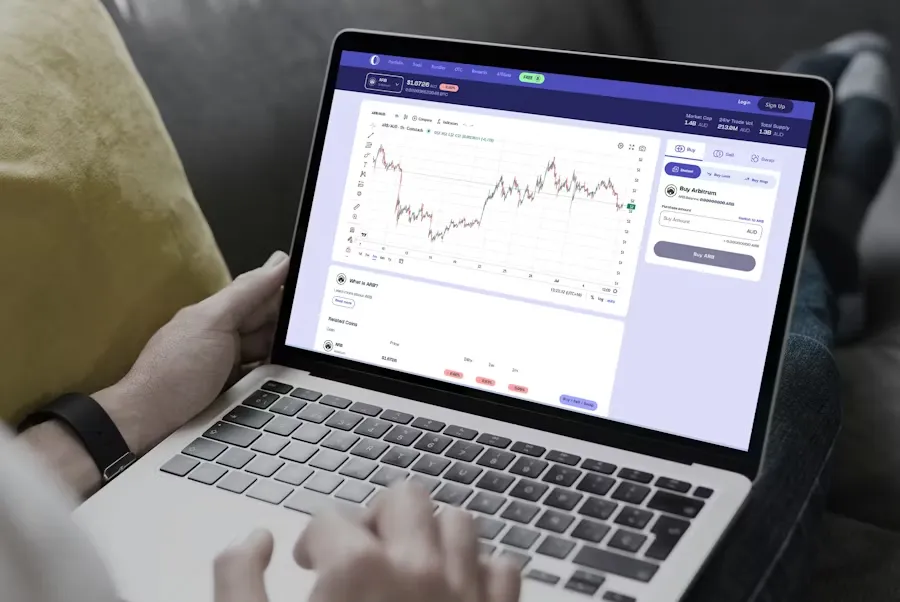
Stellar (XLM) Secures 37% of Global 24-Hour Real-World Asset Tokenization

The market capitalization of real-world asset (RWA) tokenization across the top 10 blockchain networks increased by $96.5 million over the past 24 hours. According to RWA Foundation citing Token Terminal, more than a third of this inflow — $36.4 million — went to the Stellar (XLM) network.  This allowed the blockchain platform to account for 37% of the global markets total daily expansion and confidently take the top spot.  Stellar and second-place BNB Chain, which added $23.2 million, accounted for 62% of sector-wide net inflows. XLayer (+$9.8 million) and Solana (+$7.7 million) posted more modest gains.  Fewer apps, more capital: what lies behind Stellars billion-dollar foundation  Stellars ecosystem shows an unusually high concentration of institutional capital amid the sectors broader expansion, with the total market value of RWA approaching $46 billion by the end of September. According to RWA.xyz, despite the relatively small number of launched projects (72), the average amount of funds locked per initiative exceeds $48 million.  For comparison, this figure is just $1.4 million on the retail-focused Solana network.  At the beginning of October, the total value of distributed RWA assets on Stellar reached $3.47 billion, increasing by 5.86% over the past 30 days. Monthly transfer volume within the network grew by 45%,

3 دن پہلےانڈسٹری

Near Protocol (NEAR) Breaks Ultra-Bullish Trend

Near Protocol (NEAR) has finally interrupted the almost vertical bullish trend that dominated its price action throughout the second half of September. The change does not necessarily signal the end of NEARs broader recovery, but the chart now shows a transition from aggressive expansion toward consolidation.  Momentum is too high  NEAR is trading around $4.79 after briefly reaching the $5.40-$5.60 region. The scale of the preceding move is important: NEAR traded near $1.80 at the beginning of September before accelerating above $5, meaning the token roughly tripled at its local peak.  NEAR/USDT Chart by TradingView  The first warning appeared around $5.40-$5.60. NEAR repeatedly produced long candle wicks and large intraday reversals in this region, showing that sellers were willing to distribute into strength. Instead of continuing to print consistently higher highs and higher lows, the price has subsequently moved sideways around $4.60-$5.00.  Momentum indicators confirm this cooling. The daily RSI pushed above the traditional 70 overbought threshold during the rally but has now retreated toward the low-60 area. This is not outright bearish: RSI remains above 50, but the loss of overbought momentum confirms that the exceptionally strong acceleration phase has ended.  Trading activity stabilizes  Trading activity exploded during the breakout from roughly $2.50 through $4.50, while

3 دن پہلےانڈسٹری

Visa stablecoin card payments jump 200% in a year

Visa has reported nearly 200% year-over-year growth in payment volume across its stablecoin-linked card programs, with more than 160 consumer and business programs operating worldwide.  SummaryVisa says stablecoin-linked card payment volume grew nearly 200% year over year across its network.More than 160 stablecoin-linked Visa card programs operate across consumer, business and commercial markets globally.Business and commercial programs generated approximately 17% of Visa stablecoin-linked card volume during fiscal 2026.Visa says its stablecoin settlement volume recently passed a $20 billion annualized run rate globally.Allium estimates stablecoin payments reached between $401 billion and $527 billion through August 2026 globally.  Visa said on Oct. 1 that approximately 17% of its stablecoin-linked card volume during fiscal 2026 year-to-date came from business and commercial card programs. The company based the figure on VisaNet data and its internal classifications for business and commercial cards.  The payments company did not disclose the total dollar value of stablecoin-linked card purchases behind the nearly 200% growth figure. It previously reported that stablecoin settlement activity had passed a $20 billion annualized run rate, more than 15 times its year-earlier level. Payment volume on cards and settlement volume between Visa and participating institutions measure separate parts of the network.  JUST IN: Visas stablecoin-linked card payments surge

3 دن پہلےانڈسٹری

South Korea crypto trading drops 20% in a week

South Koreas five major crypto exchanges have recorded approximately 20.5 trillion won, or $15.1 billion, in trading volume from Sept. 25 to Oct. 2, down 19.56% from the previous week.  SummarySouth Koreas five major crypto exchanges recorded 20.5 trillion won in weekly trading volume combined.Trading volume fell 19.56% from the previous week, cutting roughly five trillion won in activity.Upbit kept first place with 64.04% share, down 3.3 percentage points from the prior week.Bithumbs share rose to 26.66%, while Coinone increased its share to 6.58% during the week.Official data show crypto exchange daily volume fell 44% during the first half of 2026.  Digital Asset reported that the total fell by roughly 5 trillion won, or about $3.7 billion, during the seven-day period ending at 2 p.m. Korea Standard Time on Oct. 2. The outlet calculated the figures across Upbit, Bithumb, Coinone, Digital X and Gopax.  The rankings did not change during the week. Upbit remained the largest platform by trading share, though Bithumb, Coinone and Digital X each gained ground as Upbits portion of the five-exchange market declined.  South Korea crypto trading fell nearly 20% in one week  Combined trading volume across the five exchanges dropped 19.56% week over week to 20.5 trillion won. The source

3 دن پہلےانڈسٹری

Russia uses digital rubles to pay salaries for first time

Russias Finance Ministry has paid some employees in digital rubles for the first time, moving the central bank digital currency into regular government payroll on Oct. 1.  SummaryRussias Finance Ministry paid some employees in digital rubles for first time on October 1.Digital ruble salary payments remain voluntary and ministry did not disclose participant numbers or amounts.Russia moved nearly 16 million rubles through digital budget trials during 2025 before this rollout.Major banks began offering digital ruble services nationwide on September 1 under Russias phased rollout.EU sanctions ban support for developing Russias digital ruble while domestic adoption continues this year.  The Russian Finance Ministry said participating employees opened digital ruble accounts on the Bank of Russias platform before receiving their wages. The ministry did not disclose how many employees took part or the total value of the payments.  Receiving salary in digital rubles remains optional. Employees can continue receiving wages through existing payment methods, while people who choose the digital version must open an account on the central bank platform themselves.  You might also like:  Russia sets crypto reporting rules as holdings hit $44B  Russia moves digital ruble into regular government payroll  The Oct. 1 payments follow earlier tests involving federal budget spending. During 2025, the Finance Ministry and

3 دن پہلےانڈسٹری

Stablecoin payment firm OpenPayd eyes Nasdaq listing

OpenPayd has targeted completion of its Titan Acquisition Corp. merger by the end of 2026 as the stablecoin payments infrastructure firm prepares for a Nasdaq listing and a U.S. customer launch in 2027.  SummaryOpenPayd expects its Titan merger to close by year-end, followed by Nasdaq trading under OP.The transaction could value OpenPayd at up to $1.145 billion on a pro-forma equity basis.OpenPayd plans to launch U.S. services by April 2027 with 43 state money transmitter licenses.Revenue reached $73 million in fiscal 2026, while EBITDA totaled $13 million, company filings show.The proposed deal still requires Titan shareholder approval, SEC effectiveness, Nasdaq approval and minimum proceeds.  OpenPayds latest disclosures show the proposed business combination remains subject to several closing conditions, including Titan shareholder approval, effectiveness of the SEC registration statement, Nasdaq listing approval and at least $130 million in aggregate transaction proceeds.  CEO Iana Dimitrova said the company expects the transaction to close before year-end, barring a major external disruption. If completed, the combined company is expected to trade on Nasdaq under the ticker OP.  You might also like:  OpenPayd gains 43 U.S. licenses ahead of Nasdaq deal  OpenPayd expects its Nasdaq deal to close this year  OpenPayd and Titan signed their definitive business combination agreement on June 1.

3 دن پہلےانڈسٹری

Stablecoins may not drain banks of dollars but they can still make lending more expensive

Heres a hypothetical scenario: you want to use $100 out of your bank account to buy newly issued stablecoins. The company issuing the stablecoins takes your dollars, puts them in its own bank account, and gives you a balance you can send around on a blockchain.  You got the product you wanted, and somewhere in the vast and confusing realm of banking, the $100 is still there.  From a distance, this looks like something banks shouldnt worry about. Sure, they lost a deposit, but they also got a deposit back, so why do bankers keep warning that stablecoins could drain the financial system?  The thing is, your bank really liked having you as the customer. If you take your money away, now it owes that money to a company managing withdrawals for thousands of people, with someone paid to decide where the reserves should go.  The dollars came back, but they came back with a different owner, and that owner can be a much more demanding creditor.  This is the part of the stablecoin debate that gets lost when everyone starts estimating how many trillions will leave banks. The amount in the bank can stay the same while the bank gets a much worse deal,

3 دن پہلےانڈسٹری

Zcash ETF sees $93.6M exit as ZEC drops 23%

Zcashs U.S.-listed spot ETF has recorded $93.56 million in net outflows for the week ended Oct. 2 as ZEC fell toward $1,300 following its strong September rally.  SummaryZCSH recorded $93.56 million in weekly net outflows, its first negative week since late August.Daily redemptions reached $30.25 million September 30 and another $26.93 million on October 2 alone.ZEC closed near $1,304 on October 3, well below its recent late-September peak above $1,650.Grayscale completed a three-for-one ZCSH share split on September 30 without changing investor value overall.DCG invested roughly $100 million into ZCSH on September 8 through an authorized participant transaction.  According to SoSoValue ETF data, the weekly loss was the first net outflow for Grayscales ZCSH since the end of August. Total net assets fell to approximately $751 million, while cumulative net inflows remained positive at around $212.56 million.  $93.56M pulled from $ZEC ETFs in the last week.  Crazy reversal after the strong inflows we saw following the ETF launch.   The reversal came after strong demand during the funds first weeks of exchange trading. Grayscale converted its long-running Zcash Trust into ZCSH on Aug. 25, giving investors access to ZEC through NYSE Arca without directly holding the cryptocurrency.  Zcash ETF investors pulled $93.56 million in one week  ETF

3 دن پہلےانڈسٹری

Philippines freezes 25 crypto wallets tied to flood scandal

The Philippine Court of Appeals has frozen 116 accounts and assets, including 25 virtual asset wallets, under a Sept. 21 order tied to an unnamed lawmaker and a flood-control plunder investigation.  The Anti-Money Laundering Council said the order covers assets linked to a “prominent lawmaker,” a corporation and several associated individuals and entities. The Court of Appeals issued the order after finding probable cause that the covered property was related to alleged plunder under Republic Act No. 7080.  The AMLCs public statement did not identify the lawmaker, corporation or other people covered by the order. The council has said confidentiality rules prevent it from disclosing information that could reveal the identities of parties in freeze-order proceedings.  AMLC freeze order covers 25 crypto wallets and 91 other assets  The Sept. 21 order covers 86 bank accounts, four investment accounts, one insurance policy and 25 virtual asset wallets. Together, the categories account for 116 financial accounts and other assets placed under restraint while authorities continue their investigation.  A freeze order blocks covered property from being withdrawn, transferred or disposed of during the court-approved period. Philippine Supreme Court decisions describe the measure as interim relief intended to preserve property suspected of being connected to unlawful activity while investigators

3 دن پہلےانڈسٹری

Vitalik Buterin tries AI that keeps personal data private

Ethereum co-founder Vitalik Buterin has tested a privacy-focused AI setup that uses a local model, zkAPI and Tor to generate personalized diet and exercise recommendations while limiting personal information sent to remote models.  Buterin said on Oct. 4 that the self-experiment uses his health and travel information locally, while more powerful remote models handle selected questions that require stronger reasoning or knowledge.  Doing a bit of a self-experiment.  Goal: use my personal health and travel data to provide personalized diet and exercise recommendations for me, using frontier models but in a way that avoids leaking to them any private information.  Strategy: use a local model (Qwen 3.8 Flash… pic.twitter.com/mi38E5jlfN  — vitalik.eth (@VitalikButerin) October 4, 2026  The setup uses Alibabas Qwen3.8-Flash-Next as the local model. Buterin said the local system decides what information a remote model needs and rewrites requests before sending them, reducing the chance that personal details or his writing style reveal his identity.  Vitalik Buterin uses three layers to separate his identity  Buterin described the design as a three-layer privacy setup covering the content of requests, payment information and internet traffic. The local Qwen model handles the first layer by constructing queries itself instead of sending his original wording and full personal context to remote AI

3 دن پہلےانڈسٹری
1
...
1618
...
1000