Hyperliquid Calls Singapore Home — But Does It Have a License?

Hyperliquid has confirmed it is registered in Singapore, the Financial Times reported on Tuesday. Yet Singapores financial regulator reportedly does not see the platform as within its jurisdiction.  That regulator is the Monetary Authority of Singapore (MAS), the city-states central bank. Based on the report, the biggest concern is that Hyperliquid is decentralized.  Hyperliquids Team Lives in Singapore, but Holds No Licence  Its team of about 11 people, led by co-founder Jeff Yan, moved to Singapore in 2024. It never applied for an MAS licence.  Sponsored  Sponsored  On June 26, MAS added Hyperliquid to Singapores crypto warning list. The list flags firms that the public might wrongly assume MAS regulates.  The entry is a warning, not a ban. Hyperliquid replied that it is permissionless infrastructure, and that users keep control of their own funds.  Kyle Samani, chairman of Forward Industries, criticized its permissionless claims days later.  “Hyperliquid is not permissionless. Stop gaslighting the public,” he said.  Singapore Already Forced Out Several Crypto Firms  MAS has already shut one door for local crypto firms. It set a June 30, 2025 deadline for local firms serving only overseas clients to get licensed or stop.  It also said it would generally not grant those licences. The rules target activities such as running an exchange, brokering


Yesterday 06:39Industry

Winklevoss Plans a Zcash ETF 10x Cheaper Than Grayscale

Grayscale‘s Zcash ETF lost $218 million in assets in under two weeks. On October 6, Winklevoss Asset Services filed for a rival fund charging 0.25% a year, one-tenth of Grayscale’s fee.  Zcash (ZEC) is a cryptocurrency that lets users hide who sent a payment and how much. Grayscales ZCSH is currently the only ETF holding it.  How Grayscales Zcash ETF Lost $200 Million  ZCSH held $1 billion on September 24. By October 5, that figure stood at $781.96 million. Withdrawals explain about $97 million of the drop.  Sponsored  Sponsored  Cumulative net inflows fell from $306.12 million to $209 million over the same stretch. The rest reflects ZECs lower price.  Grayscale Zcash ETF Flows. Source: SoSoValue  Investors pulled money in four of the funds last five sessions. Between September 30 and October 2, outflows ranged from $27 million to $30 million each day.  BeInCrypto reported last week that the fund posted its first weekly outflow since launch, at $93.6 million. Meanwhile, the ZEC price today sits near $1,342, up 4.8% in 24 hours.  What the 10x Cheaper Winklevoss Zcash ETF Proposes  On a $10,000 holding, the Winklevoss fund would cost $25 a year. ZCSH costs $250. The preliminary filing names Nasdaq as the venue and WINK as the ticker.  Winklevoss just filed for

Yesterday 05:12Industry

China Could Trigger the Next Bitcoin Supercycle: What's Stopping It?

China could set off the next Bitcoin supercycle if Beijing lets its citizens trade under tight controls. This is according to former UBS banker Joseph Chee, who gave no timeline.  Chee previously ran Asia investment banking at UBS. He now leads Solana Company, a Nasdaq-listed firm that holds the Solana (SOL) token as its treasury asset.  Sponsored  Sponsored  Hong Kong Is Chinas Crypto Test Run  Crypto trading is still illegal on the mainland. In February, the Peoples Bank of China (PBOC) and seven other agencies restated that ban and kept stablecoins behind prior government approval.  Speaking on CNBCs Squawk Box Asia, the former UBS executive said Beijing follows the technology closely through think tanks and academics.  According to Chee, officials are using Hong Kong to test how crypto can be rolled out and controlled.  “When the Chinese government find a way to manage this and allow access to trading crypto… I think the crypto is going to go through another super cycle,” Chee stated.  He added that, for now, Beijing may not allow trading or onshore issuance of stablecoins, tokens pegged to a currency such as the US dollar.  Whats Stopping China From Reopening Crypto Trading?  Chee named two hurdles:  Sponsored  SponsoredFirst, the officials who would supervise the market need to understand it.The

Yesterday 05:12Industry

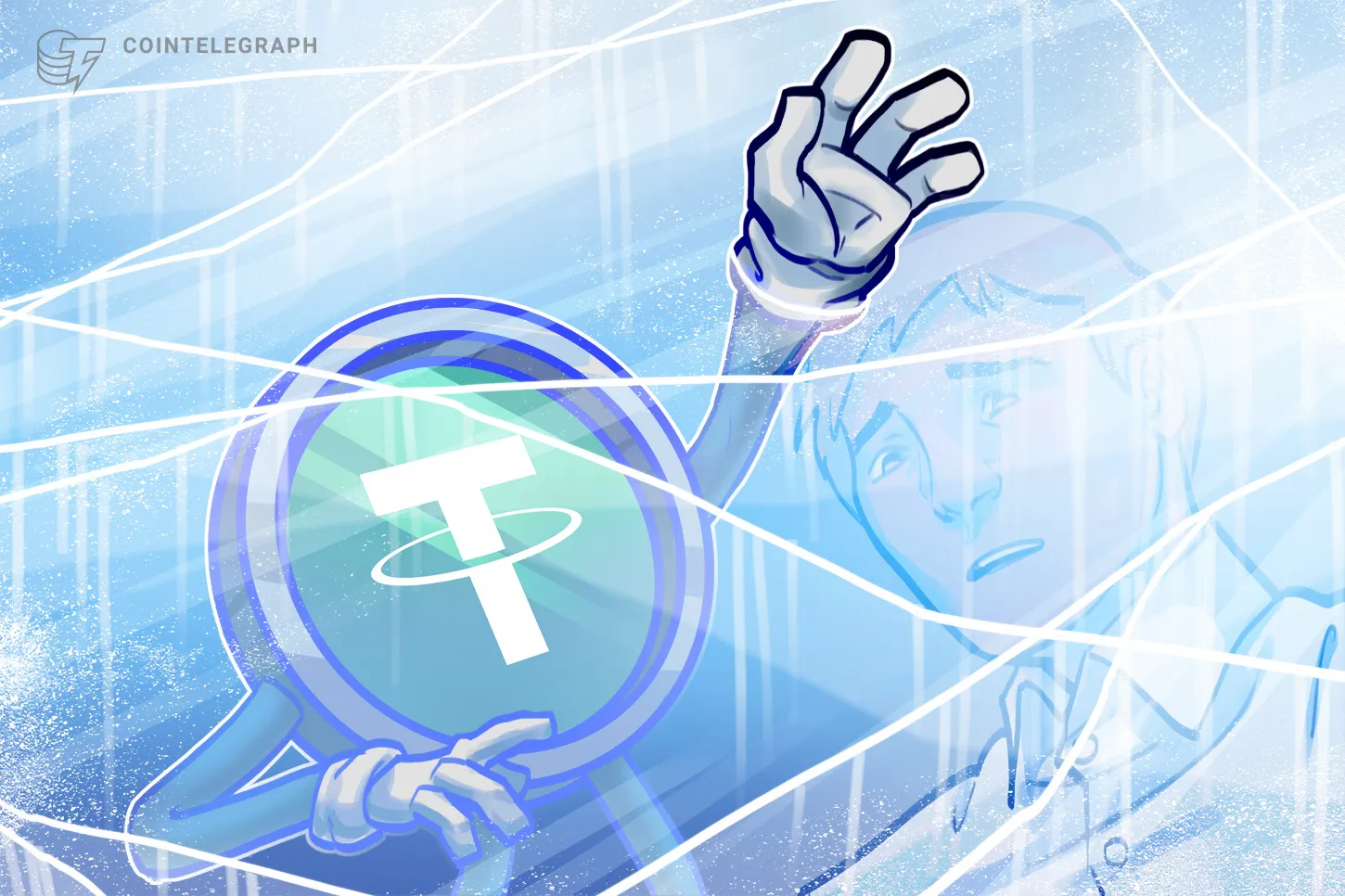
Conduit sues Tether over allegedly freezing $2.8M without explanation

Cross-border payments platform Conduit Technology alleged that stablecoin issuer Tether froze $2.76 million in USDt (USDT) without explanation in September 2025.  In a complaint filed in the US District Court for the Southern District of New York on Monday, Conduit said that Tether froze funds belonging to the company to which it had “no legal entitlement” and “no claim.” The company said it began holding USDt as part of its digital treasury wallet in May 2025, alleging that Tether froze all $2.76 million of the stablecoin in September with “no justification” — an action Conduit claimed “materially impacted its business.”  “The funds are unequivocally Conduit‘s, but Tether has taken them and is denying Conduit access to them,” alleged Conduit in the complaint, adding: “Tether is not allowed to take money from businesses just because they chose to store that money in Tether’s currency.”  According to the lawsuit, the freezing was connected to a Brazilian federal police investigation launched in 2024 into the financial intermediary Bull Intermediação de Negócios and Onix. Tether allegedly identified Conduits treasury wallet as tied to the companies “on its own initiative using its own criteria,” freezing the $2.76 million on Sept. 24, 2025.  Conduit said it had repeatedly asked Tether

Yesterday 05:10Industry

UK names six banks to lead first digital gilt issuance in early 2027

The UK government has appointed six banks to lead its first digital gilt issuance, with the pilot expected by the first quarter of 2027.  SummarySix banks will handle underwriting, investor engagement and distribution for the DIGIT pilot.HSBC‘s Orion platform will host the bond within the UK’s Digital Securities Sandbox.Industry executives say digital bonds need connections to cash, custody and existing settlement systems.U.S. and UK authorities are examining common approaches to tokenized securities and settlement.  HM Treasury announced on Oct. 6 that Barclays, HSBC, Lloyds, Morgan Stanley, NatWest and RBC Capital Markets will serve as joint lead managers for the Digital Gilt Instrument, known as DIGIT.  Following a competitive procurement process, the appointments allow investor engagement to begin, the department said. Economic Secretary to the Treasury Lucy Rigby disclosed the selection during her keynote address at UK Digital Assets Week.  UK digital gilt banks will handle the sale and investor engagement  Under the Treasurys mandate, the six institutions will provide underwriting services, support discussions with investors and distribute DIGIT on issuance day. The department said its selection process assessed suppliers against transparent and objective criteria.  For the pilot itself, the Treasury has specified a short-dated bond issued directly on digital infrastructure, with onchain settlement and a platform

Yesterday 05:00Industry

US services price gauge hits a four-year high, clouding Bitcoins rate-relief outlook

The US services prices gauge reached a four-year high in September even as growth slowed, a combination that could keep leveraged Bitcoin positions exposed to restrictive financing conditions. The October 5 survey pairs softer activity with more widespread reports of rising input costs.  Related Asset Bitcoin #1 BTC · $85,627.59 24-hour change: down 0.15% Loading price history… 24H Down 0.15% 7D Up 2.40% 30D Up 7.14%  The Institute for Supply Managements services report, issued on its October 5 release date, put the prices index at 74.0, up from 72.6 in August. That was its highest reading since July 2022, when it reached 74.5.  The headline services PMI eased to 54.9 from 55.4, while business activity dropped to 56.5 from 61.7. Both remained above the 50 expansion threshold. Employment moved the other way, rising from 47.8 to 50.1 and returning to slight expansion after two months of contraction.  Growth therefore lost momentum while reported input-cost increases became more widespread. ISMs prices gauge is a diffusion index describing the direction and breadth of monthly input-cost changes across survey respondents. Its 74.0 reading provides no estimate of the size of price increases and cannot be read as a consumer-inflation rate.  Why the rates risk persists for Bitcoin  Fed Vice

Yesterday 04:35Industry

ChatGPT AI Predicts ADA Levels as Open Interest Jumps 25%

ChatGPT AI predicts ADA pushes toward $0.30 but faces a harder test there, because the leverage driving this move cuts in both directions. Whales made 413 large transactions on Cardano yesterday.  Social chatter barely moved. That gap is the most interesting thing about this rally. Open interest jumped roughly 25% to $304 million between October 3 and 5, while the crowd stayed quiet.  ADA trades at $0.2772, up 1.9% over 24 hours and 11.1% over seven days. Market cap sits at $10.41 billion with $836.6 million in volume.  $ADA CARDANO BULLISH FOR THE FIRST TIME SINCE Q4 2025  -80% from the last cycle highs  -91% from 2021 highs  BULLISH!!!!!  Even if it doesnt go to new highs there is big profit potential here pic.twitter.com/Cbdjpdj2Eg  — Ivan on Tech ???????????? Head Trader @ Bullmania (@IvanOnTech) October 5, 2026  Put Your Money Where Your Mouth is On PolymarketIs This New Money or Short Covering?  Was $ADAs rally really a short squeeze?  Some coverage said so, pointing to falling open interest. Santiments daily closes show the opposite.  ???? $ADA rose ~10% from Oct 3 to Oct 5.  ???? Open interest rose ~25% over the same two days, to $304M, its highest daily close since at… pic.twitter.com/v2G8Dyko2O  — Santiment Intelligence (@SantimentData) October 6, 2026  New money, and the data

Yesterday 04:19Industry

Polymarket overhauls smart contracts with new Protocol V2 rollout

Prediction market platform Polymarket is rebuilding its smart contract infrastructure, laying the groundwork for new market features and potential expansion beyond Polygon.  Polymarket began rolling out Protocol V2 on Monday, introducing a new smart contract system designed to support different market types through a single exchange, according to an X post by Rajath Alex, the companys head of protocol.  The platform is testing the system on a limited number of live markets through Oct. 30, with a tentative Nov. 2 target for switching new markets to V2.  The overhaul replaces infrastructure based on code developed in 2019 that requires additional contracts to support new market types.  New protocol uses pUSD as sole collateral token  Protocol V2 uses Polymarket USD (pUSD) as its sole collateral token, alongside a single contract for position tokens and one exchange supporting different market types.  Introduced as part of an exchange upgrade in April 2026, pUSD is a collateral token backed 1:1 by Circles dollar-pegged stablecoin, USDC.  The new protocol is designed to support transferring positions, collateral and market outcome data between blockchains, although Polymarket has not announced when cross-chain functionality will launch or which networks it will support.  Related: Vitalik Buterin says Hegotá could be Ethereum‘s last ’normal fork  Polymarket currently operates its prediction

Yesterday 04:10Industry

Winklevoss Twins File for Zcash ETF 13 Years After Historic Bitcoin ETF Bid

The Winklevoss twins are planning to introduce an ETF that will directly allow investors to gain exposure to the privacy-focused cryptocurrency Zcash (ZEC).  The Winklevoss Zcash ETF has been registered via Form S-1, which was submitted to the U.S. Securities and Exchange Commission on Tuesday.  Per the filing, the new product is called the Winklevoss Zcash ETF. Winklevoss Asset Services, LLC is listed as the sponsor of the new ETF.  The Winklevoss brothers were notably behind the first spot Bitcoin ETF filing, which happened over 13 years ago.  Their initial filing for a Winklevoss Bitcoin Trust was submitted to the SEC on July 1, 2013. At that time, spot cryptocurrency ETFs were a completely new concept.  How the Winklevoss Zcash ETF will work  The summary of the prospectus explains that the Winklevoss Zcash ETF is intended to be a passive investment instrument with the goal of owning ZEC directly and offering exposure to Zcashs price movements.  The fund will not attempt to produce any returns other than those that follow from the cryptocurrencys price movements.  If approved, the product will be listed on Nasdaq. As per the preliminary prospectus, the shares will probably be traded under the WINK ticker.  All the ZEC owned by the new ETF will be

Yesterday 04:02Industry

Prediction Markets Just Hit $188 Billion, and One Company is Dominating

Prediction markets, where people trade $1 contracts on future events, logged a record $188 billion between July and September. The buyers behind those trades paid a fraction of that.  The record, tracked by CryptoRank, is nearly 70% above the previous quarter. One company, Kalshi, accounts for most of it, but US courts are split on whether its biggest product is gambling.  Sponsored  Sponsored  Is the Market as Big as It Looks?  The total counts every contract at its full payout, not its price. Pew Research Center explains the method.  Prediction markets quarterly volume, Q4 2025 to Q3 2026, Source: CryptoRank  “Each contract is counted at its $1 notional value, or the value of the contract if it is correct, rather than the price at the time of the trade,” Pew Research Center explained.  So a contract bought for 20 cents adds $1 to the total.  On Kalshi, buyers paid about $41 billion for $142 billion in contracts last quarter, DeFi Rate data shows. That works out to roughly 29 cents per dollar.  On Polymarket, most individual buyers lose. Galaxy Research counted only accounts run by people, not bots.  “69.2% of the 2.9 million ‘retail’ accounts… finished below break-even,” Galaxy indicated.  Sponsored  Sponsored  Together, those accounts were down $338.9 million since 2020.  Why Courts are Fighting

Yesterday 02:22Industry
1
...
1214
...
1000