Justin Drake Bunker Mode Explained: ECDSA, AI and Crypto Wallet Public Keys

Ethereum researcher Justin Drake has raised an unusually urgent cryptography scenario: what if progress in AI-assisted mathematics makes attacks on conventional digital signatures practical before large quantum computers arrive?  In a public October 7 X post, Drake urged the industry to begin calm planning for what he calls “bunker mode.” His personal suggestion was to consider gradually moving assets, beginning with large and sophisticated holders, into fresh addresses whose public keys have not been exposed.  The key qualifier is essential: Drake did not report that ECDSA has been broken. His timeline of possible attacks in “months rather than years” was a speculative worst-case assessment—not a demonstrated cryptanalytic result or a consensus finding among security researchers. Contemporary accounts from The Block and Cointelegraph clearly distinguish preparation from a known compromise.  That difference separates a serious long-term security discussion from an unfounded “Bitcoin and Ethereum are hacked” headline.What ECDSA Actually Protects  The Elliptic Curve Digital Signature Algorithm lets a wallet authorize transactions using a private key. A public key allows others to verify a signature without learning the private key.  This arrangement depends on the computational difficulty of recovering a private key from its public key under the mathematics used by the scheme.  Cryptography does not promise that
2 دن پہلےانڈسٹری ریسرچ

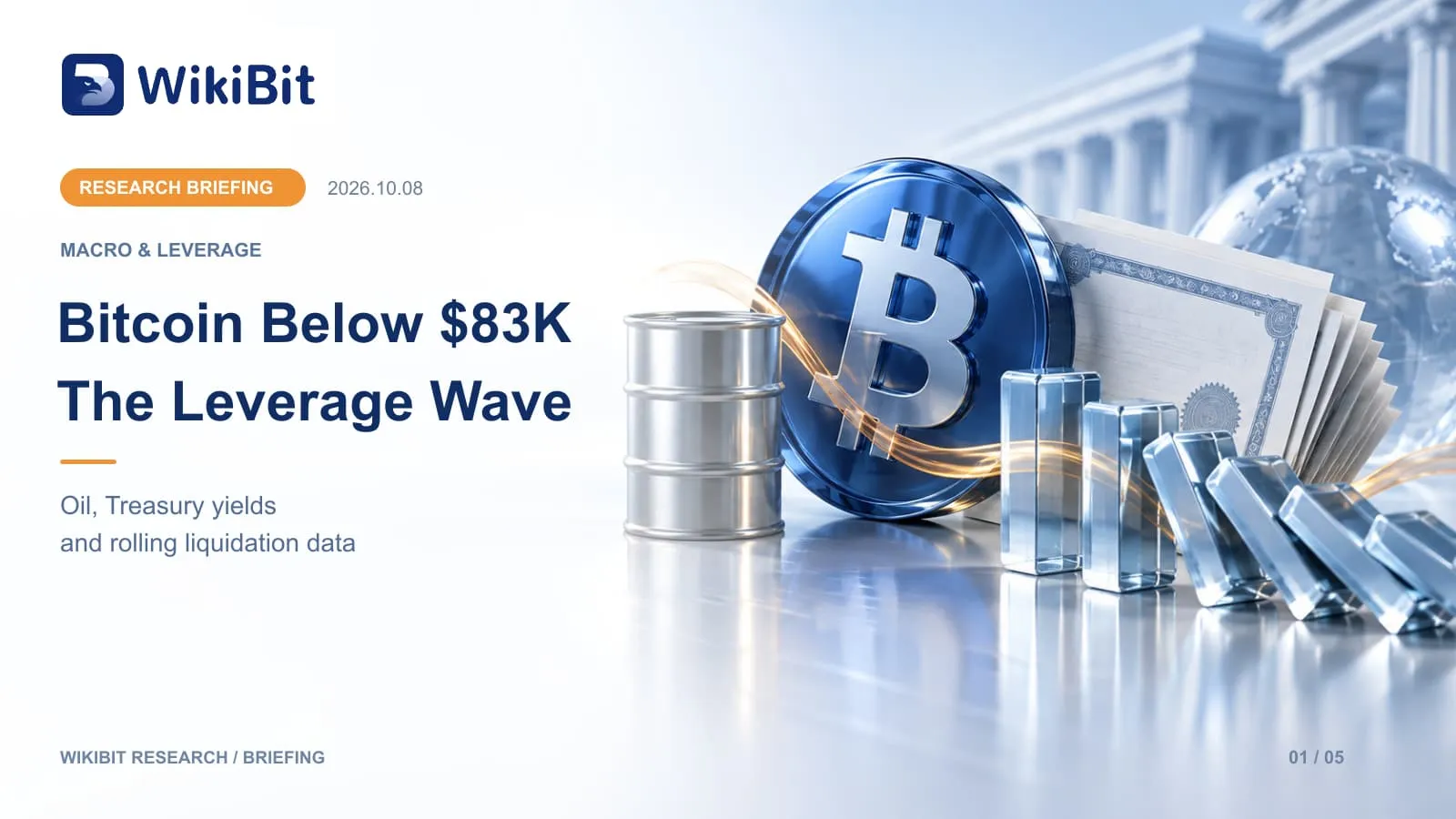
Why Bitcoin Fell Below $83K: Oil, Treasury Yields and Crypto Liquidations

Bitcoins October rally encountered an unusually uncomfortable combination on October 7: renewed pressure from oil prices, higher U.S. government bond yields and forced selling in leveraged crypto positions.  During Wednesdays trading, BTC fell to approximately $82,734 on Bitstamp, according to Cointelegraphs market report. A separate Cointelegraph/CoinGlass snapshot showed about $550 million in rolling 24-hour crypto long liquidations during the initial sell-off. The figure was a measurement at the time of reporting, not a final settlement figure for a fixed calendar day.  Brent crude was reported near $102 a barrel, while the U.S. 10-year Treasury yield was quoted around 5.36% during the stress. Those observations support the conclusion that crypto was trading within a wider risk-asset repricing. They do not prove that one news headline caused every dollar of selling.  The more useful question is how the shocks interacted.First Layer: Oil and Bond Yields Change the Cost of Risk  An oil price rise can change the markets inflation assumptions. If investors worry that energy prices will keep inflation elevated, they may demand higher yields to hold long-dated government debt.  Higher bond yields change the opportunity cost of holding assets that do not produce contractual cash flow. Bitcoin does not pay a coupon. Its valuation is sensitive

2 دن پہلےانڈسٹری ریسرچ

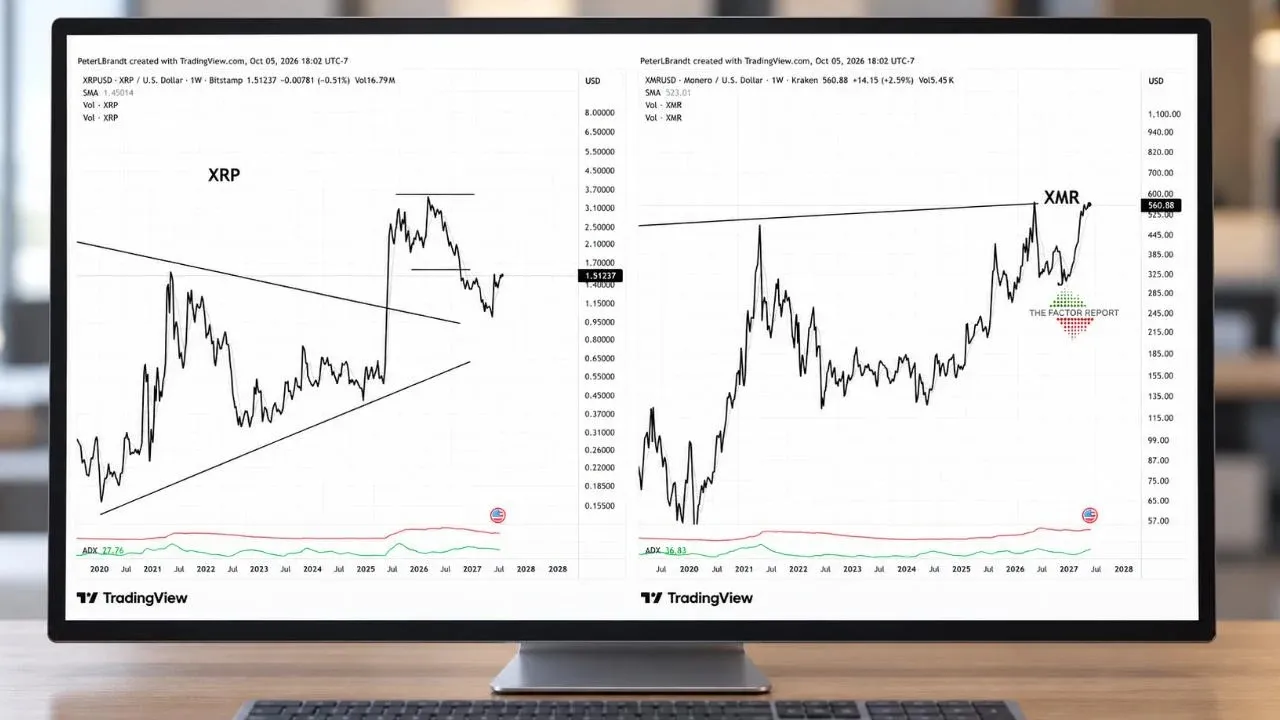
Peter Brandt Favors Monero Over XRP Despite Bullish Price Targets

Veteran trader Peter Brandt identifies a potential XRP move to $2.16 but warns that overhead selling pressure could obstruct its advance. He favors moneros chart setup, viewing all of its comparable supply burden as already absorbed.  Key TakeawaysMonero is Peter Brandts favorite among the altcoin charts compared.Brandt sees further XRP right shoulder development as likely, not required.His $2.16 daily objective differs from his earlier $5.40 projection.  Monero Gets Brandts Strongest Endorsement  Monero drew veteran trader Peter Brandt‘s strongest endorsement among the altcoin charts he compared, while XRP’s potential advance came with significant reservations. The founder of Factor Trading, which trades its own capital and provides market research, outlined his preference for monero alongside XRPs $2.16 objective in an X post on Oct. 5.  XMR, the privacy-focused cryptocurrency, stood out as Brandt considered all of its overhead supply already absorbed. He contrasted that position with XRPs burden, describing monero as having “clear sailing ahead.” The veteran trader summarized his preference:  “Of these, my favorite by far is XMR.”  “Of these, my favorite by far is XMR.”  XRP presented a less favorable picture: potential sellers above the current market price could impede its advance, Brandt detailed. Investors who purchased higher may sell during a recovery, creating resistance where supply

2 دن پہلےانڈسٹری

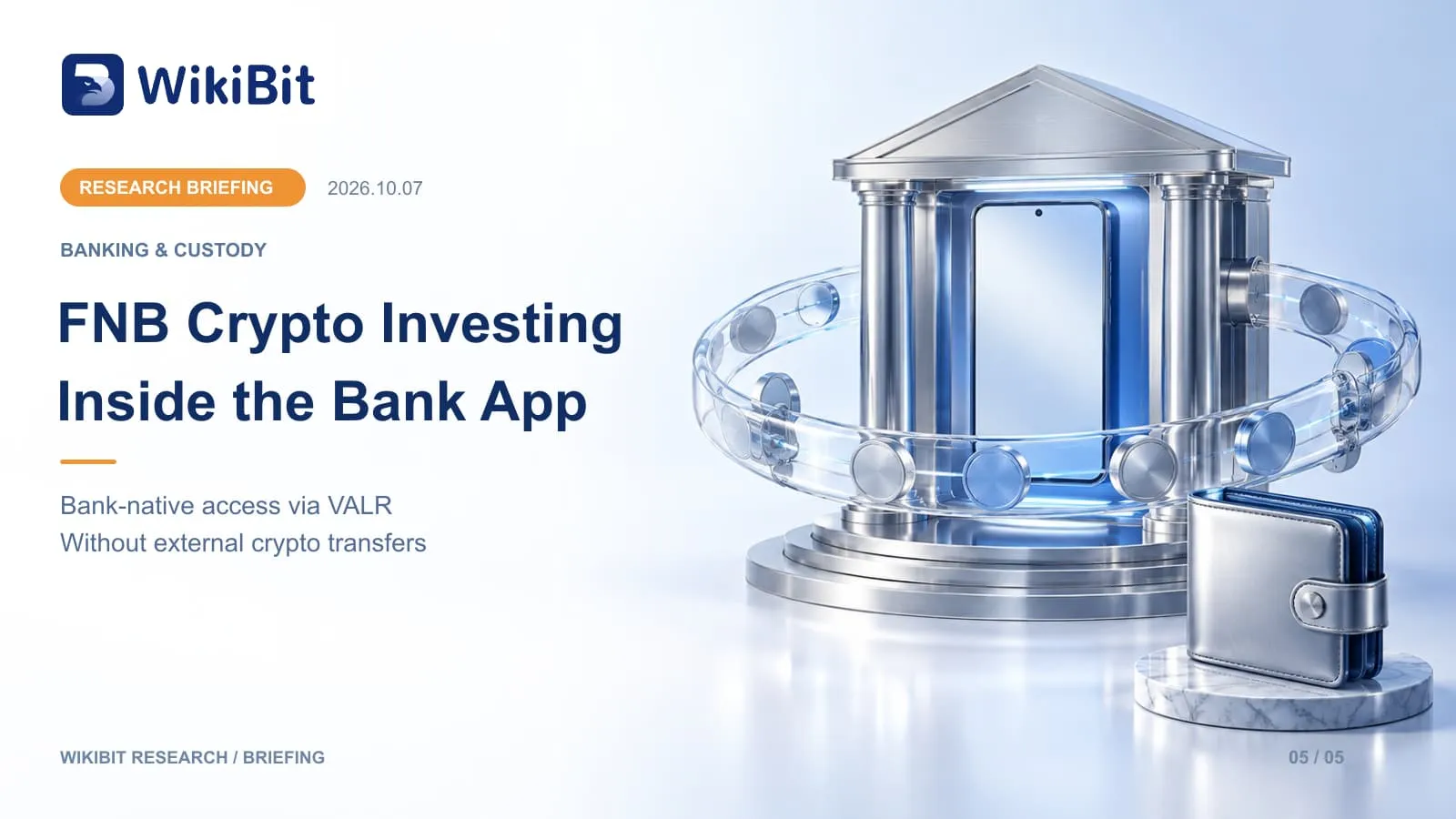
FNB Crypto Investing Explained: VALR Partnership, 24/7 Trading and No Withdrawals

South Africas First National Bank has brought crypto into the same investment interface customers use for conventional assets.  On October 6, FNB launched Crypto Investing through a partnership with local crypto platform VALR.  Customers can buy and sell five digital assets:Bitcoin;Ether;XRP;Solana;USDT.  Minimum trades start at R10.  Trading is available 24 hours a day.  The feature is integrated into FNBs existing Share Saver, Share Builder, Share Investor and Share Zero products.  But there is one major restriction:  crypto cannot be transferred into or out of the FNB ecosystem.  Customers can gain exposure.  They cannot withdraw the coins to a self-custodial wallet.  That makes FNBs launch a useful case study in what crypto adoption looks like when a bank embraces the asset class but deliberately excludes the open-wallet layer.The Product Optimizes for Trust and Distribution  A bank already has several advantages that a standalone crypto exchange has to build.  It has:customer identity;fiat balances;payment rails;an investment interface;regulatory processes;brand trust.  FNB can add crypto without asking a customer to create a new financial relationship.  The customer funds a crypto purchase directly from an FNB account.  There is no separate exchange wire.  There is no new login.  For mainstream adoption, that reduction in friction is powerful.  The user does not need to become a “crypto user.”  Crypto becomes another asset inside a bank investment

2 دن پہلےانڈسٹری ریسرچ

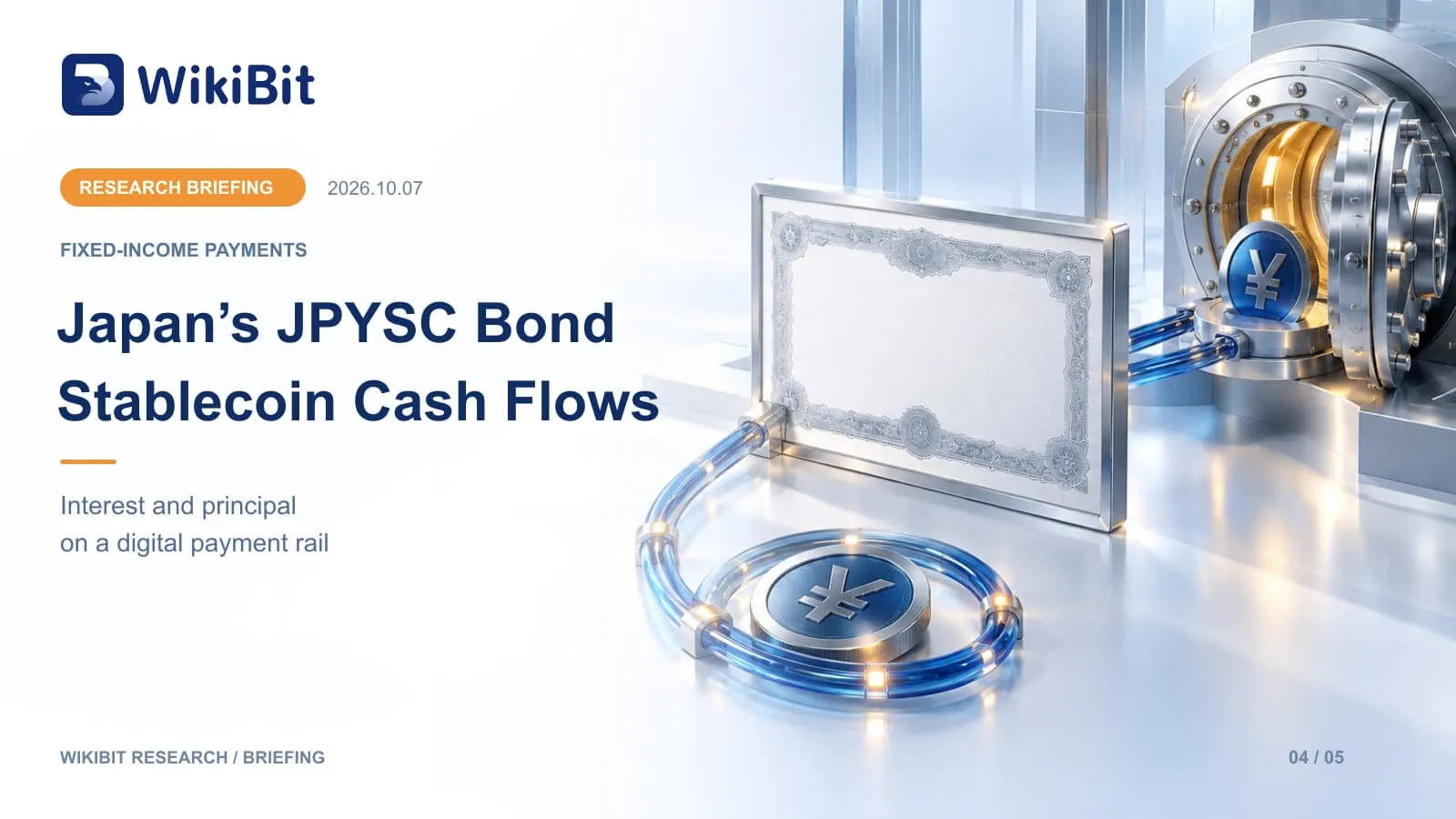
Startale JPYSC Bond Explained: Japan’s Stablecoin Coupon and Principal Payments

Tokenization usually starts with the asset.  A bond, fund or stock is represented digitally.  The payment side often remains conventional.  Startale Japan is testing the reverse question:  What changes when the bonds cash flows themselves settle in a regulated stablecoin?  On October 6, Startale Japan opened subscriptions for its first guaranteed digital corporate bond, marketed as a “Stablecoin Adoption Bond.”  The offering totals ¥99.9 million.  It has a one-year term.  The fixed annual coupon is 5.00% before tax.  The minimum subscription unit is ¥100,000.  Both interest payments and final principal redemption are scheduled to be paid in JPYSC, a yen-denominated trust-type stablecoin issued by SBI Shinsei Trust Bank.  The issuance is small by institutional fixed-income standards.  Its design is more important than its size.  It puts a regulated stablecoin directly into the lifecycle of a conventional corporate liability.The Bond Is Conventional; the Cash Rail Is New  The instrument still has familiar fixed-income economics.  An investor subscribes to a bond.  The issuer owes scheduled interest.  The issuer repays principal at maturity.  The difference is how those payments are delivered.  Instead of sending yen through ordinary bank-transfer rails, the scheduled cash flow arrives in JPYSC through the Startale application.  That distinction matters because a large share of tokenization experiments focus on digital ownership but leave payment and settlement outside the blockchain-oriented stack.  If

2 دن پہلےانڈسٹری ریسرچ

Zcash Institutionalization Explained: WINK ETF, Gemini Custody and a $100M Mining Bet

Zcash is being institutionalized in two very different markets at the same time.  On October 6, Winklevoss Asset Services filed a preliminary S-1 registration statement for the Winklevoss Zcash ETF, which is expected to seek a Nasdaq listing under the ticker WINK.  The proposed product would hold ZEC directly.  Gemini Trust Company would custody the ZEC.  The sponsor fee is proposed at 0.25% annually.  Winklevoss Capital Fund has indicated non-binding interest in purchasing up to $100 million of shares.  Separately, Fortitude Mining Holdings signed a letter of intent with Bitmain for priority access to next-generation Zcash mining equipment, with a non-binding purchase commitment of up to $100 million.  One project packages ZEC for brokerage accounts.  The other invests in the physical infrastructure that secures the network.  Together, they make a stronger narrative than a price rally:  institutional capital is beginning to build both the financial wrapper and the production layer around a privacy asset.WINK Is a Preliminary Filing, Not a Live ETF  The SEC filing is explicit.  The registration statement is preliminary.  The shares cannot be sold until the registration becomes effective.  The trust expects a Nasdaq listing under WINK, subject to the required process.  The funds objective is straightforward: hold ZEC and provide exposure to its price, less expenses and liabilities.  The filing still contains

2 دن پہلےانڈسٹری ریسرچ

Conduit vs. Tether Explained: The $2.76M USDT Freeze and Stablecoin Issuer Power

Stablecoin issuers have spent years demonstrating why freeze controls can be useful.  A hacked exchange can identify stolen USDT.  Law enforcement can trace the tokens.  Tether can prevent a blacklisted balance from moving.  Conduits new lawsuit asks the opposite question:  What happens if the issuer freezes the wrong wallet — or freezes a legitimate business without a clear legal process for challenging the decision?  Conduit Technology, a cross-border payments company that uses stablecoins to move money internationally, filed suit against Tether entities in the U.S. District Court for the Southern District of New York.  The company alleges that Tether froze approximately $2.76 million of USDT in a Conduit treasury wallet on September 24, 2025 and has refused to release the funds for more than a year.  Conduit says the wallet functioned like an operating bank account.  It is asking the court to order an unfreeze, award at least another $2.76 million in damages and account for profits Tether allegedly earned from reserves backing the frozen tokens.  Those are Conduits allegations.  Tether had not publicly answered the claims in the reporting reviewed for this article.  No court has ruled that the freeze was improper.  That distinction is central.The Case Is Not About Whether Tether Can Technically Freeze USDT  Tethers technical power is well established.  USDT is

2 دن پہلےانڈسٹری ریسرچ

Ethereum Glamsterdam Explained: ePBS, Block-Level Access Lists and the 200M Gas Test

Ethereums next major upgrade is no longer only a roadmap document.  Glamsterdam activated on the Sepolia public testnet on October 6, 2026. Early upgraded epochs finalized, and the testnet began a gradual increase from a 60 million gas limit toward a 200 million client target.  The number is attention-grabbing.  The architectural changes underneath it matter more.  Glamsterdam combines changes to Ethereums execution and consensus layers. Its two headline features are enshrined proposer-builder separation, or ePBS, and block-level access lists, or BALs.  Together, they are intended to let Ethereum process and validate more execution without making the validator workload scale in the same naïve way.  That is why Glamsterdam should not be reduced to “Ethereum raises the gas limit.”  The upgrade is testing a different way to build and validate large blocks.A 200M Gas Target Does Not Mean Mainnet Has 3.3x Capacity Today  Before the Sepolia fork, major client configurations were centered around a 60 million gas limit.  The Glamsterdam test pushes the test network toward a 200 million target.  That does not mean Ethereum mainnet has already increased capacity by more than three times.  Sepolia is a public testing environment.  Hoodi and mainnet activation dates had not been announced at the time of writing.  The purpose of the higher limit is to expose

2 دن پہلےانڈسٹری ریسرچ

Metaplanet Sold 10,000 BTC and Bought 11,000 Back: The Liquidity Test Explained

Metaplanet did something unusual for a company built around accumulating Bitcoin.  It sold 10,000 BTC.  Then it bought 11,000 BTC back.  The Q3 round trip left the Japanese company with a net increase of 1,000 BTC and total holdings of 44,000 BTC as of September 30.  The sale generated approximately ¥124.7 billion.  The later purchase cost roughly ¥149.9 billion.  The company said the reason was not a change in its long-term Bitcoin thesis.  It was a liquidity demonstration.  CEO Simon Gerovich said rating agencies and credit investors want to know whether a Bitcoin treasury can be converted into cash to meet obligations — and whether management is actually willing to do it.  Metaplanet decided to answer by executing the transaction.  That makes the quarter more interesting than another treasury-company purchase announcement.  It shows a Bitcoin treasury company beginning to behave like a credit institution managing collateral, liquidity and funding credibility.A Bitcoin Treasury Is Only Useful to Creditors If It Can Be Monetized  A balance sheet can show billions of dollars of Bitcoin.  A creditor still has to ask a more practical question:  Can the company turn that Bitcoin into cash when debt comes due?  Bitcoin is globally liquid.  That does not automatically prove the companys operational ability or willingness to sell.  Boards can impose restrictions.  Custody arrangements can

2 دن پہلےانڈسٹری ریسرچ

OKXICE 24/7 Tokenized Stocks Explained: ICE, OKX, AMMs and SEC Rules

Tokenized equities are moving from offshore wrappers to an institutional U.S. market design.  OKXICE, the 50-50 joint venture between crypto exchange OKX and Intercontinental Exchange, the parent company of the New York Stock Exchange, has notified the SEC that it plans to launch a Tokenized Securities Venue under the agencys new Innovation Exemption.  The proposed venue would begin with more than 60 U.S.-listed stocks.  Trading would be available around the clock.  The tokenized shares are intended to preserve shareholder rights such as dividends and voting.  Companies whose shares are tokenized would receive a 30-day opportunity to object.  There is no announced launch date yet.  The filing is important because it combines three market structures that rarely coexist:  regulated securities ownership + public blockchain settlement + AMM-style liquidity.This Is Not Just an Offshore Stock Wrapper  Crypto exchanges have offered stock-linked tokens outside the United States for years.  The legal structure varies.  Some products are debt instruments linked to a share price.  Some are synthetic derivatives.  Some have redemption links to underlying shares.  The SECs Innovation Exemption takes a more conservative approach for U.S. tokenized NMS stocks.  Qualifying tokens are expected to preserve the rights and privileges of the traditional share.  That means the token should not merely track Nvidia‘s or Apple’s price.  The ownership experience matters.  Dividends, voting and

2 دن پہلےانڈسٹری ریسرچ
1
...
1214
...
1000