Strategy’s $150 million-a-day STRC market has a hidden dependency on its own buybacks

Strategys $1.45 billion preferred-share buyback program is supporting a substantial share of trading in one of its key Bitcoin financing instruments.  Related Company Strategy Business intelligence software  According to a Keyrock research report, Strategys repurchases accounted for more than 20% of weekly trading volume in its variable-rate preferred stock, STRC, during almost every week of September.  The companys share reached about 28% the week of Sept. 8 before falling to just under 20% in early October.  Related Asset Bitcoin BTC · $82,593.68 24-hour change: down 0.53%  The findings raise questions about how much of STRCs market liquidity comes from independent investors and how trading conditions might change if Strategy reduces its purchases.  That question is becoming increasingly relevant as the Michael Saylor-founded company approaches the limit of its repurchase authorization.  Related Person Michael Saylor Executive Chairman · Strategy  Strategy had spent approximately $1.45 billion of its $2 billion authorization as of Oct. 4, leaving $547.2 million available. The program has helped support STRC as its shares recovered from the mid-$70s in June to approximately $99.50, approaching the securitys $100 reference price.  However, the repurchases are discretionary, and Strategy can modify, suspend, or terminate the program.  For a company seeking to establish preferred securities as a recurring funding channel for Bitcoin


2 days agoIndustry

Pyth Network price jumps 14%: Why is PYTH rising?

Pyth Network price has surged more than 14% to $0.08605 on Friday, October 9, after its decentralized autonomous organization (DAO) approved a plan to direct all eligible product revenue toward buying PYTH tokens on the open market.  According to CoinGecko, PYTH recorded approximately $119 million in 24-hour trading volume, with activity rising more than 287% from the previous day. The token gained 11.27% over seven days, while its market capitalization reached approximately $677 million, placing it among the 100 largest cryptocurrencies.  Meanwhile, the buying activity followed the Pyth DAOs October 8 announcement of a new revenue allocation policy known as the “100% Rule.”  Pyth Network price jumps after DAO approves 100% buybacks  The Pyth DAO has approved proposal OP-PIP-136, which changes how revenue received from its data products is used to purchase the networks native token.  Pyth Network announced the decision on October 8, confirming that 100% of funds received by the DAO from eligible products will now be allocated to accumulating PYTH in its reserve. Previously, monthly purchases were based on one-third of the DAOs non-PYTH treasury balance and required a separate governance vote.  Introducing The 100% Rule.  Every dollar the Pyth DAO receives now buys PYTH each month ???? pic.twitter.com/e4O3Gow1ze  — Pyth Network ???? (@PythNetwork) October

2 days agoIndustry

XRP Ledger Turns Into 'Whales Safehouse' With New Upgrade: What It Changes for XRP Holders

The XRP Ledger has officially activated the “PermissionDelegationV1_1” amendment. Network validators confirmed the EnableAmendment transaction in ledger 107,524,865, and developers have already begun testing the first operations.  Notably, this technical debut will go unnoticed by millions of retail investors: their personal wallets will continue to operate as before. Instead, this update effectively turns the XRP Ledger into a secure “whales safehouse” built for big capital.  Transaction receipt confirming the activation of the PermissionDelegationV1_1 amendment on the XRP Ledger, Source: XRPScan  In essence, Permission Delegation is a specialized security tool designed to meet the stringent standards of large businesses and traditional finance (TradFi). The feature allows the owner of a large account to grant a third-party account (a delegate) up to 10 strictly limited permissions. For example, a delegate can be authorized to make routine payments or approve trust lines.  The key feature is key isolation. The delegate signs transactions using its own keys, while the master key controlling the primary wallet with its million-dollar balances remains completely secure, either offline or in cold storage. Permissions can be revoked at any second, and delegating critical functions, such as changing the master keys, is technically impossible.  Who needs a “vault for whales” on XRPL, and why?  For ordinary

2 days agoIndustry

Bitcoin, Ether ETFs October outflows swell toward $1B

US spot Bitcoin and Ether exchange-traded funds (ETFs) have recorded nearly $1 billion in combined net outflows so far in October.  According to Farside Investors, Bitcoin ETFs recorded $244.1 million in net outflows on Thursday, following $484.9 million in withdrawals on Wednesday, the largest daily outflow since June 25.  Ether ETFs posted $72.5 million in net outflows on Thursday, extending their losing streak to eight consecutive trading sessions. The funds have shed about $641.3 million in net outflows over the streak, which began Sept. 29.  October net outflows now total $407.4 million for Bitcoin ETFs and $578.9 million for Ether ETFs. Combined, the funds recorded $986.3 million in net outflows this month.  The withdrawals coincide with a weakening Bitcoin rally. The cryptocurrency fell to as low as $80,427 on Thursday, according to CoinGecko. It traded at $82,506 at the time of writing.  A pickup in spot trading volume and ETF buying would show that Bitcoins recent breakout had real support, according to Glassnode.

2 days agoIndustry

Binance to Delist 22 Tokens in Brazil

Binance, a top cryptocurrency exchange, has decided to delist 22 cryptocurrencies for Brazilian customers.  The exchange titan will halt trading services for 22 tokens for Brazilian residents, effective Oct. 27.  The affected tokens include Verge (XVG), Ethena USDe (USDE), TerraClassicUSD (USTC), Decred (DCR), Dusk (DUSK), PIVX (PIVX), MANTRA, Harmony (ONE), Ravencoin (RVN), Zilliqa (ZIL), and Secret (SCRT).  Other tokens to be delisted are BB, GMT, TFUEL, ONT, ACX, HIT, PYR, VANRY, VIC, ICX, and STORJ.  It is important to note that the delistings are only for Brazilian users, not global Binance customers.  However, until Oct. 27, users will be able to trade the delisted tokens. After that, their balances will remain in their accounts. Users can still withdraw and reinvest in them.  Eight Binance services to be restricted  Binance will also put some restrictions on access to eight products and services in Brazil, effective Oct. 27.  The restricted services and products are Binance Loans, Binance Pool, Cloud Mining, margin trading, Launchpool, Megadrop, HODLer Airdrops and Alpha 2.0.  Binance will restrict new positions in the above products and services from being opened.  Existing loans will be switched to a repayment-only status. This will ensure that clients can pay off their outstanding debt without further repercussions due to the transition.  Additionally, Binance is

2 days agoIndustry

EU regulators target non-compliant stablecoins with a 90-day deadline

Crypto firms authorized under the EUs Markets in Crypto-Assets regulation (MiCA) should resolve EU clients remaining exposure to non-compliant stablecoins through their services within three months, according to a new opinion from the blocs markets watchdog.  Related Law MiCA: EU Markets in Crypto-Assets Regulation European Union · In force  The European Securities and Markets Authority (ESMA) published the opinion Oct. 8. Where national regulators find legacy exposures, ESMA said they should require remediation as soon as possible and no later than three months after publication, or about Jan. 8, 2027.  National regulators may allow firms that do not yet comply to provide strictly limited services needed for an orderly wind-down and to avoid harm to clients. These can include liquidation, conversion, withdrawal, transfer or safekeeping of existing holdings.  Those exit services should be time-limited, clearly communicated to clients and closely supervised. They should not enable new acquisitions, promotion, active distribution or continued market availability.  National supervisors decide whether to allow them, so customers do not automatically get three months of continued service.  The opinions legal route is Article 66(1) of MiCA, which requires providers to act in clients best interests. In ESMAs view, providing any MiCA service involving a non-compliant stablecoin should give rise to a

2 days agoIndustry

MARA Holdings moves $81M in BTC, is Bitcoin price at risk?

MARA Holdings has transferred nearly 1,000 Bitcoin worth approximately $81.13 million to Galaxy Digital, according to blockchain transaction data flagged by onchain analytics platform Lookonchain.  SummaryMARA Holdings transferred 996.105 BTC worth approximately $81.13 million to Galaxy Digital, according to onchain data flagged by Lookonchain.The transaction raised questions about a possible Bitcoin sale, although blockchain records have not confirmed that the assets were sold.Bitcoin traded near $82,300 after recent losses, with short term moving averages and MACD indicating continued selling pressure.BTC could revisit $80,514 if selling continues, while a break below that level could expose support near $79,742.  In an October 9 post on X, Lookonchain identified a transfer of 996.105 BTC from a wallet labeled MARA Miner to Galaxy Digital and another associated address. The analytics firm suggested that the U.S. Bitcoin mining company may have sold the assets.  It seems that Bitcoin mining company MARA Holdings (@MARA) also dumped 996 $BTC($81.13M).https://t.co/fTOd8FQMxR pic.twitter.com/xr6Bk1km4N  — Lookonchain (@lookonchain) October 9, 2026  The transaction was recorded approximately 10 hours before the Arkham Intelligence screenshot shared in the post. Blockchain records showed the receiving address labeled Galaxy Digital (bc1qv), while the sending address was identified as MARA Miner (32i1m).  Although Lookonchain described the movement as a potential sale, the available

2 days agoIndustry

President Trump unveils $215M quantum computing plan amid crypto fears

The Trump administration has announced more than $6 billion in science initiatives, including a $215 million quantum computing competition and $2.4 billion in AI industry commitments, as European authorities warn about future quantum threats to cryptocurrency security.  Summary$6 billion in science initiatives includes federal funding, private commitments, quantum research, and AI infrastructure programs.$215 million in planned funding will support competing teams developing reliable, fault tolerant quantum computing systems.11 technology companies have pledged $2.4 billion in AI tools and computing resources for research programs.European authorities warn future quantum computers could threaten Bitcoin wallets, although practical attacks remain unproven.  The White House announced the initiatives on October 8 during its Science: A New Golden Age Summit in Washington, bringing together federal agencies, technology companies and research institutions. The package includes planned government funding, private investment commitments and computing resources for scientific projects across energy, healthcare, quantum technology and space exploration.  The Department of Energy (DOE) identified eight research problems for its Quantum Genesis Q Competition, while companies including Nvidia, AMD, OpenAI and Anthropic committed resources for AI research. The announcement does not describe the quantum initiative as a cryptocurrency security program.  FACT SHEET  Trump Administration Announces the Most Ambitious Set of Science Initiatives This Century  Over $6 billion

2 days agoIndustry

Ripple News: Prime Enters Leveraged ETF Financing

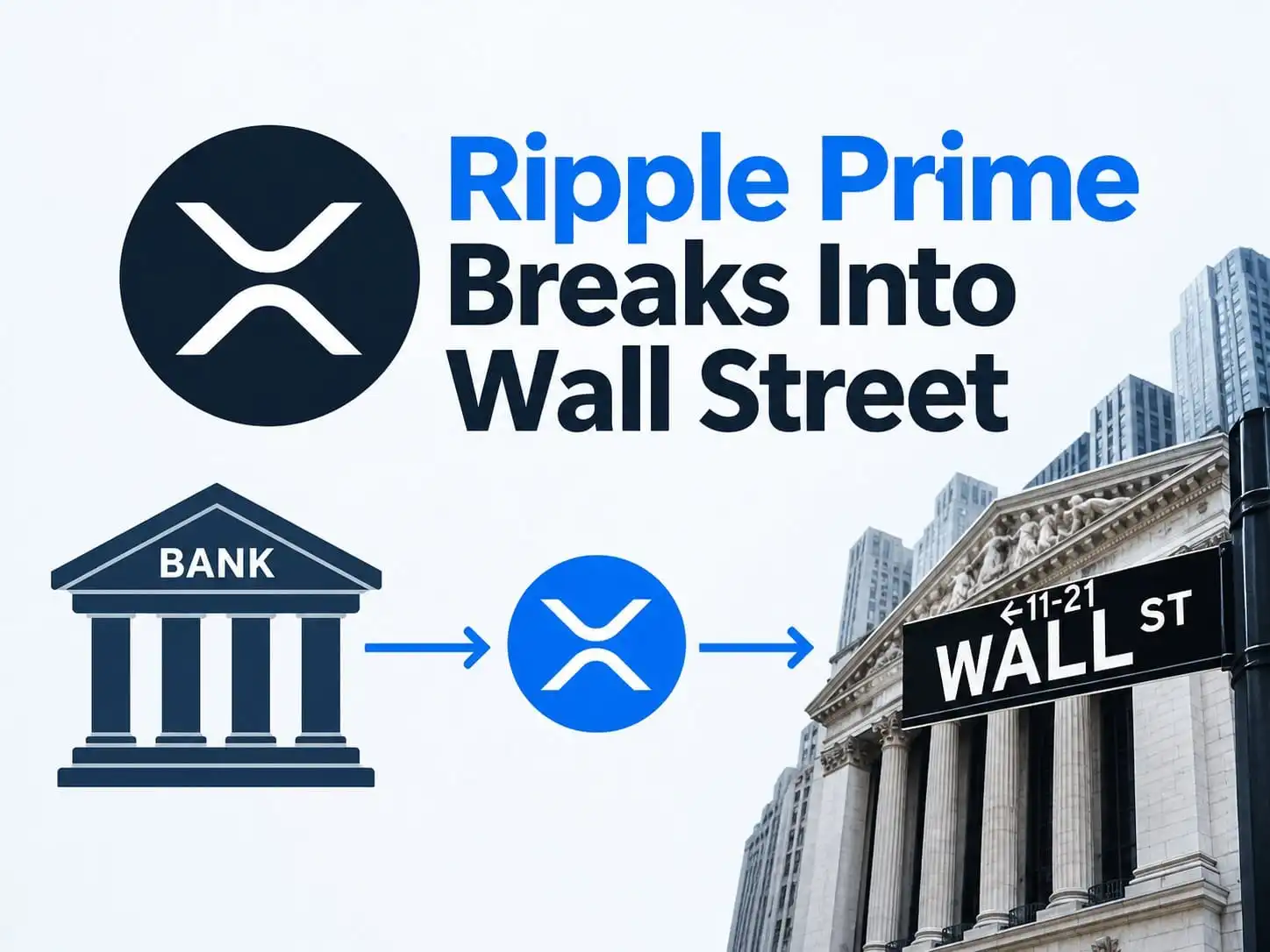
In Ripple news today, Ripple Prime is reportedly providing total-return-swap financing to leveraged exchange-traded fund (ETF) issuers. This marks its entry in a U.S. sector that Morningstar Direct data counts at 593 funds and more than $256 billion in assets.  The figure describes the ETFs‘ combined assets, not Ripple Prime’s financing book, revenue, or the amount of capital it has committed. The report, published on Friday, October 9, 2026, places the prime-brokerage business in a fee-generating segment of institutional finance.  This is not simply a crypto company adding another product. It is a nonbank firm entering a financing business traditionally dominated by banks, as tighter capital limits create room for competitors. Ripple acquired Hidden Road for $1.25 billion and now operates the brokerage as Ripple Prime; the reported transactions do not establish any role for XRP or RLUSD.  The move also fits Ripples broader effort to build fee-generating businesses beyond its digital-asset holdings, though the ETF financing report does not quantify its contribution. A large addressable pool of fund assets is not evidence of equivalent business volume for Ripple, and that distinction matters.  ???? Ripple Just Stole Wall Streets Most Lucrative Side Hustle and Banks Are Scrambling  Ripple Prime is now quietly financing leveraged ETFs

2 days agoIndustry

Coinbase rolls out 10x spot leverage, but blocks US retail from it

Coinbase plans to introduce spot borrowing with up to 10x leverage, letting eligible traders borrow against collateral to buy crypto on spot markets, but US customers who do not qualify as Eligible Contract Participants will be excluded.  Related Company Coinbase A leading digital currency company  The exchanges Oct. 7 announcement puts the rollout in the coming weeks. Access will depend on customer eligibility and selected jurisdictions, but Coinbase does not identify those countries, so availability cannot be assumed for every trader outside the US.  For US individuals, a 2021 statement by a commissioner at the CFTC, the US derivatives regulator, describes discretionary investments exceeding $10 million in aggregate, or exceeding $5 million when the transaction is for risk management purposes. That distinction puts the planned service beyond ordinary US retail access.  The restriction applies specifically to spot borrowing, and Coinbase says the product is offered by affiliates and is separate from Coinbase Financial Markets, which offers US derivatives.  For US customers, the margin lenders will be Coinbase Custody International Limited or Coinbase Credit, Inc., even though traders would manage spot borrowing and derivatives exposure through a shared margin portfolio.  Coinbase completed the Deribit migration on Oct. 2, setting the stage for Coinbases expansion, while the spot-margin

2 days agoIndustry
1
...
79
...
1000