Senate tax bill frees stablecoin spending while Bitcoin stays on IRS forms

A coffee bought with a qualifying dollar stablecoin would avoid gain-or-loss recognition under the ADAPT Act that Sen. Steve Daines released Sept. 30. The same coffee bought with Bitcoin would still trigger the cost-basis calculation and capital gain or loss reporting that attach to spending digital assets.  Related Asset Bitcoin #1 BTC · $84,111.59 24-hour change: unchanged 0.00% Loading price history… 24H Unchanged 0.00% 7D Down 0.34% 30D Up 7.90%  Bloomberg Law reported Sept. 25 that Daines had circulated a draft and expected to introduce it the next week. The 56-page text released Sept. 30 carries the title Aligning Digital Assets with Principles of Taxation Act and lists Sens. Cynthia Lummis, Bernie Moreno and Tim Scott of South Carolina as cosponsors.  Under current IRS guidance, paying for goods or services with digital assets in any amount is a disposition. Holders of personal or investment assets must calculate and report capital gain or loss, which depends on the assets value and cost basis.  Related Person Cynthia Lummis Member, U.S. Senator for Wyoming · U.S. Senate  A payment can produce a gain, a loss, or a break-even result, and the IRS uses a cup of coffee as its own example. A $5 Bitcoin purchase with an allocated

10-01Industry

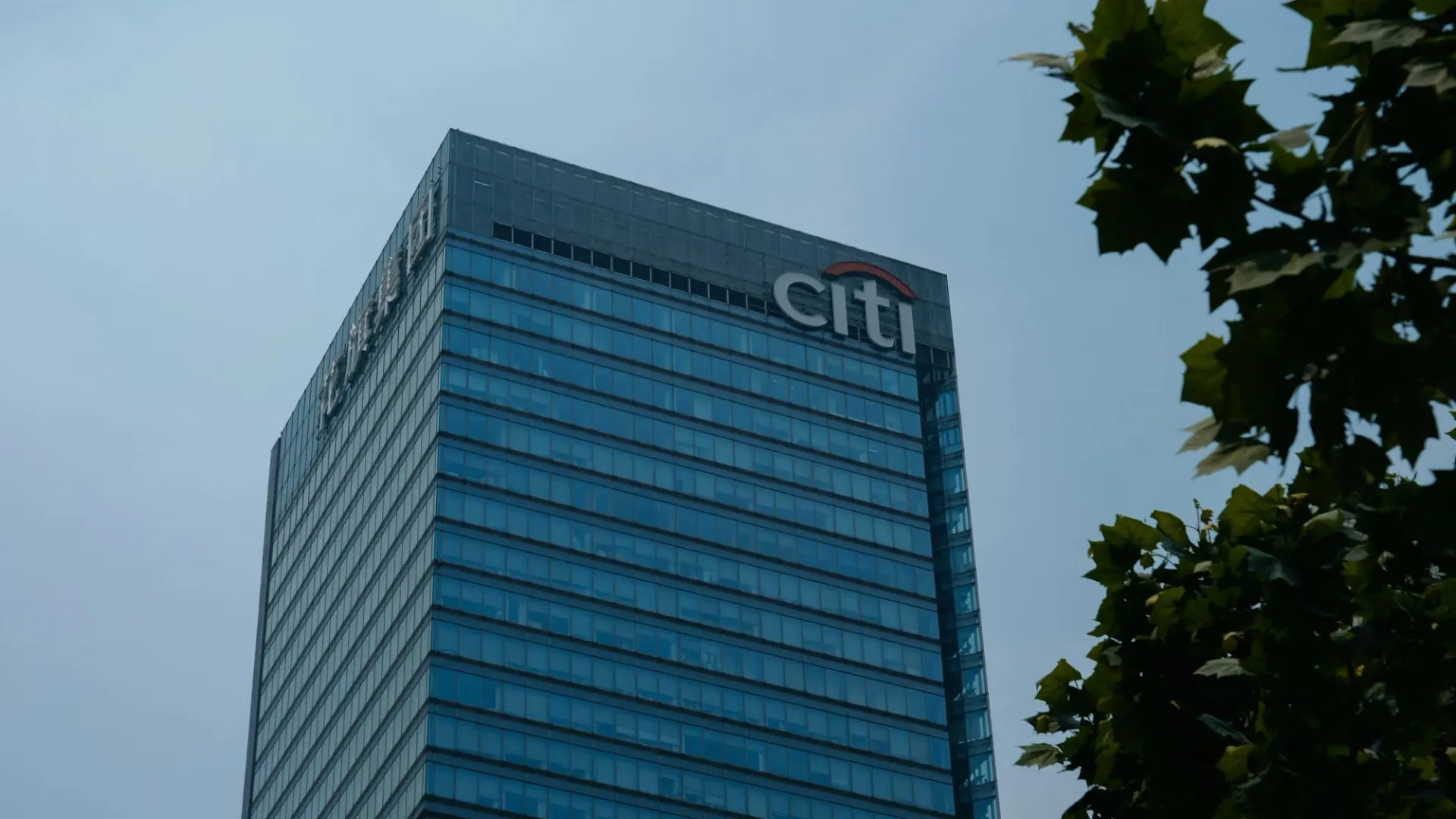
Citigroup raises 12-month bitcoin target to $113,000 as ETF inflows resume

SummaryCitigroup raised its 12-month bitcoin forecast to $113,000 from $82,000 and its ether target to $3,028 from $2,240, citing renewed exchange-traded fund inflows and favorable economic conditions.Citi expects cryptocurrency investment products to attract $5 billion over the next year as advisers and brokerages gradually increase bitcoin allocations.Bitcoin rose more than 10 percent after the Senate rejected the Clarity Act on Sept. 15, while subsequent SEC announcements and Treasury bond buybacks helped ease negative sentiment and revive the broader cryptocurrency market.  Financial services giant Citigroup (C) has raised its outlook for bitcoin and ether on account of exchange-traded fund (ETF) inflows resuming and supportive macroeconomic conditions, in a note on Wednesdy.  Citi raised its 12-month forecast for bitcoin from $82,000 to $113,000 and for ether from $2,240 to $3,028. The targets represent increases for BTC and ETH of around 35% and 12% respectively based on their current prices.  Citi expects “slower but stickier” inflows into products like ETFs as advisers and brokerages favour gradual increases in bitcoin allocations, forecasting $5 billion of inflow over the next 12 months.  U.S. spot bitcoin ETFs had experienced year-to-date net outflows of $5.8 billion as of July 13. This has been reversed in the months since though, with net

10-01Industry

PERPTools raises $8M with NEAR, Animoca Brands joining seed round

PERPTools has raised $8 million across two token funding rounds after its perpetual trading platform recorded $240 million in volume during private beta testing.  SummaryPERPTools raised $8 million across two rounds backed by DEXTools Ventures, Orderly Network, NEAR, Animoca Brands and other investors.The platform has recorded $240 million in private beta trading volume and already operates a perpetual DEX, AI trading marketplace and prediction product.PERPTools plans a token generation event in Q4 2026 as it expands trading execution within the DEXTools ecosystem.  According to an announcement shared with crypto.news, the team behind DEXTools raised $3 million in a pre seed round at a $30 million fully diluted valuation before securing another $5 million at an $80 million valuation.  DEXTools Ventures and Orderly Network led the first round, which closed in December 2025 after fundraising began a month earlier. BigBrain Holdings, NEAR, Animoca Brands, Sfermion and Shima Capital joined the seed round in early 2026.  PERPTools is building a decentralized perpetual futures platform that combines an exchange with autonomous AI trading agents and prediction markets. Its infrastructure uses Orderly Networks liquidity layer, while its connection with DEXTools gives the project access to an existing trading analytics platform used by millions of traders.  CEO Evgen Tokarev said

10-01Industry

Tokenized assets hit $34B as investors favor single stocks

Tokenized assets have climbed past $34 billion as new data shows investors are trading and using stocks, credit and cash products differently once they move onchain.  SummaryDune says tokenized real-world assets exceeded $34 billion as onchain markets developed distinct trading patterns.Single stocks represent 81% of tokenized equity supply, while ETFs account for the remaining 19%.Tokenized equities generated 93% of August spot trading despite remaining the smallest tracked asset class.Binance Research measured tokenized equities at $4.43 billion, up 390.4% during 2026 through September 15.SEC relief now allows qualifying venues to test tokenized U.S. stock trading under strict conditions.  Dune reported in its Q3 study, After Issuance: Reading the Onchain RWA Market, that the four main asset classes it tracked grew more than 140% over the year to $33.9 billion by Aug. 31, while an accompanying release put total tokenized RWA value at $34.5 billion. Cash-equivalent products accounted for close to half of the market, yet equities generated most secondary trading.  The report examined tokenized and synthetic exposure across equities, cash equivalents, credit and commodities. Dune tracked more than 2,600 products from over 250 issuers and platforms across 21 blockchains, using supply, holder, trading, lending and pricing data.  You might also like:  Base Cobalt upgrade puts new

10-01Industry

Chainalysis still faces Celsius case over $3.3B ‘audit’

Chainalysis has defeated most claims brought by Celsius Network‘s litigation administrator, but a U.S. judge has allowed an aiding-and-abetting case tied to the lender’s disputed $3.3 billion 2020 “audit” to continue.  The U.S. District Court for the Southern District of New York ruled on Sept. 29 that Count One of the complaint was sufficiently pleaded, while dismissing 15 consumer-protection claims brought against the blockchain analytics company. Twelve were dismissed with prejudice and cannot be refiled in their current form, while three can be amended by Oct. 20.  Judge Margaret Garnett stressed that the decision was made at the motion-to-dismiss stage. The court was required to accept well-pleaded allegations in the complaint as true for that purpose, meaning the ruling does not establish that Chainalysis committed the conduct alleged by Celsius.  Why the $3.3B Celsius ‘audit’ claim survived  The remaining claim accuses Chainalysis of aiding and abetting alleged breaches of fiduciary duty by Celsius insiders. The Blockchain Recovery Investment Consortium, which acts as litigation administrator for the collapsed lender, is pursuing the claim on behalf of Celsius.  The court said the complaint adequately alleged that Chainalysis knew a December 2020 press release contained false statements about Celsiuss assets under management and actively participated in spreading them.  Among

10-01Industry

Ethereum is preparing a 200 million gas push as its Layer 1 scaling strategy accelerates

Ethereum validators face a configuration choice next week that could determine how aggressively the network tests its next major scaling push.  Related Asset Ethereum #2 ETH · $2,681.26 24-hour change: down 0.01% Loading price history… 24H Down 0.01% 7D Down 0.04% 30D Up 9.42%  The Glamsterdam upgrade is scheduled to activate on the Sepolia testnet on Oct. 6 at 13:53:36 UTC, bringing changes designed to increase Ethereums execution capacity. Node operators must update both execution and consensus clients before the fork, while stakers must also upgrade their beacon node and validator software.  But simply installing compatible software will not necessarily move Sepolia toward the 200 million gas preference scheduled for the test.  Prysm 7.2.0 and Teku 26.9.1 both support Glamsterdam but will continue using a 60 million gas preference after activation unless validators explicitly change their settings, according to the Ethereum Foundation. Prysm operators must use version 2 proposer settings or the keymanager API, while Teku validators can override the default through their validator configuration.  Related Company Ethereum Foundation Promotes and supports the Ethereum platform  The distinction turns Sepolia into a coordination test for Ethereums effort to substantially expand Layer 1 capacity.  A higher block gas limit allows more aggregate computation to fit into each block, creating

10-01Industry

Why is Midnight price up 22% as privacy demand grows?

Midnight price has jumped more than 22% in 24 hours to around $0.044 as renewed attention on blockchain privacy, institutional use cases and Midnights enterprise partnerships pushed NIGHT toward its strongest levels in months.  SummaryMidnight price jumped more than 22% in 24 hours while weekly gains reached roughly 84%.WallStreetBets founder Jaime Rogozinski argued institutions need privacy when moving large amounts of capital onchain.Google Cloud operates Midnight infrastructure while Monument Bank is testing tokenized deposits on the network.Midnight price trades above its upper Bollinger Band as volatility and bullish MACD momentum expand.Midnights immediate resistance sits near $0.045, while $0.038 remains an important pullback reference price level.  CoinGecko shows NIGHT trading near $0.044 at the latest reading, with the token up roughly 84% over seven days and carrying a market capitalization around $727 million. Trading volume has climbed above $120 million during the same period.  The rally accelerated after WallStreetBets founder Jaime Rogozinski argued that privacy could become increasingly important as institutions move larger amounts of capital onchain. His comments represent a market view, not evidence that institutions are currently buying NIGHT.  You might also like:  Midnight price targets June resistance after 17% surge  Why is Midnight price rising?  Rogozinskis argument centers on the transparency of public blockchains. Large

10-01Industry

Crypto loses $768M in worst hack month of 2026

Crypto hacks have caused more than $766 million in gross losses during September, making it the costliest month of 2026 as the Bitget and Liquid Network incidents dominated the total.  PeckShield reported 55 major security incidents with approximately $766.5 million stolen during the month, while CertiK counted 97 incidents and put losses at $768.4 million. The firms use different tracking methods and did not publish identical incident counts, but their estimates of total stolen value were separated by less than $2 million.  September‘s figure was far above August. PeckShield had counted 50 major attacks worth roughly $136.3 million during August, according to crypto.news coverage of the previous monthly hack report. CertiK’s dashboard placed August losses at $220.3 million under its own methodology.  Bitget accounted for the largest September loss  Bitgets Sept. 24 breach was the biggest single incident included in the September total. The exchange confirmed that approximately $387.5 million in crypto reached attacker-controlled addresses after investigators expanded an initial estimate of $351.6 million.  The breach affected portions of Bitgets hot and warm wallet infrastructure across Ethereum and other EVM networks, XRP Ledger, Zcash and Tron. Assets involved included ETH, XRP, USDT, USDC, ZEC, BNB, AVAX and TRX. Bitget said its cold wallets and private

10-01Industry

Ripple quietly made Brazil the center of its XRPL tokenization push

Ripples Brazilian foothold spans cross-border payments and securities records in a country Chainalysis ranked first for grassroots crypto adoption.  Related Company Ripple Financial technology and enterprise blockchain company  Ripple and CSD BR, a regulated financial market infrastructure operator, announced a first phase on Sept. 29 to mirror ownership records for BTG Pactual investment fund shares on the XRP Ledger (XRPL). CSD BRs systems will remain the official record for registration, deposit, and settlement.  The announcement follows a Sept. 28 interview in which RippleX executive Markus Infanger told Estadãos E-Investidor that about $2.7 billion of the $6.7 billion in tokenized real-world financial assets he counted on XRPL was in Brazil.  Related Company Chainalysis Blockchain detective  That puts roughly 40% of the reported asset value in one country, although the measure reflects assets rather than payment activity.  Related Asset XRP XRP · $1.49 24-hour change: down 1.38%  Together, the developments show how Ripples years of expansion have connected it to several parts of Brazils financial system. The opportunity spans institutions moving money, platforms distributing stablecoins, and firms managing investment assets, with different measures of success for each.  Ripple was building there before the ranking  Ripple opened its Brazilian office in 2019 and announced XRP-enabled payments with Travelex Bank in August 2022.

10-01Industry

MetaMask Exits Lido Validators Amid Infrastructure ‘Security Incident’

In briefMetaMask is responding to an “ongoing security incident” affecting part of its infrastructure.It is exiting the Ethereum validators it operates in the Lido protocol as a precaution, and has not said whether others are affected.Lido says no action is required from stETH holders, and that returning ETH may take up to 45 days.  MetaMask is responding to an “ongoing security incident” affecting part of its infrastructure and has begun pulling its Ethereum validators out of the Lido staking protocol as a precaution, the companies said on Wednesday.  The wallet developer said it had identified “no immediate threat to MetaMask wallets,” and that it was addressing and remediating the issue internally alongside external partners and security advisors. It is exiting affected validators within its non-custodial staking operations, working with clients and partners.  Security Update: We are responding to a security incident affecting part of our infrastructure.  At this time, we have identified no immediate threat to MetaMask wallets.  As a precaution, we are proactively exiting affected validators within our non-custodial staking operations,…  MetaMask Staking, previously Consensys Staking, runs validators on Lido, the largest liquid staking protocol on Ethereum. Lido disclosed the exits in a security notice posted to its governance forum on Wednesday, describing the cause

10-01Industry
1
...
4951
...
1000