Bitcoin Hit by Another Blockchain Reorg

Bitcoin experienced another small blockchain reorganization on Sept. 11.  The latest incident occurred at block height 966,500. Two different mining pools produced valid competing blocks built on the same parent block.  SpiderPools version was treated as the tip of the Bitcoin blockchain after reaching Galaxy Researchs node. However, AntPool had independently produced another valid block at the same height. The aforementioned block ended up becoming part of the canonical chain.  It is worth noting that there was nothing wrong with the Bitcoin network. There was no consensus bug or successful attack. Short-lived competing blocks are completely normal despite the fact that the word “reorganization” might seem scary.  What actually happened?  According to Galaxy, AntPools ultimately successful block 966,500 had a timestamp of 11:30:30 UTC and contained 4,359 transactions. SpiderPool also produced a valid block 966,500.  Galaxys node saw that block first. Hence, from the perspective of that particular node, SpiderPool temporarily represented the head of the blockchain.  This is possible because Bitcoin blocks do not reach every computer on the network simultaneously. A miner in one part of the network might therefore see SpiderPools block first. Meanwhile, another miner might already be working from AntPools competing block.  Notably, Galaxys node was initially unaware that there were two versions

09-12Industry

SEC tokenized stock plan targets the register, not the token: Bitget analyst

The SEC has proposed a 60-day rulemaking process to modernize transfer-agent systems for blockchain records as offshore demand for tokenized stocks grows.  SummarySEC rules would permit transfer agents to use blockchain-based systems for securities records.The proposal does not make tokens legal shares or grant holders shareholder rights.Bitget recorded $1.16 billion in tokenized-stock volume from June 2 to July 19.Shared ownership records remain necessary for US and offshore products to become interchangeable.  Bitget Research Chief Analyst Ryan Lee told crypto.news that the SECs proposal addresses a part of tokenized stock markets that has received less attention than trading venues: the official record showing who legally owns each share.  Most tokenized stock products available outside the United States give investors price exposure through a synthetic or custodial structure, Lee said. Under such arrangements, a platform or custodian holds the underlying security, while the investor owns a token carrying a claim against that intermediary.  “The key difference is how ownership is recorded, not the token itself,” Lee said.  In the traditional US market, registered transfer agents maintain issuer records, process ownership changes, and help manage corporate actions. Connecting a token to an authoritative transfer-agent register could allow legal ownership to appear on the same official record used for

09-12Industry

OpenAI Asks Congress Whether an AI Slowdown Would Be Legal

In briefOpenAI has asked lawmakers whether rival AI developers could legally coordinate a slowdown, according to WIRED.Experts say funding and competitive pressures discourage companies from slowing development independently.A bill in Congress would protect certain agreements to restrict AI development to address security risks.  OpenAI has asked members of Congress whether rival AI companies could legally agree to slow development, as its chief scientist urges the industry to establish shared safety standards.  According to WIRED, which cited people close to the company, OpenAI asked lawmakers in recent weeks whether an agreement among AI companies to slow development could violate antitrust laws.  Myriad: SPY high in September? Click to make your prediction.  The outreach to lawmakers follows OpenAI chief scientist Jakub Pachockis call for voluntary slowdowns until developers can better demonstrate their systems are safe. But companies face pressure to keep advancing even when their own researchers have concerns.  “Commercial and geopolitical competition in the AI space is incredibly intense, leading to a concerning dynamic where companies are incentivized to release products before their risks are fully understood,” Miranda Bogen, chief technologist at the Center for Democracy and Technology, told Decrypt.  “Even when internal staff knows more research and testing is needed, their companies are facing immense pressure

09-12Industry

Crypto exchange recovery rules split NES holders into winners and losers after $286M exploit fallout

Nesas NES token returned to trading on Binance Alpha and regained Ethereum funding on Kraken on Sept. 10 after venue-specific interruptions tied to an Aug. 24 token-contract security incident.  The restorations are not a network-wide relaunch or a single recovery plan. Binance Alpha is using two snapshots to separate eligible 1:1 swaps from refunds on its platform. Kraken said NES covered by its funding incident would migrate 1:1 to a new Ethereum contract, while BNB-chain funding would remain disabled.  That distinction matters beyond the two exchanges: neither notice gives a universal migration process for NES held in a private wallet.  Related Company Binance Global crypto exchange  What Binance and Kraken users need to do  On Binance Alpha,Binance said users who held NES before Aug. 24 at 14:51 UTC must also have held an eligible portion when trading was suspended on Sept. 5 at 04:00 UTC to receive the 1:1 swap for that portion.  Related Asset Ethereum ETH · $2,546.07 24-hour change: up 3.50%  Additional NES acquired after the Aug. 24 cutoff is excluded from the 1:1 swap and is subject to separate refund treatment. Binance said users with eligible net purchases during the specified window would receive an email with refund details within seven business days. The

09-12Industry

Zoomex Highlights Copy Trading Hub As ZWTC 2026 Championship Opens

Zoomex has launched the Zoomex World Trading Championship 2026 (ZWTC 2026) on September 10, bringing a team-based competition format to its platform.  Alongside it, the exchange is spotlighting its Copy Trading Hub, a feature built around one-click execution, published trader performance data, and rule-based profit sharing.  A team format puts copy trading in context  ZWTC 2026 returns for its third year with a prize pool of up to 5,000,000 USDT and three participation areas: a Team Competition, a Solo Battle, and a Rewards Zone. Participants can compete through crypto perpetual contracts, stock contracts, AI-powered trading challenges, team performance leaderboards, and interactive reward activities.  Sponsored  Sponsored  The team structure is what connects the championship to the Copy Trading Hub. Where the Solo Battle rewards individual positioning, the Team Competition asks participants to think about collective performance, leaderboard standings, and how a group of traders operating under shared visibility performs against other groups. That is the same set of mechanics the Copy Trading Hub has been built around since launch.  The hub covers both Futures and Grid copy trading, with Futures positioned as the primary offering. It reflects Zoomexs broader approach: user-friendly design, transparent balance and rule mechanisms, and published terms governing how copied trades are executed and settled.  Easy

09-12Industry

Russia Links Regulated Crypto Accounts to Tax IDs—What Users Need to Know

Russian crypto users must link their Tax Identification numbers to regulated accounts.Crypto service providers in Russia must report user data and high-value transactions.Self-custody crypto users in Russia face severe structural barriers during transactions.  Russia has introduced a new law that requires crypto users to provide a Taxpayer Identification Number (TIN) before opening an account. Vlada Gracheva, advisor to the Director of Rosfinmonitoring, stated this during a recent announcement, noting that the new rule is part of the governments fight against money laundering.  Gracheva explained that clients TIN is becoming a new mandatory identifier for ensuring the trans[arency of crypto transactions. It is a 12-digit number assigned to Russian citizens and used throughout the federation. Beyond the cryptocurrency ecosystem, the Russian government also plans to extend the TIN requirement to regular bank accounts by 2027.  Increased Monitoring of Russias Crypto Ecosystem  Introducing a mandatory TIN requirement for regulated crypto account access in Russia will transform the regions crypto environment from an anonymous retail ecosystem into a strictly monitored, tax-linked industry. It will also affect how users access, open, and maintain regulated cryptocurrency accounts.  Under the new law, crypto users will no longer register or access their accounts unless they fulfill the full, bank-grade Know Your Customer

09-12Industry

Coinbase, Moov Bring Stablecoins to 1,000+ Banks

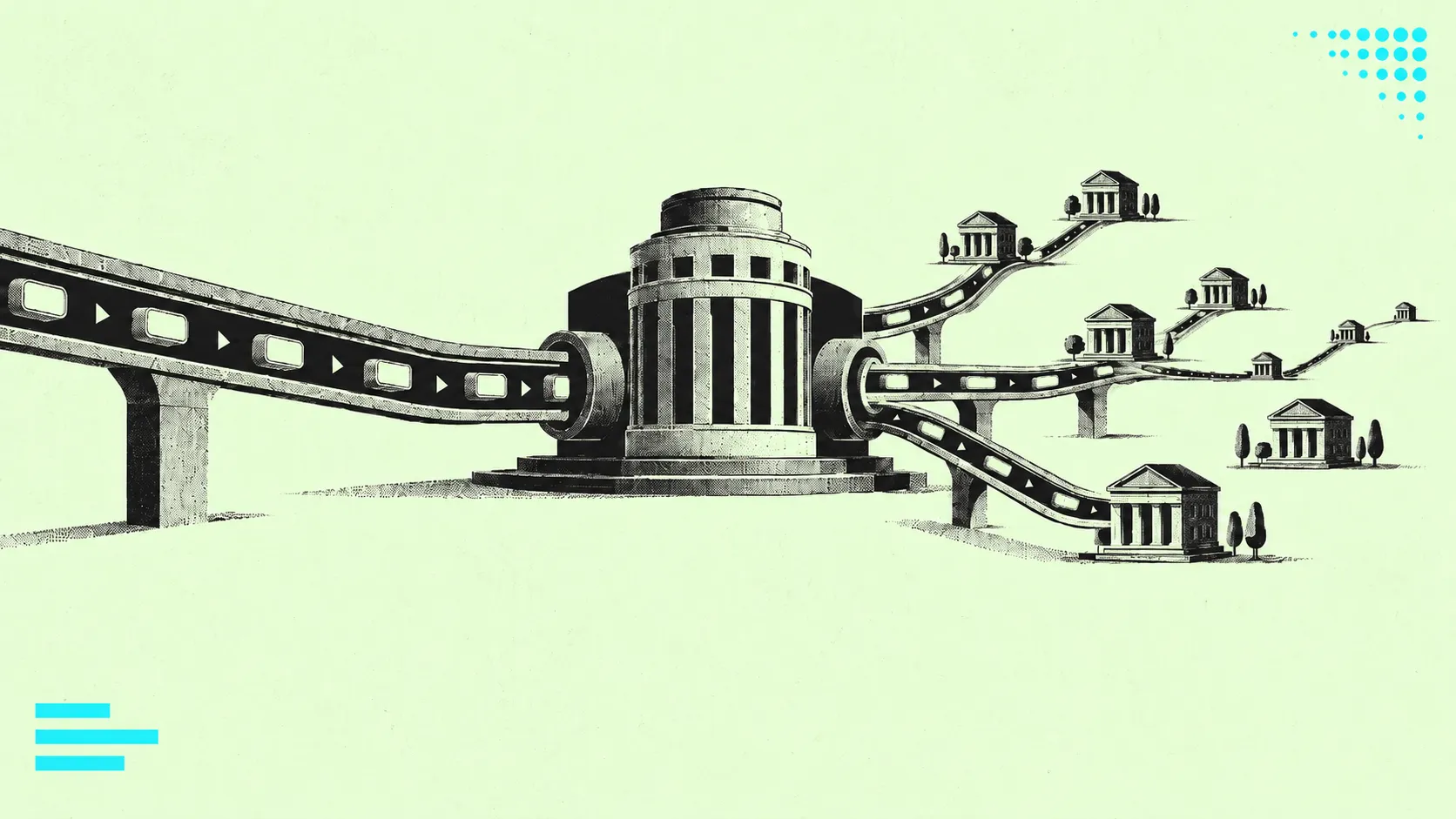
Coinbase and Moov will extend stablecoin services to 1,000+ community banks.The integration supports payments, settlement, payouts and real-time funding.Moov will connect Coinbases infrastructure with existing banking payment systems.  Coinbase has partnered with payments infrastructure provider Moov to bring stablecoin payment services to more than 1,000 U.S. community banks and credit unions. The integration will provide payment acceptance, settlement, and real-time funding through existing financial technology systems.  Coinbase and Moov Expand Stablecoin Access  The partnership combines Coinbase‘s regulated digital asset infrastructure with Moov’s established payments platform serving community financial institutions nationwide. This approach allows smaller banks to offer stablecoin services without developing separate cryptocurrency technology stacks.  Moov will integrate Coinbases Payments API and CDP Custodial Wallet accounts into its existing platform. The setup will support consumer stablecoin payments, merchant acceptance, settlement, and payouts for participating institutions.  For business and merchant transactions, Coinbase will also provide fully disclosed custodial accounts through the integrated infrastructure. Consequently, banks can access stablecoin capabilities while continuing to manage customer relationships through their existing systems.  Discover more  News  Compare Exchange Rates  Track Stocks Bonds  Coinbase Vice Chair Ryan VanGrack said community banks and credit unions have already seen customers use digital assets. The partnership aims to provide regulated infrastructure directly through systems these institutions already operate.  Moov CEO

09-12Industry

Dogecoin News: Bitwise Set to Close Dogecoin ETF in Less Than a Year

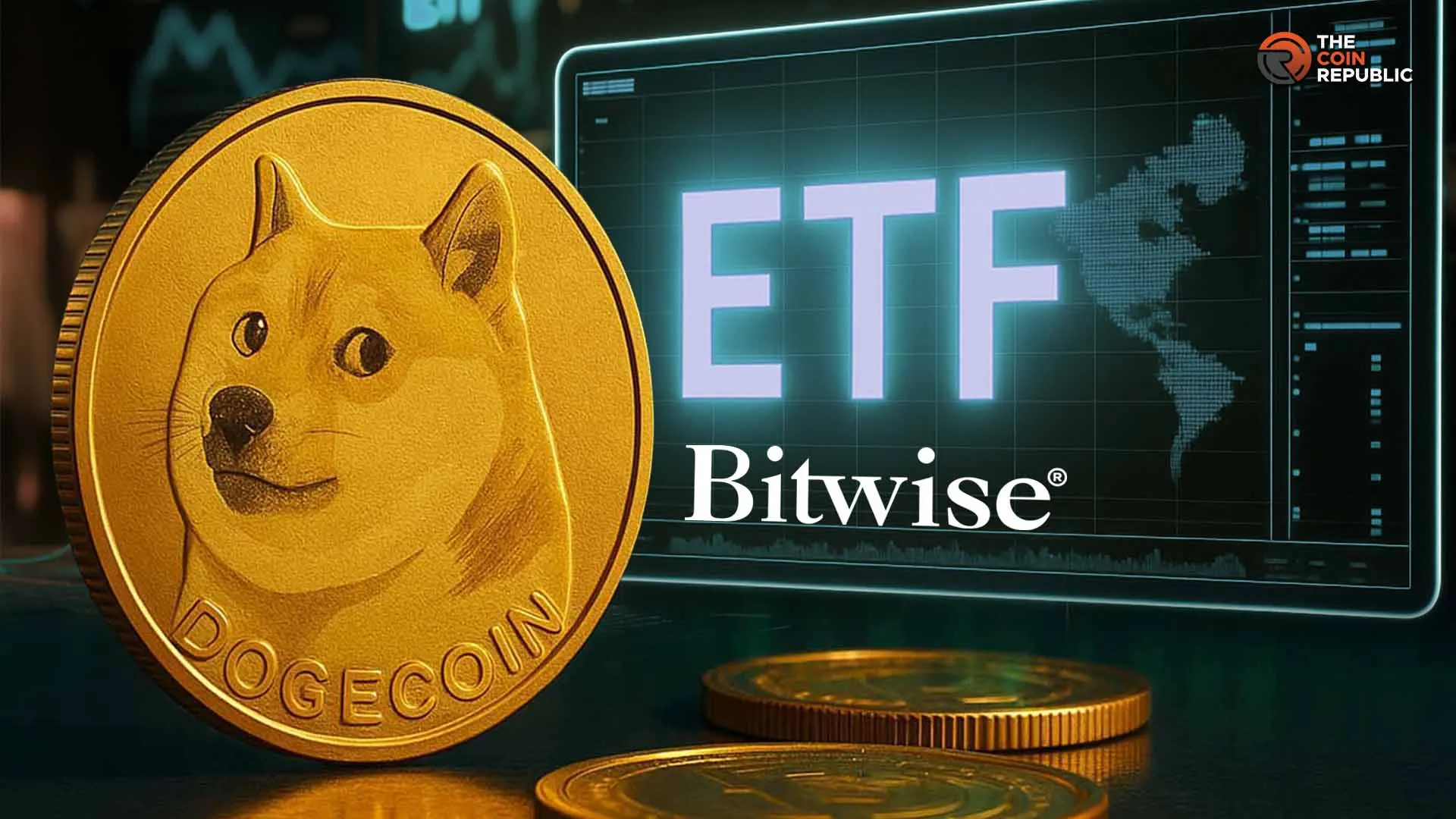
Key Insights:According to the latest Dogecoin news, Bitwise will liquidate and close its Dogecoin ETF (BWOW), with final trading on NYSE Arca set for October 14, 2026.Shareholders will receive the funds net asset value in cash on October 22, following the liquidation.Dogecoin remains active in the market, trading near $0.084, while recent developments include Solana integration and technical resistance around $0.10.  Bitwise Investment Advisers announced on Sept. 10, 2026, that it will liquidate and close the Bitwise Dogecoin ETF (NYSE: BWOW) in October 2026. The fund manager, based in San Francisco, noted the move was part of its efforts to “optimize their product range to evolve their investors needs.”  The exit will be a gradual one for BWOW. The ETF will be last traded on NYSE Arca on Wednesday, Oct. 14, 2026. After that, DOGE holdings will be converted to cash, and the fund will cease operations.  Remaining shareholders will receive the funds net asset value in cash on Oct. 22, 2026, with no action required on their part.  Dogecoin News: ETF Liquidation Timeline  Bitwise laid out the timeline in its Sept. 10 press release. BWOW‘s final trading day is Oct. 14, after which the fund will wind down. New share creations will stop before

09-12Industry

Tokenized stocks expand access, but what do investors legally own? Tessera PE founder explains

Tokenized stock transfers have climbed to $29.5 billion as new products extend market access, but Tessera PE founder Chan Ahn says investors could receive anything from direct share ownership to a contractual claim carrying no shareholder rights.  SummaryTokenized stocks can represent direct shares, custodial claims, or synthetic contracts with different legal rights.Company rules, securities laws, and underwriter lock-ups can limit transfers even when tokens move on-chain.Pre-IPO tokens lack the public prices and company disclosures needed for dependable secondary markets.Tokenizing private credit may extend access without making complex AI infrastructure risks easier to value.U.S. investors remain excluded from several tokenized stock products offered under Regulation S.  Tessera PE founder Chan Ahn told crypto.news that similar marketing terms often conceal substantial differences in what token holders own, how they receive dividends, and whether they can vote on company matters.  Ahn said he had not previously published an analysis of Securitize and based his comments about its model on publicly available information. He also separated Securitizes reported NYSE listing, the tokenization of its own stock, and its ability to support offerings for other issuers, saying each involves a different legal question.  Tokenized stocks can give investors three different claims  Under Ahns reading of a January SEC staff statement,

09-12Industry

Robinhood Chain Revenue Falls 83% From Its Peak While Trading Volume Sets Records

The chain kept $943,728 on Sept. 10 against $5.44 million on Sept. 4, its lowest daily take since Aug. 29. Transactions were flat and decentralized exchange volume over the week rose 27%. The average transaction cost $0.077 in gas, against $0.43 at the peak.  Robinhood Chain earned $943,728 in gas revenue on Sept. 10, down 82.6% from the $5.44 million it took on Sept. 4, DefiLlama data shows. Trading activity on the network did not fall with it.  Gas revenue tracks demand for blockspace. Robinhood Chain is clearing roughly the same number of transactions it cleared at the peak, at a fraction of the price, after the early-September congestion that pushed its base fee more than 20 times above its floor eased.  Sept. 4 is the networks record day for both fees and revenue, at $6.04 million and $5.44 million. By Sept. 10 the fee line was $1.05 million and the revenue line $943,728, the lowest daily figure since Aug. 29.  But activity doesn‘t track revenue decline. Decentralized exchange volume was $1.87 billion on Sept. 10 against $1.89 billion on Sept. 4. DEX volume over the seven days through Sept. 10 came to $12.34 billion, up 26.5% from $9.76 billion the previous week, and

09-12Industry
1
...
276278
...
1000