U.S. court orders seizure of $212K crypto tied to North Korean IT workers

A U.S. federal court has ordered the forfeiture of roughly $212,700 in stablecoins linked to wages earned by North Korean IT workers, giving the Justice Department a partial victory in its attempt to seize more than $7.74 million in digital assets tied to an alleged sanctions evasion network.  NK News reported on Sept. 7 that U.S. District Judge Rudolph Contreras ruled that funds seized from a crypto wallet beginning with “0x81c4” should be forfeited to the U.S. government. The Sept. 3 ruling granted part of the Justice Departments request for default judgment while rejecting its attempt to immediately take control of other assets included in the case.  Prosecutors said the wallet received approximately 158,123 USDC from at least 10 addresses used to receive payments for North Korean IT workers and another 54,574 USDT from at least four worker payment addresses. The two dollar-pegged stablecoins had a combined face value of roughly $212,700.  The government argued that the funds were proceeds of a scheme in which North Korean workers obtained overseas IT jobs, concealed their identities and locations, and routed their earnings through cryptocurrency before money was ultimately sent toward North Korea.  U.S. court approves $212,700 North Korea crypto forfeiture  Contreras found that prosecutors had provided

09-08Industry

British man recovers £3.3M in Bitcoin lost for over a decade

A British Bitcoin investor has recovered 61 BTC worth roughly £3.3 million after losing access to the coins for more than 12 years following the collapse of early UK exchange Intersango.  LBC reported that the investor, identified only as Chris, regained control of the Bitcoin this year after lawyers gathered documents proving that the assets held through the defunct exchange belonged to him.  Chris originally invested £1,500 in Bitcoin in 2011 after a friend persuaded him to consider the cryptocurrency, which traded at £2.94 per coin when he made his first purchases. His holdings had risen to roughly £4,000 by the time he lost access.  The recovery returned all 61 BTC to Chris, according to CEL Solicitors, which handled the claim. The firm said he instructed its lawyers in January and the case was settled on May 28, roughly four months later.  Crypto.news previously reported that the recovered holdings were valued at approximately $4.5 million, turning an investment made during Bitcoins early years into a multimillion-dollar holding.  Intersango collapse left Bitcoin inaccessible for years  Chris bought the cryptocurrency through Britcoin, one of the earliest Bitcoin exchanges serving UK customers. The platform later became Intersango and attracted thousands of users during the early years of the cryptocurrency

09-08Industry

Germanys Bitcoin tax fight heats up after AfD election victory

Germany‘s debate over Bitcoin taxation has gained a new political dimension after the Alternative for Germany won nearly 44% of the vote in Saxony-Anhalt, months after the party opposed plans to remove the country’s one-year crypto tax exemption.  Reuters reported that the AfD secured 39 of the 83 seats in the state parliament, leaving the party three seats short of an outright majority but well ahead of Chancellor Friedrich Merzs Christian Democratic Union.  The AfD received 43.8% of party-list votes and 44.3% of first votes across 2,661 polling districts. The CDU fell to 17.2% of party-list votes, almost 20 percentage points below its result in the 2021 election, while voter turnout reached 77.8%, up 17.5 percentage points.  The state election does not give the AfD additional seats in the Bundestag or allow Saxony-Anhalt to change Germanys federal crypto tax rules. It does, however, give the party another political platform while the federal government prepares legislation that could change how long-term cryptocurrency gains are taxed from 2027.  AfD win strengthens a vocal opponent of Germanys Bitcoin tax plan  Merz ruled out cooperation with the AfD after the result, telling reporters that the election had shaken the CDU “to its very foundation,” Reuters reported.  AfD co-leader Tino Chrupalla

09-08Industry

Zcash rally draws criticism from F2Pool co-founder

F2Pool co-founder Chun Wang criticized Zcash on Sept. 8 as ZEC traded near $1,130 following a rally that carried the privacy coin into the cryptocurrency markets top ten.  Wang, who posts under the name Chun at @satofishi, called the move a “narrative bid.” He argued that Zcashs funding history, optional privacy model, governance disputes and recently disclosed Orchard vulnerability did not justify its valuation.  His comments are opinions rather than evidence of wrongdoing. Several underlying events are documented, but some of Wang‘s conclusions omit later changes to Zcash’s funding and privacy systems.  ZEC was trading around $1,130 when this report was prepared, down nearly 7% over 24 hours. CoinMarketCap placed its capitalization near $19 billion and ranked it tenth, while CoinGecko placed it ninth. Rankings can differ because platforms use different supply and asset-classification methods.  The token remained more than 2,300% higher than one year earlier, according to market data cited in coverage of Zcashs move above $1,000. Its rally accelerated after Grayscale converted its Zcash Trust into a U.S.-listed spot exchange-traded fund in August.  Six years ago, a Zcash team member wrote me and kept confusing EST and EDT. Communication went nowhere, I banned their entire company.  Six years later, this is still one of

09-08Industry

Sweden orders six crypto firms to pay $56M in additional taxes

Swedens tax authority has ordered six crypto companies operating in Boden to pay nearly 540 million Swedish kronor (approx. $56 million) in additional taxes after finding that the firms used business structures to obtain tax benefits they were not entitled to.  SummarySweden has ordered six crypto firms operating in Boden to pay nearly SEK 540 million in additional taxes.The tax agency said some companies concealed crypto mining activity to claim tax benefits they were not entitled to.Nine crypto companies have received tax adjustments totaling more than SEK 500 million between 2024 and 2026.Bikupan Datacenter has challenged its tax assessment and taken the dispute to Swedens Supreme Administrative Court.  Swedish public broadcaster SVT reported on Sept. 3 that the six companies accounted for most of the latest tax adjustments imposed on crypto businesses following a review by Skatteverket, the Swedish Tax Agency. The authority said some companies had structured their operations in ways that concealed crypto mining activity.  Patrik Lillqvist, head of intelligence at Skatteverket, said the arrangements were designed to secure tax advantages that would not have been available if the businesses had been classified as crypto miners.  “The companies that we have inspected often have a special arrangement to conceal that they are

09-08Industry

South Koreas KRW1 stablecoin taps LayerZero for cross-chain expansion

BDACS has selected LayerZeros Omnichain Fungible Token standard for its KRW1 stablecoin, giving the won-backed asset a unified cross-chain system as the company seeks to expand its use outside South Korea.  LayerZero said BDACS, South Koreas largest digital asset custodian by assets under custody, chose its OFT standard after reviewing options for making KRW1 natively interoperable across multiple blockchains.  @BDACSKorea has selected LayerZeros OFT standard to take KRW1, the first on-shore Korean won-backed stablecoin, cross-chain.  KRW1 is now the first Korean won-backed stablecoin natively transferrable across major DeFi ecosystems https://t.co/sSErebmg31 pic.twitter.com/LM4LDD8axF  — LayerZero (@LayerZero_Core) September 8, 2026  KRW1 already operates across several networks, including Ethereum, Avalanche and Circles Arc. BDACS said the separate deployments created friction when moving the stablecoin between networks, limiting its distribution and utility.  The new setup is designed to maintain one KRW1 supply across connected chains. When tokens move between networks, KRW1 will be debited on the source chain and credited on the destination chain, while LayerZeros Stargate application will handle transfers for users.  LayerZero gives KRW1 a unified cross-chain supply  LayerZero‘s OFT standard is already used for stablecoins including Tether’s USDT0, PayPal USD and Paxos-issued USDG.  The company said OFT currently facilitates 87% of cross-chain transfer volume and has processed $280 billion in lifetime

09-08Industry

Australia tightens crypto oversight with 45 removals

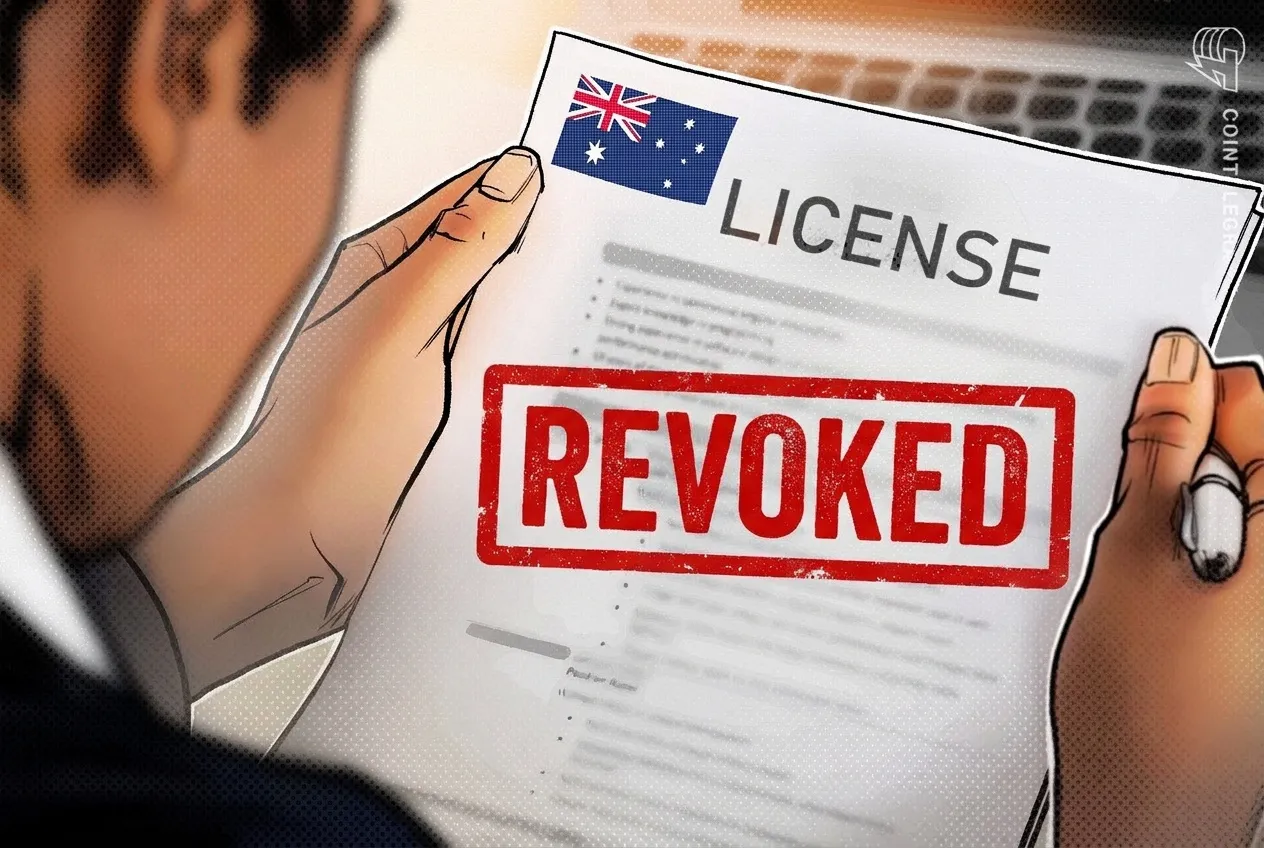
Australias financial intelligence regulator said on Sept. 7 that it canceled, suspended or refused to renew 45 crypto and remittance registrations during the past year.  The Australian Transaction Reports and Analysis Centre said the AUSTRAC registration actions removed affected businesses from its official registers. The agency did not identify all 45 companies or disclose how many were virtual asset service providers rather than remittance businesses.  According to its statement, AUSTRAC targeted businesses that were inactive, insolvent or unable to begin or continue operating. Other cases involved incorrect registrations, failures to report material changes or elevated money laundering and terrorism financing risks.  AUSTRAC CEO Brendan Thomas said companies with canceled registrations can no longer provide the relevant services. The regulator also referred people associated with some businesses to Australian and overseas law enforcement or regulatory partners.  “The rapid movement of money across borders can create some of the highest ML/TF risks,” Thomas said.  The action represents an administrative and supervisory response rather than a finding that all 45 businesses committed financial crimes. AUSTRACs stated reasons cover conditions ranging from inactivity and insolvency to alleged financial crime exposure.  AUSTRAC canceled GetCoins after customer complaints  AUSTRAC identified BA Digital Ventures, which traded as GetCoins, as one company affected by the

09-08Industry

Abraxas Capital buys $32M ETH to hedge $353M Hyperliquid short

Abraxas Capital has bought another 13,000 ETH worth $32.39 million in the spot market to hedge part of a 141,180 ETH short position on Hyperliquid valued at $353.27 million.  Lookonchain said on Sept. 8 that Abraxas Capital purchased the additional Ether while keeping its much larger short position open on the decentralized derivatives platform. The blockchain analytics account described the transaction as another spot purchase made specifically to hedge the short.  Abraxas Capital bought another 13,000 $ETH ($32.39M) spot to hedge its 141,180 $ETH ($353.27M) short on Hyperliquid.https://t.co/qwAXChjYvp pic.twitter.com/q5fIew30RS  — Lookonchain (@lookonchain) September 8, 2026  At the values provided by Lookonchain, the latest purchase was made at an implied price of roughly $2,491 per ETH. The 13,000 ETH position equals just over 9% of the firms 141,180 ETH short when measured by the number of tokens.  Abraxas therefore remains heavily net short based solely on the positions disclosed by Lookonchain. Subtracting the latest 13,000 ETH spot hedge from the 141,180 ETH short leaves 128,180 ETH of net short exposure before considering any other holdings or positions controlled by the firm.  Abraxas Capital keeps $353 million ETH short open  Lookonchain valued the Hyperliquid short at approximately $353.27 million at the time of its post, compared with $32.39 million

09-08Industry

Bitcoin miner called $5.68 cost for 50 BTC a loss

A Bitcoin forum post published on Sept. 7, 2010, has resurfaced 16 years later after an early miner described a projected $5.68 electricity bill for mining a 50 BTC block as “a net loser.”  The calculation was genuine, but it did not mean that spending $5.68 guaranteed the miner a block. The figure represented an expected electricity cost based on the miner‘s computing power, Bitcoin’s difficulty and the average time needed to find a valid block.  The forum participant, using the name TTBit, measured a computer consuming 140 watts while producing about 2,200 kilohashes per second. A mining calculator estimated an average wait of 338.05 hours, or roughly 14 days and two hours.  Running a 140-watt machine for that period would consume approximately 47.33 kilowatt-hours. At $0.12 per kilowatt-hour, the electricity bill would be $5.68. The arithmetic in the original post is therefore consistent.  “It would cost me 47.327 Kwh to produce a block,” TTBit wrote, before calling the projected expense “a net loser.”  An Internet forum user 16 years ago measured their computers electricity use and estimated it would take approximately two weeks to produce a Bitcoin block. With the block mining subsidy then 50 bitcoin, their estimated electricity cost was $5.68, which they

09-08Industry

Australia says it removed 45 crypto, remittance registrations over the past year

Australias financial intelligence regulator said it canceled, suspended or refused to renew 45 crypto and remittance registrations over the past year as it intensified scrutiny of high-risk payment businesses.  On Monday, the Australian Transaction Reports and Analysis Centre (AUSTRAC) said the actions targeted providers that were inactive, insolvent or lacked the capacity to operate. It also cited failures to report material changes, incorrect registrations and cases presenting significant money laundering or terrorism financing risks.  AUSTRAC CEO Brendan Thomas said businesses whose registrations were canceled can no longer operate. He added that individuals connected to some businesses had been referred to Australian and overseas law enforcement or regulatory partners.  AUSTRAC highlighted BA Digital Ventures, which traded as GetCoins and had its virtual asset registration canceled in June following customer complaints. The regulator said GetCoins was allegedly exploited by organized cryptocurrency investment scams and that its cancellation, undertaken with the National Anti-Scam Centre, helped disrupt the activity.  The regulator did not name all 45 businesses or provide a breakdown between crypto and remittance providers. Its public VASP register lists recent actions involving GetCoins, Cryptolink, Self Custody, Jam Xchange and Coinsec Australia.  AUSTRAC has also opened an investigation into Western Union and suspended Cryptolinks crypto ATM network.

09-08Industry
1
...
250252
...
1000