Hyperliquid revenue hits $1.31B as HYPE burns rise - But theres ONE risk

Hyperliquids [HYPE] trading volume continues to drive growth in its HYPE burn mechanism, linking network usage directly to supply reduction. Weekly protocol revenue reached $13.48 million, while gross fees stood at $15.11 million.  Part of that revenue was used to remove 156.58K HYPE worth around $12.42 million. The overall trend indicates that there are increasing levels of larger revenue increases occurring over time.  Source: X  As such, cumulative revenue has now reached $1.31 billion. In addition to that 48.70 million HYPE, or approximately 4.87% of HYPEs total supply, has been removed.  The two metrics create an inverse relationship and show how users‘ desire to utilize Hyperliquid’s trading tools relates to the reduction of available HYPE.  Discover more  Choose POS Systems  Fintech  Compare Exchange Rates  USDC liquidity supports growth  The liquidity picture shows why Hyperliquid can sustain the trading activity behind its fee engine. DeFi TVL has climbed to $1.31 billion, adding 2.68% in 24 hours, while stablecoin liquidity remains much larger at $6.83 billion.  Although that pool fell 2.41% over seven days, USD Coin [USDC] still accounts for 98.31%, keeping trading liquidity concentrated. Traders are putting that capital to work, with $8.31 billion in daily perpetual volume and $339.25 million on DEXs.  Source: DeFiLlama  USDC holdings now stand at approximately $6.72 billion, slightly

09-18Industry

BitGo adds ex-Exodus executive as compliance chief

BitGo has appointed Alex Rozman as chief compliance officer effective Sept. 21, placing the former Exodus compliance executive in charge of enterprise compliance and financial crime programs as the NYSE-listed digital asset company expands its regulated institutional business.  SummaryBitGo appointed Alex Rozman chief compliance officer, effective September 21, to oversee global compliance programs.Rozman brings over 25 years of compliance, legal, risk, AML, and sanctions experience across finance.BitGo became publicly traded in January after listing on NYSE and securing federal trust-bank approval.BitGo reported 5,833 clients and $65.2 billion in assets on platform during second quarter 2026.BitGo acquired NYDIGs institutional trading business in August, expanding derivatives, financing, and execution capabilities globally.  BitGo said Rozman will lead engagement with regulators, examiners and banking authorities across the companys legal entities worldwide, covering a business that now spans federally regulated custody, trading, financing, stablecoin services and institutional settlement.  You might also like:  BitGo acquires NYDIG institutional trading business  Rozman takes over global compliance and financial crime work  Rozman joins BitGo from Exodus Movement, where he had served as chief compliance officer since May 2024. His career covers more than 25 years across legal, risk and compliance roles, with experience in anti-money laundering and sanctions programs for banking, financial-market infrastructure and digital

09-18Industry

XRPL’s new lending tool could lock up your XRP from minutes to decades

XRP Ledgers (XRPL) newest server release defines a future lending market in which depositors could commit assets to a vault for a fixed term and wait until a set redemption date to withdraw. For XRP holders, the design introduces a possible liquidity lock that can last from minutes to years.  Related Asset XRP #5 XRP · $1.32 24-hour change: up 1.16% Loading price history… 24H Up 1.16% 7D Down 1.52% 30D Up 32.00%  The XRP Ledger Foundation released xrpld 3.4.0 on Sept. 16 with LendingProtocolV1_1 code for closed-ended vaults and cash-basis accounting.  The first feature fixes the period during which deposited capital can fund loans, and the second recognizes interest when a borrower pays it.  Availability still depends on the amendment process and the rest of XRPLs lending stack. A live dashboard snapshot fetched Sept. 17 did not surface LendingProtocolV1_1 in the responding nodes feature feed or show a V1.1 activation countdown.  The same snapshot placed the base LendingProtocol amendment at 13 of 35 trusted-validator votes and SingleAssetVault at 16 of 35, below the displayed threshold of 28.  Single-asset vaults can use XRP, an issued trust-line token, or a Multi-Purpose Token. Any claim that the system will create lasting XRP demand therefore depends on later choices

09-18Industry

World Money launches in 150+ countries with Stripe

World has begun rolling out World Money across more than 150 countries on Sept. 17, combining stablecoin balances, global transfers, digital asset trading, Morpho-powered Earn programs and virtual accounts inside a self-custody financial app.  SummaryWorld Money is rolling out across more than 150 countries, with features varying by jurisdiction.Stripe powers the U.S. Apple Pay funding flow, converting supported funds into stablecoins within minutes.Morpho powers Earn programs for WLD, USDC, wrapped Ether, and wrapped Bitcoin in selected markets.Bridge converts U.S. virtual account deposits into USDC, while Lead Bank issues account details directly.World ID verification unlocks promotional Earn boosts, but rates and principal remain unguaranteed for users.  World said features and eligibility vary by country, meaning the 150-plus-country footprint does not represent uniform access to every payment, trading, virtual-account or Earn function. The company describes World Money as the financial counterpart to World ID, with existing World users able to carry their verification status into the new app.  You might also like:  World opens Solana prediction market to 1M users  World Money combines payments, stablecoins and investing  World Money supports stablecoin balances tied to eight currencies, according to the launch announcement. Users can hold supported dollar and local-currency stablecoins, track their portfolios, view transaction histories, set price alerts

09-18Industry

US sanctions Iran‘s BitBank, saying it processes ’Hormuz Safe Bitcoin payments

US authorities on Thursday announced sanctions against Iranian crypto exchange BitBank, accusing it of processing Bitcoin paid by ships transiting the Strait of Hormuz.  The US Department of the Treasurys Office of Foreign Assets Control said that as of June, the Hormuz Safe Marine Services Authority used BitBank to transfer payments it received to the Islamic Revolutionary Guard Corps. The Treasury alleged it is part of the architecture used by Iranian financier Babak Zanjani to move hundreds of millions of dollars in Bitcoin to the IRGC.  Treasury has previously alleged Hormuz Safe is part of an IRGC-backed scheme forcing vessels to buy maritime insurance for passage, including coverage against seizures by Iran itself.  “Today‘s designations of Iranian digital asset infrastructure make perfectly clear that efforts to finance the Iranian regime using cryptocurrencies are not beyond OFAC’s reach,” said US Treasury Secretary Scott Bessent.  The designation is the latest Treasury action aimed at isolating Iran from the international financial system, including through sanctions on digital asset exchanges.  The OFAC designations include BitBank, its developer Pishtaz Simorgh Electronic Trade Company and three associates of Zanjani, with the Treasury calling them “key components of the Iranian regimes digital assets-based sanctions evasion infrastructure.”  Cointelegraph reached out to BitBank for comment.  Iran‘s

09-18Industry

Bitcoin Faces $80,000 Ceiling as Fed and CLARITY Risks Mount

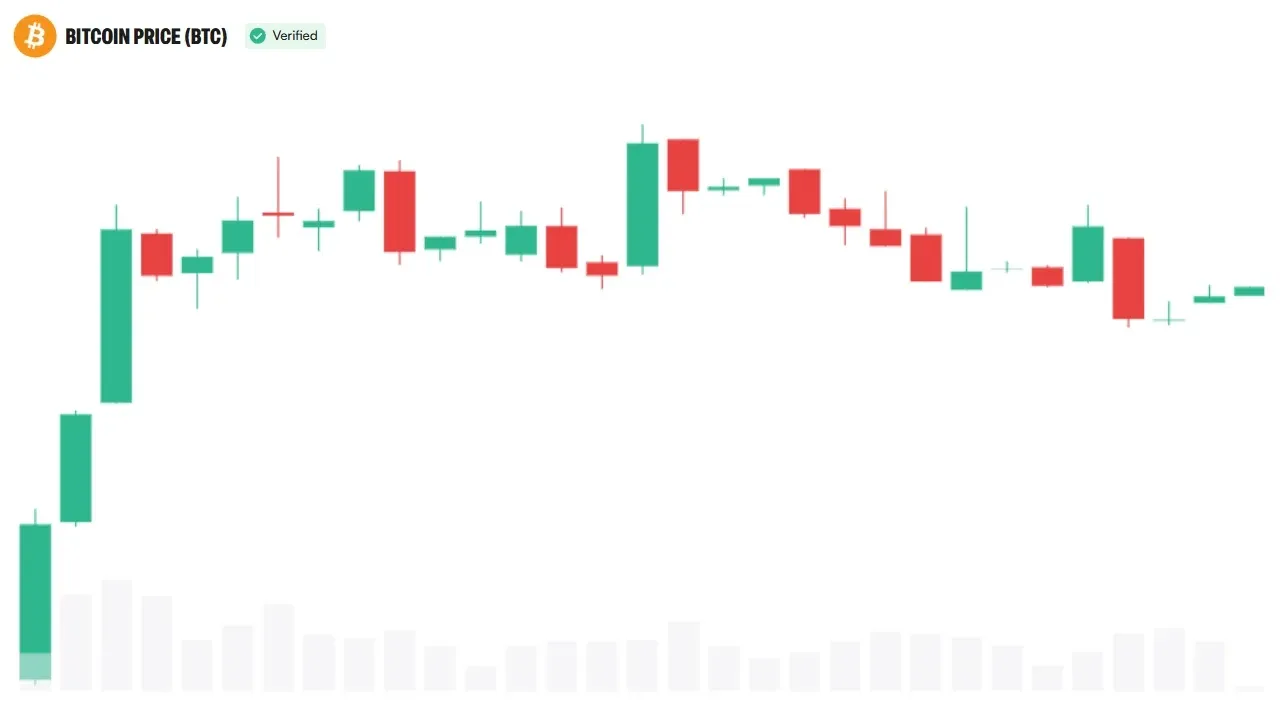
Bitcoin may struggle to break decisively above $80,000 as tighter U.S. monetary policy and the CLARITY Act setback weigh on near-term conditions. Coinshares sees both headwinds delaying a stronger crypto recovery.  Key TakeawaysCoinshares sees a sustained bitcoin move above $80,000 as unlikely.The Fed raised rates as policymakers kept a restrictive outlook.The CLARITY Act setback adds uncertainty, particularly for altcoins.  Bitcoins $80,000 Breakout Faces a Tougher Fed  Bitcoin faces a more difficult path above $80,000 after the Federal Reserve raised interest rates and signaled that monetary policy could remain restrictive longer than markets previously expected, according to James Butterfill, head of research at digital asset manager Coinshares. His Sept. 17 market assessment identified the Fed and the CLARITY Act setback as the two main obstacles to a stronger near-term crypto recovery.  The analyst argues that the more significant signal came from policymakers‘ rate projections rather than the increase itself. The Fed’s September projections put the median federal funds rate at 4.1% for both 2026 and 2027, compared with June projections of 3.8% and 3.6%, respectively. The Federal Reserves latest economic projections show a substantially higher expected rate path.  He said:  “This creates a difficult setup for bitcoin into year-end. In our view, a decisive break above US$80,000

09-18Industry

British Pound flatlines above 1.3350, UK Retail Sales data in focus

The GBP/USD pair trades on a flat note around 1.3360 during the early Asian trading hours on Friday. Traders continue to assess the latest interest rate decisions and policy cues from the US Federal Reserve (Fed) and the Bank of England (BoE). The UK August Retail Sales data will be published later on Friday.  The BoEs Monetary Policy Committee (MPC) voted 6-3 to hold the Bank Rate at 3.75% on Thursday, despite inflation rising well above its 2% target. However, policymakers warned a hike was becoming increasingly likely. The three dissenters voted to enact a hike of 25 basis points (bps) to 4.0%.  A hike of at least 25 bps is widely anticipated at its next meeting in November, according to LSEG data.  On the other hand, the U.S. Federal Reserve (Fed) announced a quarter-point hike on Wednesday, its first hike since 2023. Fed Chair Kevin Warsh said on Wednesday that “the plain fact is that inflation is too high and has been for too long.” “This summers inflation readings do not tell me that underlying trends have meaningfully improved,” he added.  Traders are now pricing in nearly a 53.1% probability of another US rate hike when the Fed meets next in October, compared

09-18Industry

From Kaiko to OpenZeppelin, S&P Global is quietly preparing for markets that never close

S&P Global agreed to acquire smart contract security firm OpenZeppelin, expanding its digital asset business into the technology underpinning tokenized finance.  On Sept. 17, the financial data and ratings company said that OpenZeppelin will continue operating under its own name as a separate business unit. Chief Executive Demian Brener will remain in charge and report to S&P Global Ratings President Yann Le Pallec.  Financial terms were not disclosed, and the transaction remains subject to closing conditions.  The deal gives S&P direct exposure to the security layer behind stablecoins, tokenized funds, and decentralized-finance applications. OpenZeppelins open-source contracts have supported more than $37 trillion in transferred value, while the company has completed more than 900 security engagements and identified over 10,000 vulnerabilities before production.  The acquisition follows a broader push by S&P into digital assets as round-the-clock markets create demand for the data, benchmarks and risk infrastructure needed to support institutional capital on blockchain networks.  S&P adds smart-contract risk to its institutional toolkit  As more financial products move onto blockchains, institutions face an additional layer of risk around the software that issues, transfers and manages those assets.  S&P said OpenZeppelin will expand its capabilities in what it described as the “on-chain technology-risk layer,” including security assessments and benchmarks for

09-18Industry

WTI drops as Middle East supply fears ease

West Texas Intermediate (WTI) oil price remains subdued for the third successive day, trading around $96.40 per barrel during the Asian hours on Friday. Crude oil prices have declined as concerns over Middle East supply disruptions ease, bolstered by growing hopes for renewed diplomatic efforts to resolve the conflict and restore stable energy flows.  Saudi Arabia is actively working to restore its energy infrastructure, targeting the recovery of roughly half the capacity of its East-West pipeline within days, with a full return to operations anticipated within six weeks. To maintain supply in the interim, the kingdom is rerouting a portion of its crude exports through the Strait of Hormuz. By utilizing shuttle vessels to transport crude through the strait before loading tankers waiting outside, Saudi Arabia is effectively limiting its fleets exposure to potential Iranian attacks.  Diplomatic pressure is also mounting behind the scenes. Reports indicate that China urged Iran to help restrain Houthi militants following an appeal from Riyadh, responding to the rebel groups intensified attacks on Saudi energy facilities. Concurrently, President Donald Trump stated he is evaluating whether to resume military attacks on Iran, speaking ahead of an upcoming meeting with Gulf leaders in New York.  Lower oil and gas prices

09-18Industry

Revolut says no direct contact from hackers after $3M public ransom demand

Revolut said Thursday it had received no direct contact from those claiming responsibility for a customer data breach despite multiple public ransom demands.  A group calling itself “IAmNotAVillain” publicly demanded 6,000 Monero (XMR), worth about $3 million, from Revolut within 24 hours, threatening to sell the customer records to other criminal groups, the Financial Times reported Wednesday.  “Revolut has not received any direct contact or demand from the individuals or group making these claims,” a Revolut spokesperson told Cointelegraph.  The public ultimatum is the latest development in a data breach Revolut first disclosed last week, with Italian authorities now widening their investigation into how a government email account was allegedly used to obtain customer data.  One breach, multiple ransom demands  Revoluts claim that it has received no direct contact adds to uncertainty over who is behind the public ransom demand, as “IAmNotAVillain” is not the only name linked to claims of responsibility for the incident. Its website, iamnotavillain.xyz, was unavailable when checked by Cointelegraph at the time of publication.  An earlier group calling itself “Revolut Smilik” reportedly demanded 10,000 Bitcoin, worth about $780 million at the time, vastly more than IAmNotAVillains current $3 million Monero demand.  IAmNotAVillain disputed the competing claim in a notice on its website,

09-18Industry
1
...
171173
...
1000