FMARegulated
Austria Crypto Asset Transfer License (MTL)




Austria Crypto Asset Transfer License (MTL)

Kazakhstan Crypto Asset Exchange License (CEX)

United Arab Emirates Crypto Asset Exchange License (CEX)

Georgia Virtual Asset Service Provider (VASP)
Turkey Virtual Asset Service Provider (VASP)
Seychelles Crypto Asset Exchange License (CEX)

Bybit I had a Bybit account before they existed the uk, several emails and support chats no action has been taken to help me withdraw and close my account. The support email response are just generic and don’t address any of the issues I raised. My horror continues

Bybit I had a Bybit account before they existed the uk, several emails and support chats no action has been taken to help me withdraw and close my account. The support email response are just generic and don’t address any of the issues I raised. My horror continues
Exchanges with reserves exceeding 95.07%
Exchanges with 24H inflows exceeding 92.58%
Exchanges with 24H trading volume exceeding 98.36%
BIT
BitDAO
$0.56
2.51%
24H Vol
$40.51
Issue Time
2021-08-11
Crowdfunding Price
$1.50
return on investment
-62.89%
Recently destroyed (pieces)
--
Total destroyed (pieces)
--
| Currency/Name | Trade | Unit Price | Change | 24H Vol | +2%/-2% Market Depth | Liquidity |
|---|---|---|---|---|---|---|
| BTC/USDT | $79,019.83 | 2.21% | $899,682,726.92 | $10.38M/$12.17M | 868 |
| ETH/USDT | $2,480.54 | 1.43% | $319,147,818.43 | $4.22M/$6.63M | 782 |
| USDC/USDT | $1.00 | 0.01% | $281,668,337.92 | $18.02M/$26.21M | 716 |
| SOL/USDT | $96.25 | 1.14% | $93,551,794.99 | $1.77M/$1.90M | 598 |
| XRP/USDT | $1.48 | 1.50% | $85,849,011.95 | $1.58M/$1.32M | 606 |
| HYPE/USDT | $77.53 | 4.16% | $79,904,191.65 | $790.85K/$696.70K | 549 |
| LIT/USDT | $3.28 | 2.97% | $29,407,128.85 | $316.79K/$302.06K | 450 |
| ENA/USDT | $0.15231796 | 7.63% | $26,851,880 | $621.03K/$600.61K | 569 |
| MNT/USDT | $0.52129301 | 0.51% | $22,045,474.06 | $323.18K/$292.30K | 486 |
| XAUT/USDT | $4,617.43 | 0.49% | $18,153,272.3 | $1.12M/$1.17M | 644 |
What Is Bybit?
Bybit is the world’s second-largest cryptocurrency exchange by trading volume, serving a global community of over 60 million users. Founded in 2018, Bybit is redefining openness in the decentralized world by creating a simpler, open and equal ecosystem for everyone. With a strong focus on Web3, Bybit partners strategically with leading blockchain protocols to provide robust infrastructure and drive on-chain innovation. Renowned for its secure custody, diverse marketplaces, intuitive user experience, and advanced blockchain tools, Bybit bridges the gap between TradFi and DeFi, empowering builders, creators, and enthusiasts to unlock the full potential of Web3. Discover the future of decentralized finance at Bybit.com.
The platform offers the following products: Spot, Derivatives (USDT perpetuals, USDC perps, inverse perps, futures, USDC options, leveraged tokens), NFT marketplace, Bybit Earn, Buy Crypto and Options.
Who Are the Bybit Founders?
It was established by founder and CEO Ben Zhou. After graduating from The University of Pennsylvania, Zhou returned to China and worked for 7 years at XM, one of the largest forex brokerage companies in China. In 2018, he co-founded the crypto derivatives exchange Bybit.
When Did Bybit Launch?
Bybit was launched in March 2018.
Where Is Bybit Located?
The company is registered in the British Virgin Islands as Bybit Fintech Limited, and is headquartered in Dubai, UAE, under Bybit Fintech FZE.
Bybit Restricted Countries
The global platform is available to customers worldwide, except for countries with service restrictions such as the United States, the United Kingdom, mainland China, Hong Kong, Singapore, Canada, North Korea, Cuba, Iran, Uzbekistan, Russian-controlled regions of Ukraine (currently including the Crimea, Donetsk, and Luhansk regions), Syria.
What Coins Are Supported on Bybit?
Bybit has over 100 crypto tokens listed and over 300 spot trading pairs, including major coins like: BTC, ETH, BIT, SOL, APE, DYDX, LTC, DOGE, AVAX, MATIC, DOT and more.
How Much Are Bybit Fees?
Bybit charges a tiered fee structure based on a maker-taker model. Tier levels include: non-VIP, VIP 1, VIP 2, VIP 3, Pro 1, Pro 2 and Pro 3. For non-VIP level users, maker and taker fees are 0.10% for spot trading, and 0.06% (taker) and 0.01% (maker) fee for perpetual and futures trading. For Pro 3, spot trading fees are 0.02% (taker) and 0% (maker), and derivatives trading fees are 0.03% (taker) and 0% (maker).
Is It Possible To Use Leverage or Margin Trading on Bybit?
The exchange also offers trading with up to 100X leverage on crypto derivatives products. Available products include BTC/USD, ETH/USD, XRP/USD, EOS/USD, and more perpetual contracts. Users can use isolated margin and cross margin as well. Customers have access to Inverse perpetuals, crypto futures, crypto options and leveraged tokens.
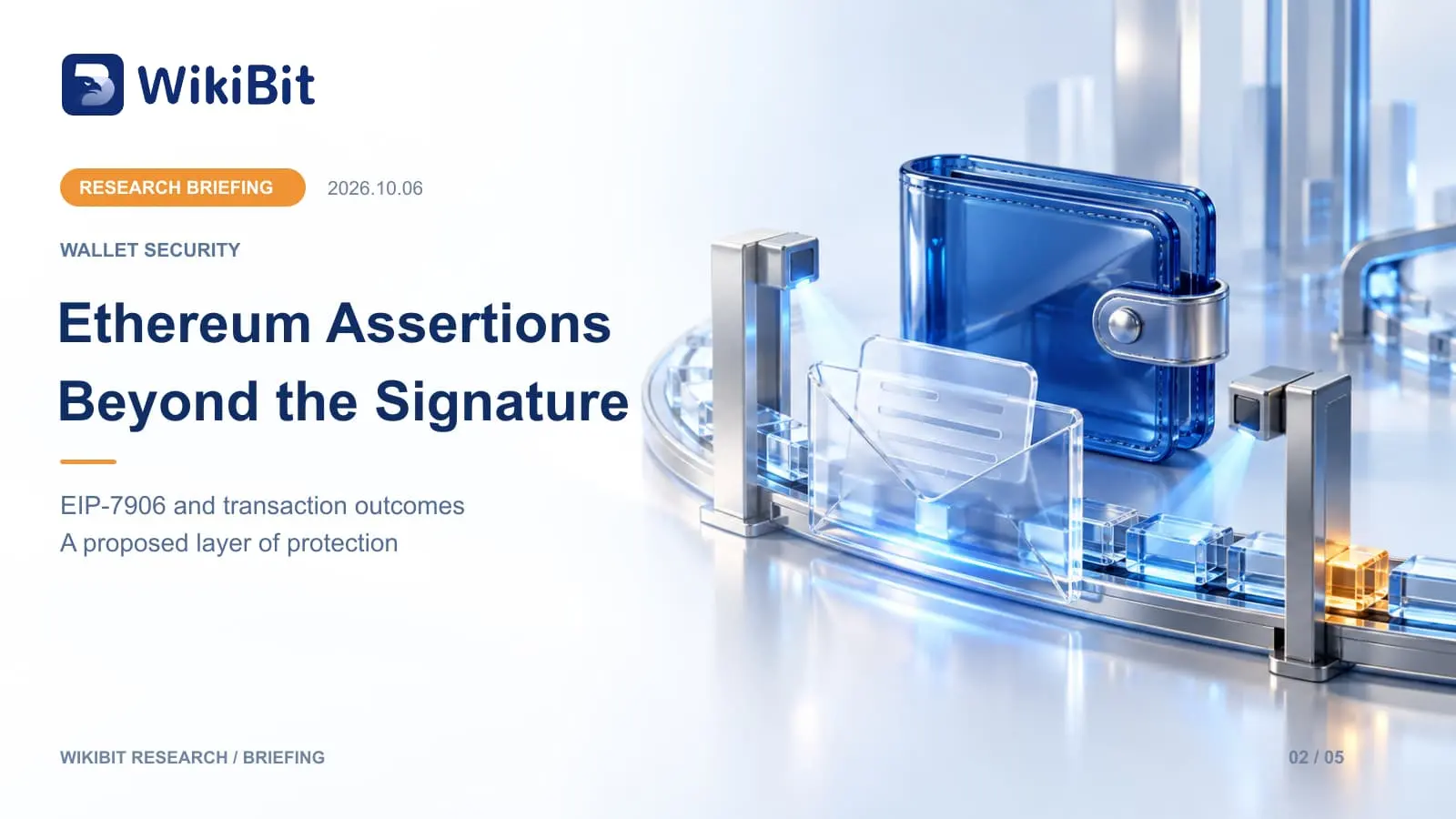
Ethereum wallets have spent years trying to help users understand what they are signing. The Ethereum Foundation now wants to go one step further: make the chain enforce whether the result matches what the user meant to achieve. On October 5, the Ethereum Foundations Access Cluster published a research proposal around native transaction assertions as part of its Trillion Dollar Security initiative. The problem is subtle. A cryptographic signature proves that a user authorized a transaction request. It does not guarantee that the transaction will produce the economic or security outcome the user expected. Code can change. State can change. A frontend can be compromised. Liquidity can disappear. A solver can choose a route that is technically valid but economically disastrous. Native transaction assertions would add a separate rule over the transactions final state. If the transaction produces an outcome that violates that rule, execution would revert. That is a meaningful shift from understanding the request to constraining the result.A Valid Signature Can Still Produce the Wrong Outcome The Ethereum Foundation divides failures into two broad classes. The first is an intent mismatch. The user believes they are approving one action, but the payload they sign does something else. The Foundation cites incidents such as Bybit and BadgerDAO, where compromised interfaces led users or signers to authorize
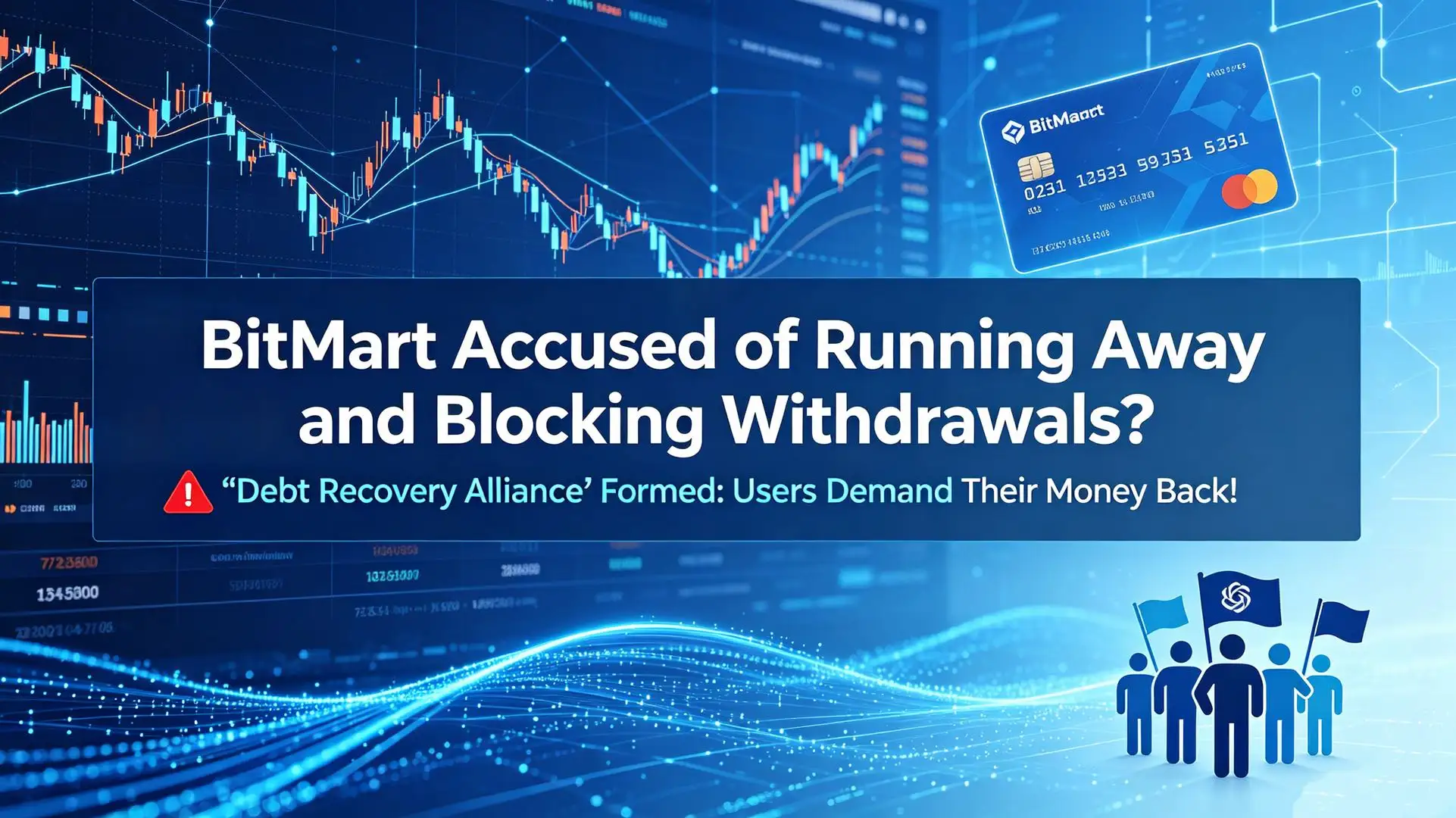
Recently, a former BitMart employee publicly exposed allegations on X, claiming that BitMart‘s collapse was a premeditated scheme to take users’ funds and disappear. According to the claims, before its alleged shutdown, BitMart used high-yield financial products to attract and collect approximately 40 million USDT from users. The platform has since reportedly refused withdrawal requests, especially large withdrawals. Even former employees allegedly had their crypto assets locked, while the company also refused to pay employee compensation and delayed some salary payments. It can be said that BitMart has severely damaged its reputation this time — allegedly even betraying its own employees. If insiders cannot withdraw their funds, can ordinary users still expect to get their assets back? Even more controversially, some allegations claim that BitMarts executives are planning to move to WooxPro and repeat the same alleged fund-raising and exit strategy. A crypto blogger on X claimed that the BitMart incident has already been officially filed for investigation and is highly likely to be treated as a landmark case. Exposé on X (Source: @silencefisher) Users affected by BitMart‘s withdrawal restrictions have now begun organizing themselves and forming a “Debt Recovery Alliance” to demand the return of their assets. This matter is unlikely to end anytime soon.
After BitMart announced its orderly shutdown on July 26, an increasing number of users have reported issues in recent days, including withdrawal difficulties, delayed withdrawals, abnormal account balances, and unresponsive customer support. On July 30, affected BitMart users with significant asset exposure established a joint communication group and completed an initial registration process. According to the preliminary records, 27 users reported being unable to withdraw their funds normally, with total affected assets reaching approximately 3,704,214 USDT. The largest reported individual asset amount reached 700,000 USDT, while several other users reported account balances ranging from 100,000 USDT to 600,000 USDT. Screenshots from the original accounts of just seven users showed a combined balance of 1,692,203.67 USDT. Screenshot of BitMart Users Unable to Withdraw Funds (Source: @MINGLIbtc) Centralized exchanges (CEXs) play a critical role in custodying user assets, facilitating trades, and providing withdrawal services. However, over the past few years, the crypto industry has witnessed multiple exchange risk events. From the collapse of major exchanges to withdrawal difficulties faced by smaller platforms, ordinary users are often the ones who suffer the greatest impact in the end. When such incidents continue to occur, how can users better protect their asset rights and interests?BitMart Shutdown: $3.7 Million in User Assets