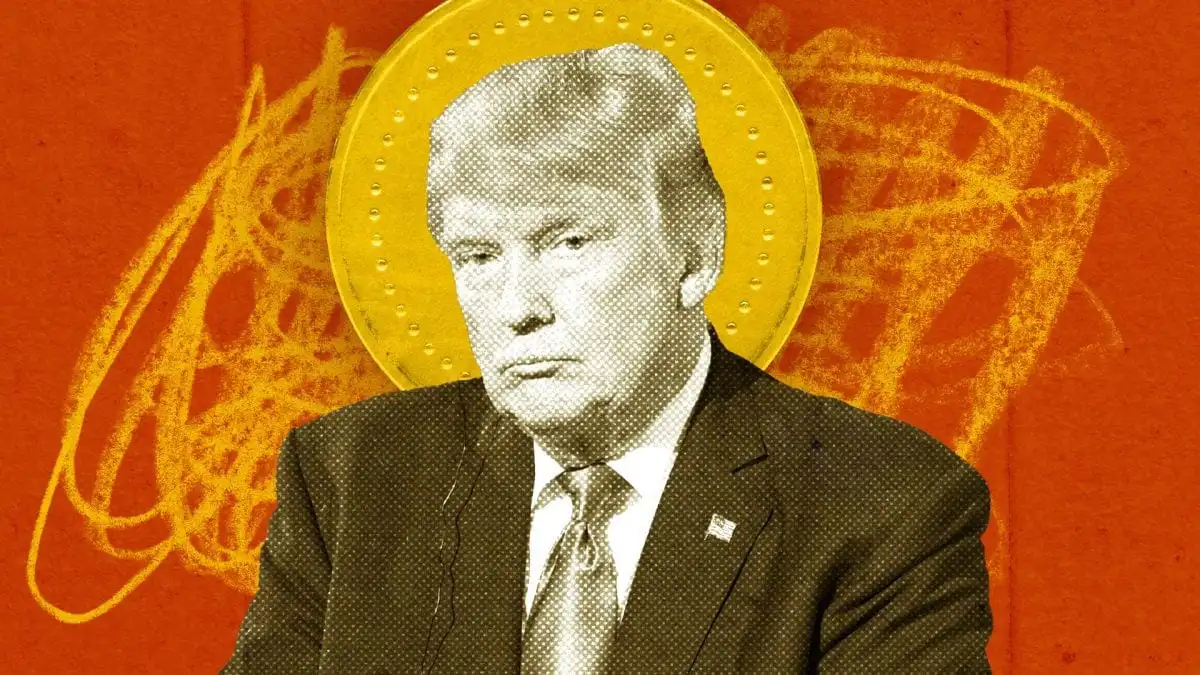
Tornado Cash Dev Roman Storm Moves to Dismiss Indictment Over Crypto-Laundering Allegations

Building Tornado Cash, a tool that can be used to obscure the origin and destination of cryptocurrency transfers, is not the same as laundering money, said a motion to dismiss the criminal indictment against developer Roman Storm.  Storm and fellow developer Roman Semenov were indicted last summer on charges of conspiring to commit money laundering, conspiring to operate an unlicensed money transmitter and conspiring to violate the International Emergency Economic Powers Act (in other word, to violate U.S. sanctions). Storm was arrested and released on bail. The U.S. Department of Justice, alleged that Tornado Cash facilitated the laundering of over $1 billion by groups like North Koreas Lazarus. Tornado Cash has been sanctioned by the U.S. Treasury Department multiple times now.  “Storm is a developer, and his only agreement, together with the members of his U.S-based company, was to build software solutions to provide financial privacy to legitimate cryptocurrency users,” Friday nights filing in the Southern District of New York said. “This is not a crime.”  The motion defines Tornado Cash, describing it as a “set of non-custodial smart contracts in which users maintain complete ownership and control over their assets without the need to rely on any service provider or other intermediary,”

2024-04-01Deep Dive

Bitcoin Runes Launch at the Halving: Here's Everything You Need to Know

Bitcoin is front and center again, and orange coin lovers everywhere have plenty to be excited about: new all-time high prices, the upcoming halving, rising demand for Ordinals—and soon, something totally new called Runes.  And while Runes won‘t hit Bitcoin until the halving—currently set for April 20 as of this writing—when the supply of newly minted BTC is once again cut in half by slashing miner rewards, the project is already getting a lot of hype and attention. Here’s what you need to know.What are Runes?  Runes is a new protocol from the mind behind Ordinals, Casey Rodarmor. With Ordinals, the Bitcoin developer made it possible to create NFT-like “inscriptions” on the Bitcoin network—and this, in turn, made it possible to trade jpegs for magic internet money right on the grandaddy chain.  Rodarmor, in an interview with TechCrunch, described his Ordinals “theory” as a “lens that you can view the Bitcoin blockchain through, and when you view it through that lens, these trackable satoshis pop into view like Pokémon in the tall grass.” So, in this sense, Runes similarly represent a new lens through which to view Bitcoin—but this time, with shitcoins.  The Runes protocol picks up where BRC-20s left off. BRC-20 is a

2024-04-01Deep Dive

This Week Noteworthy Events(April 1, 2024 - April 7, 2024)

ProShares Submits Applications for Five Leveraged Bitcoin Spot ETFs, Expected to Take Effect on April 1st  Bloomberg analyst Henry Jim posted on the X platform stating that ProShares has submitted applications to the SEC for five leveraged Bitcoin spot ETFs. They are: ProShares UltraShort Bitcoin ETF (-2x), ProShares ShortPlus Bitcoin ETF (-1.5x), ProShares Short Bitcoin ETF (-1x), ProShares Plus Bitcoin ETF (+1.5x), and ProShares Ultra Bitcoin ETF (+2x).  These products track the daily performance of the Bloomberg Galaxy Bitcoin Index, with trading codes/fees to be determined, and are scheduled to take effect on April 1st.  Bloomberg analyst Eric Balchunas said that there may be as many as a dozen similar product applications in the market in the coming months.HKVAEX: Will Temporarily Suspend Services in Phases Starting from April 1st, Official Website to Close on May 1st  HKVAEX recently announced that it will begin to suspend services in phases starting from April 1, 2024, and its official website will be completely closed on May 1, 2024.  Effective immediately, HKVAEX will no longer accept new user registrations or virtual asset recharge services. Trading services will be closed at 23:59 on April 5, 2024. At that time, users will be unable to place any new orders, and all

2024-04-01Deep Dive

FTX former execs and promotors to settle class lawsuit for $1.3M

Former FTX executives and promotors have come to a nearly $1.36 million settlement with a class action group of the crypto exchanges former investors seeking compensation for being defrauded.  FTX co-founder Zixiao “Gary” Wang, former engineering lead Nishad Singh and sister trading firm Alameda Research ex-CEO Caroline Ellison agreed to cooperate and give information to the lawsuit to resolve the claims against them, according to a March 27 Miami federal court bid seeking the settlements approval.  Settlements were also reached with seven other influencers and former FTX chief regulatory officer and FTX.US chief compliance officer Daniel Friedberg.  The former execs didn‘t admit to any of the lawsuit’s allegations, but the class group found the trios “knowledge and other information” would be valuable in strengthening its case against others it sued — including celebrities, companies and venture capitalists.  Wang, Singh and Ellison will turn over — and have already begun sharing — “all non-privileged documents and/or data” they gave when helping prosecutors lock up their old boss Sam Bankman-Fried for 25 years.  The three each face their own sentences after pleading guilty to fraud. The class will affirm their cooperation with the court before their sentencing.  The former execs will also hand in records used in FTXs

2024-03-29Deep Dive

Prisma Finance Exploited for $12M

Prisma Finance, a DeFi protocol that issues stablecoins backed by Ethereum liquid staking and restaking tokens (LRTs), has been exploited for nearly $12 million.  First flagged by blockchain security firm Cyvers, attackers managed to make off with 3,258 ETH before the protocol was paused by the team. Prisma users are advised to revoke approvals for the affected smart contracts.  The stolen assets have since been redistributed to three Ethereum addresses, according to an analysis from security firm Peckshield.  The protocols PRISMA token crashed 30% after the exploit but has since recovered some losses. It currently trades at a $9 million market capitalization. Nearly $110 million was withdrawn from the protocol in the wake of the exploit, leaving it with $127 million in total value locked (TVL).  Prisma issues two dollar-pegged stablecoins, mkUSD and ULTRA, which can be minted against Ethereum liquid staking tokens (LSTs) and restaking tokens (LRTs), respectively. Its flagship mkUSD has a market capitalization of $35 million, while the newer ULTRA stands at just over $2 million.  Prismas design is based on that of LUSD issuer Liquity, which confirmed on X that it is not susceptible to the same type of exploit.  

2024-03-29Deep Dive

Sam Bankman-Fried Sentenced to 25 Years in Prison

According to the New York Post, on Thursday, Judge Lewis Kaplan denounced Sam Bankman-Fried as a ruthless con artist obsessed with political power. He sentenced the ousted cryptocurrency mogul to 25 years in prison for stealing over 8 billion US dollars from clients of his cryptocurrency company five months ago. His cryptocurrency exchange, FTX, has since gone bankrupt.  Bankman-Fried has also been ordered to repay over 11 billion US dollars to FTX users, investors, and creditors, although it remains unclear how much of this he will be able to repay.  Lewis Kaplan stated that the 32-year-old former billionaire, who once ran the popular FTX trading platform, “painted himself as a good guy,” supporting “appropriate regulation of the crypto industry,” but his friendly image was merely “an act.”  “He did it because he wanted to be a figure of enormous political influence in this country,” Kaplan said in a crowded federal courtroom in Manhattan. The judge then criticized the fallen tycoon for “evidently lacking any genuine remorse.”Sam Bankman-Fried speaks  Bankman-Fried stated that he cares more about FTX customers waiting for refunds than the “emotional life” or “hypothetical future children” mentioned by lawyers defending him.  “My lifespan may have ended. Its been over for a while now,”

2024-03-29Deep Dive

Fidelity takes another step toward spot ether ETF, but hurdles likely remain

Fidelity Investments is moving forward with its spot ether ETF proposal despite uncertainty around the near-term approval of such funds.  It became clear the financial services giant was looking to launch an ETH ETF in November, when Cboe — the exchange on which the product would trade — filed a 19b-4 form on behalf of Fidelity.  Now, the company filed a registration statement — known as a Form S-1 — Wednesday, marking another step in its bid to get the Fidelity Ethereum Fund approved.  The Securities and Exchange Commission would have to approve the 19b-4 as well as deem effective the S-1 form before the fund would be allowed to start trading.  Fidelity did not reveal a ticker or fee for the proposed product in the latest filing.  Similar to other proposals, however, the fund‘s registration statement includes details about its intent to stake a portion of the trust’s assets via one or more staking infrastructure providers.  “As a result of any staking activity in which the trust may engage, the trust expects to receive certain staking rewards of ether, which may be treated for federal income tax purposes as income to the trust,” it states.  The fund custodian — to be Fidelity Digital Asset Services —

2024-03-28Deep Dive

Inscriptions push blobs to reach set utilization limit on Ethereum

The rate of blob transactions on Ethereum has surged, exceeding the networks set capacity. This escalation follows the introduction of inscriptions on blobs, which has increased demand for blob space.  Ethereum core developers implemented the Dencun upgrade earlier this month, adding blob transactions to make Layer 2 transactions cheaper. They have been successful by allowing Layer 2s to use blobs instead of the “calldata” method for posting transactions — offering a direct path to fee reduction and passing these savings to end users.  However, the introduction of inscriptions on blobs has begun to stress test the feature. Inspired by Bitcoin Ordinals, these inscriptions generate unique fungible and non-fungible artifacts embedded within blob transactions. Blob-related inscriptions emerged despite blobs being ephemeral and removed from the network after 18 days — though full archival nodes can still maintain their data.  Analysis from a Dune Analytics dashboard maintained by Hildobby shows a significant trend: 40% of blob transactions are now related to inscriptions. This is the highest usage of blobs posted among other Ethereum Layer 2s such as Arbitrum, Optimism, Base, and Linea.Blobs at 100% utilization rate  The increased interest and utilization have led blobs to operate at full capacity, with a 100% utilization rate observed.  The data

2024-03-28Deep Dive

Following Binance, KuCoin is sued by the U.S. Department of Justice

On March 26, the U.S. Department of Justice once again took action against a cryptocurrency exchange, charging KuCoin and its two founders, Chun Gan and Ke Tang, with “conspiracy to violate the Bank Secrecy Act and conspiracy to operate an unlicensed money transmitting business.” Each charge carries a maximum sentence of five years in prison. This comes as another indictment by the U.S. Department of Justice against founders of cryptocurrency exchanges, following the case of Binance and its founder, Changpeng Zhao.  The U.S. Department of Justice stated that GAN and TANG are still at large.What Laws Did Kucoin Violate?  According to a news release from the U.S. Department of Justice, KuCoin and its founders are being charged with conspiring to operate an unlicensed money transmitting business and conspiring to violate the Bank Secrecy Act. The charges involve intentionally failing to maintain adequate anti-money laundering (AML) procedures aimed at preventing KuCoin from being used for money laundering and financing terrorist activities, failing to maintain reasonable procedures to verify customer identities, and not submitting any suspicious activity reports. KuCoin is also accused of operating an unlicensed money transmitting business and materially violating the Bank Secrecy Act.  It is noteworthy that the indictment does not include

2024-03-28Deep Dive

Vitalik Buterin highlights account abstraction in security and convenience, talks metaverse

Ethereum co-founder Vitalik Buterin said account abstraction is the way towards providing security and convenience for blockchain developers and users during his Wednesday speech at BUIDL Asia, a crypto-focused conference in Seoul, South Korea.  A modern account abstraction includes other features that improve security and convenience that Ethereum currently does not support, according to Buterin. Security goals include allowing users to change and revoke private keys and better means of account recovery, while convenience goals include users being able to pay gas fees in ERC-20s and automation of payments.  The concept of account abstraction refers to the concealment of more technical details of on-chain interactions in favor of accessibility and user-friendliness. Ethereums account abstraction aims to enable user wallets to work as smart contracts without having to manage externally owned accounts and its private keys.  Ethereum users currently interact with the network by using externally owned accounts (EOAs), which requires them to maintain a private key and extra accounts with extra funds, which pose a major drawback for users and developers.  “The next 10 years are going to be about really upgrading the ecosystem at the user level,” Buterin said at the event. “Lets make something people in the worlds lower-income countries can actually

2024-03-27Deep Dive
1
...
2426
...
737