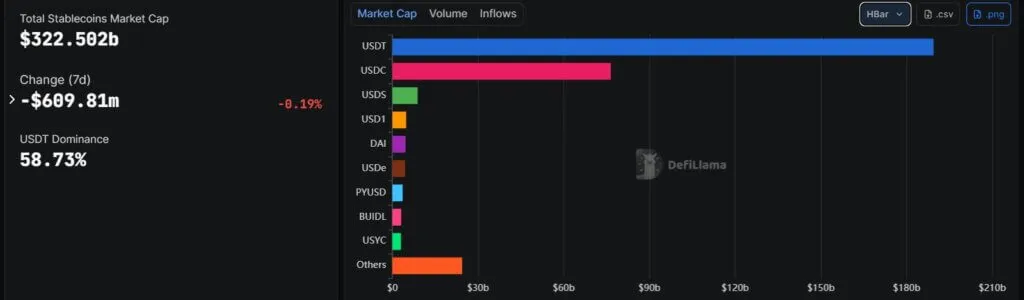
Stablecoins just hit a record $322 billion – and the bank-run warnings are getting louder
The global stablecoin market has climbed to a record $322 billion valuation, cementing the rise of digital dollars as one of the cryptocurrency sectors most viable commercial products. The milestone reflects an accelerating demand for real-time settlement, borderless cross-border transfers, and reliable dollar access on blockchain rails. However, this expansion is also intensifying anxieties within the traditional banking sector, where these privately issued tokens are increasingly viewed as a direct threat to core deposits, payment relationships, and the legacy plumbing of global commerce. As a result, the friction is driving a fundamental restructuring of digital finance. As stablecoin issuers expand under newly established federal frameworks, a parallel defensive-offensive is unfolding: global banks are quietly deploying tokenized deposit systems that already route trillions of dollars annually through blockchain-based infrastructure. Stablecoin market moves deeper into finance Over the years, stablecoins have evolved from a niche crypto-trading refuge into a settlement layer that threatens to disintermediate traditional banks. While dollar-pegged tokens originally gained traction as a volatility hedge for digital asset traders, they are now gaining a foothold in global remittances, merchant settlements, and cross-border corporate flows. Despite this commercial expansion, the market remains heavily top-heavy. Tether ($USDT) and Circle ($USDC) maintain a powerful duopoly, controlling more than 80% of