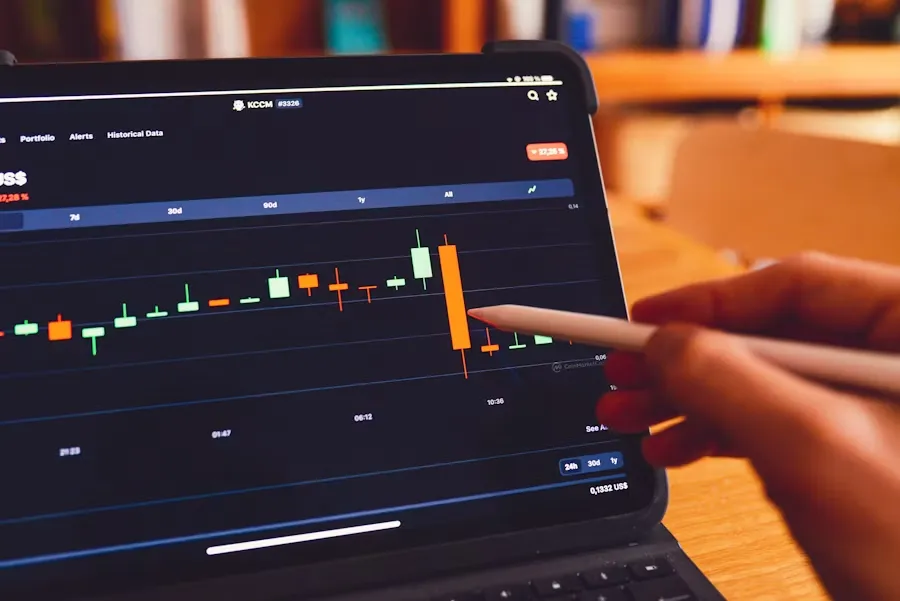
Bitcoin price analysis: Next key level to watch as short-term holders exit

Bitcoin (BTC) price has dropped below $80,000 on May 8 after a rejection above $82,850 was accelerated by notable spot selling.  BTC price fell 1.34% over the past 24 hours, losing around $1,083 to trade at about $79,840 at press time. As such, the flagship coins market capitalization declined by $21.5 billion to hover at approximately $1.6 trillion at the time of publication.  BTC/USD 24-hour chart. Source: Finbold  Bitcoin price has experienced heightened selling pressure after recently approaching a major liquidity level around $88,880, which coincides with the average price for investors who entered between 3 and 6 months ago, as Finbold explained. With some traders positioning for further downside in hopes of a capitulation-driven bottom, the more important level may sit just below the current price.  Bitcoin price target as short-term traders exit  Amid the recent Bitcoin price drop, the number of BTC holders declined at the fastest rate in nearly 2 years, according to data from analyzed by Finbold on Friday. Over the past 5 days, BTCs holders declined by 245,000 wallets, the most since the summer of 2024, leaving approximately 58.88 million at the time of reporting.  Total number of non-empty wallets on the network. Source: Sentiment  As such, the next major level for

05-08

Analysts Warn Bitcoin Rally May Be Short-Lived As Profit-Taking Pressure Builds

Bitcoin has slipped below the $80,000 mark, pulled down by a fresh wave of selling from short-term holders taking profits. The pullback has raised questions about the sustainability of the recent price recovery, with several analysts describing the move as a relief rally rather than the beginning of a sustained bull market.  Relief Rally or Genuine Recovery?  According to data from analytics firm CryptoQuant, Bitcoin has rebounded approximately 37% from its April lows. However, the firm cautioned that growing unrealized profit margins among short-term holders could trigger further selling pressure. In a note shared with CoinDesk, CryptoQuant analysts said the current price action more closely resembles a tactical bounce within a broader corrective phase than a structural shift in market direction.  The warning comes as on-chain metrics show an uptick in the movement of coins that were acquired at lower prices, a pattern historically associated with profit-taking behavior. When short-term holders — typically defined as wallets that have held Bitcoin for less than 155 days — begin to sell in size, it often creates overhead resistance that caps further upside.  Geopolitical Tailwinds Prove Fragile  Part of the recent rally was fueled by improved risk appetite following President Donald Trumps decision to suspend military operations related

05-08

SIREN rallies 61% in a week - Technical factors pushing the token to $2

After diving below the $0.225 swing low, SIREN bulls managed to break the $1.88 local high. In recent days of trading, the $0.89 local resistance has also been pushed aside.  The $1.88 break, retracement, and now the recent bullish momentum make it seem like SIREN has a bullish structure. This argument gains strength when you consider that, after breaking below $0.225, the memecoin has not set a new swing low.  Meanwhile, the OBV continued to climb higher, and the RSI was also above neutral 50. The OBVs ascent, in particular, suggests that the selling pressure in late March has since been erased, and buyers have the upper hand.  Traders call to action – Remain fluid  Technically, the swing structure was bearish, but the OBV hinted otherwise. Traders can use the current momentum to ride the rally higher, to the $1.9-$2.0 resistance zone. Betting on further gains might be dependent on the reaction around $2.  If the buyers can flip this region to support, and there are no volume or momentum divergences on the higher timeframe charts, the rally might have more room to grow.  Traders will have to wait and watch, but in the short term, they can expect a move toward the $2 highs once

05-08

IMF raises alert as advanced AI tools threaten global financial stability

The International Monetary Fund (IMF) has issued a warning regarding the danger being posed by the sophisticated nature of AI. In the IMFs 7 May 2026 blog, newer AI models offer a pathway to bypass any financial guardrails put in place.  To them, this would be disastrous to financial markets. The IMF has made clear that although the technology provides defense mechanisms to counter such attacks, its offensive capabilities outweigh its defensive strengths.  The IMF highlights escalating AI cyber threats to financial stability  This warning comes against the backdrop of growing dependence on technology such as shared infrastructure, including software and networks, that power payments and information transfer across the globe. In its report, the IMF warned that these risks cannot be viewed in isolation but are systemic and can spread from finance into other industries, such as energy and telecom.  An important example cited is Claude Mythos Preview by Anthropic, a powerful AI model introduced in a carefully monitored environment. IMF further explained that Mythos can detect and use weaknesses in all major operating systems and web browsers, regardless of whether its operators possess any specific expertise.  Such technology is a prelude to a future in which “zero-day” exploits—which have been difficult to create

05-08

Hot air at AWS causes Coinbase outage

Coinbase stopped working for over seven hours on Thursday after hot air in an Amazon data center threw its cloud services into disarray.  The exchanges users found themselves unable to buy or sell crypto, while order book prices displayed hundreds of dollars larger than rival exchanges Binance and Hyperliquid.  The cause? Coinbase blames “increased temperatures in the affected AWS service.”  Amazon Web Services (AWS), which is one of the largest providers of cloud infrastructure that keeps much of the internet ticking over, claims to have suffered from a “thermal event” in one of its data centers in Northern Virginia.  The increase in temperature apparently affected its cloud hosting hardware, leading to a loss of power.  AWS quickly got to work on a solution, and as of this morning said it was “actively working to bring additional cooling system capacity online, which will enable us to recover the remaining affected racks in a controlled and safe manner.”  Amazon notes that its data centers rely on evaporation cooling, a system that involves filters in its air conditioning units being “dampened” with water, cooling any hot air that comes in and evaporating the water in the process.  Microsoft uses a similar system to Amazons AWS cooling methods.  Whatever the fix was

05-08

Smart Media Planning: How Outset Media Index Helps Stay Within Your Budget

This creates a more complete picture of media value before budget decisions are made.  1. Unified Media Intelligence  Media research is often scattered across multiple subscriptions and spreadsheets.  Context: Teams regularly switch between Similarweb, Ahref1s, media databases, and manual editorial checks to assess publication quality. Conflicting signals slow planning and reduce confidence.  Operational implication: Research costs rise while campaign decisions remain inconsistent.  OMI consolidates these fragmented workflows into a unified framework for media analysis. Users can compare outlets side by side using normalized methodology and structured scoring systems.  2. Better Placement Prioritization  High-traffic outlets do not always produce meaningful communication outcomes.  Context: Some publications generate visibility but weak audience interaction. Others produce lower traffic but stronger syndication, industry influence, or citation activity.  Operational implication: Teams overspend on placements optimized for appearance instead of outcomes.  OMI helps identify which outlets align with specific communication goals, including visibility, engagement, SEO impact, and industry relevance.  This improves placement prioritization before budgets are committed.  3. Faster Media List Creation  Manual media list building consumes operational resources.  Context: PR specialists often spend hours filtering outlets manually, reconciling spreadsheets, and reviewing scattered metrics.  Operational implication: Planning cycles slow down and internal labor costs increase.  OMI allows teams to filter publications by customized parameters, compare outlets through dual scoring systems, and build focused

05-08

PROS explodes 48% as Upbit and Bithumb listings ignite demand

Upbit will add Pharos to its KRW, BTC, and USDT markets on May 8, giving Korean traders new spot access to PROS. PROS jumped 47.8% to $0.9457 after Upbit and Bithumb expanded Korean market access.Pharos trading volume rose 209.6% to $28.7 million as listing momentum boosted activity.CoinGecko ranked PROS at #255, with a $127.5 million market cap after the rally.  The exchange notice said trading support was scheduled for 8:30 p.m. Korea time.  Deposits and withdrawals are expected to open within one hour and 30 minutes after the notice. Upbit said users must send PROS through the Pharos network only, as deposits through unsupported networks may take longer to return.  Interestingly, CoinGecko data showed Pharos trading at $0.9457, up 47.8% over 24 hours. The token also gained 45.7% over seven days, placing it above the wider crypto markets daily move.  Trading activity also increased. CoinGecko placed 24-hour PROS volume at $28.7 million, up 209.6% from the previous day. The token had a market cap of about $127.5 million and ranked #255 on CoinGecko.  The price move also came as Bithumb added Pharos to its Korean won market. That gave PROS another local listing on the same day and expanded access beyond Upbit  Early trading limits will

05-08

Long-Time Yankees Pitcher Joins American League Bottom Feeder After Trade

The New York Yankees are enjoying a strong season with a roster full of returning veterans, but there is at least one unit that doesnt seem to be clicking as well as the rest of the team.  As the Yankees emerge as the American League leader in numerous offensive and pitching categories, the teams bullpen mix is still a bit of a question mark, outside of high-leverage options like closer David Bednar.  “A key issue has emerged with the bullpen: Theres a significant drop-off after its top five of Bednar, (Camilo) Doval, (Fernando) Cruz, (Tim) Hill and (Brent) Headrick,” Chris Kirschner wrote for The Athletic. “The Yankees need someone outside that circle of trust to emerge. Otherwise, this group could be in trouble.”  Outside of those names, the team has had a bit of a revolving door to the relief corps, with options like Paul Blackburn, Ryan Yarbrough, Jake Bird and Yerry De Los Santos cycling through. But even as the Yankees explore their options for low-leverage arms, it seems they werent terribly interested in a reunion with three-year reliever Yoendrys Gomez.  Former New York Yankees Reliever Yoendrys Gomez Traded To Minnesota Twins  Gomez first joined the Yankees system in 2017 and made his major-league

05-08

U.S. hiring slowdown could be great for bitcoin — unless wages spoil the party

Friday‘s U.S. nonfarm payrolls report could inject volatility into the crypto market. Economists expect April job growth to slow sharply, with payrolls forecast to rise by just 62,000 compared with March’s 172,000, while the unemployment rate is seen holding steady around 4.3%, according to Reuters.  At first glance, weaker hiring data appears supportive for bitcoin and other risk assets. A softer labor market could reinforce expectations that the Federal Reserve will keep rates steady this year and potentially delay any tightening cycle beyond that. As of now, markets are pricing in steady rates through this year, followed by a hike next year.  But the picture is more complicated.  Alongside the payrolls release, markets will also be watching wage growth closely. Average hourly earnings are expected to rise 3.8% year-on-year, up from 3.5% previously. Sticky wage pressures, combined with already elevated oil prices, could strengthen inflation concerns globally and complicate the Feds path forward.  In other words, the market reaction may hinge less on headline job creation and more on whether wage growth cools. With traders already pricing in the possibility of future rate hikes next year, risk assets may need a softer-than-expected earnings figure to stage a meaningful rally.  For now, analysts remain broadly constructive

05-08

Mantle Unveils CeDeFi Infrastructure for Around-the-Clock Tokenized Stock Markets

Mantle has integrated xStocks. The tokenized equities space is getting a significant boost with a new integration announced by Mantle‘s blockchain network, featuring xStocks and Fluxion. It will place xChange by xStocks on Mantle’s infrastructure and establish a new space for tokenized stocks supported by institutional-grade liquidity.  Tokenized equities just leveled up to the bar institutional capital actually requires.  The launch is part of a wider trend of real-world asset tokenization, one of the largest areas across all of digital finance. The integration will eliminate issues that have plagued the adoption of tokens in equity trading by larger investors and professionals, Mantle said.  xChange Goes Live on Mantle  Mantle confirmed that the new xChange by xStocks is live on the network. Traders have access to tokenized equities powered by Atomic RFQ technology through the integration.  “The system can help reduce slippage and eliminate partial fills that often affect big trades on decentralized markets,” the company officials said. Access to deep liquidity remains essential for institutions looking for dependable execution quality in a blockchain trading ecosystem, the company noted.  Trading for 10 tokenized equities is now underway and will be expanded as adoption grows.  Fluxion Enables Around-the-Clock Trading  In addition, Mantle said that Fluxion will play an important role

05-08
1
...
698700
...
1000