Ethereum Network Blast Is Shutting Down: Who Controls Users' Last $51 Million?

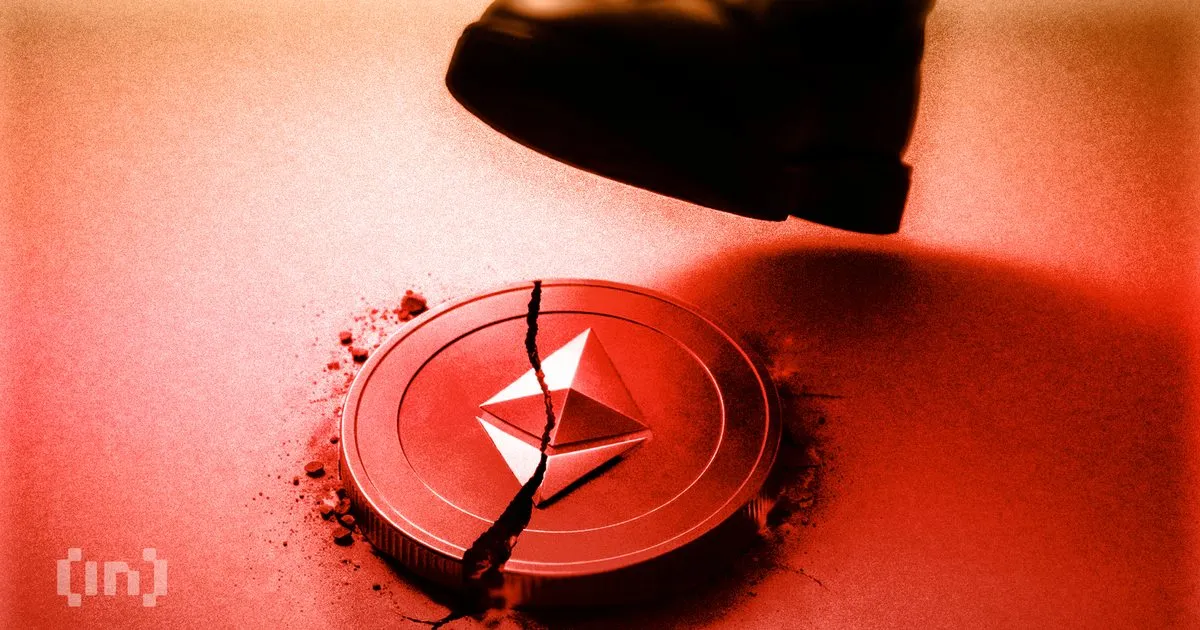
Blast, a crypto network that held $2.24 billion in June 2024, is shutting down. In the past day, it earned $110 in chain revenue.  Blast is a Layer 2 (L2), a cheaper side network that runs on top of Ethereum. It paid interest on deposits and promised a token reward. The money came for the reward. The Blast (BLAST) token fell 19% on the news.  Sponsored  Sponsored  BLAST Price Performance. Source: BeInCryptoWhy Blast Is Shutting Down Now  The team said on Friday that the chain costs more to run than it makes, with no credible fix in sight.  Blast will be shutting down.  We launched Blast with the goal of building a self-sustaining chain for users and developers. Unfortunately, the economics of operating the chain no longer make sense: the ongoing costs of maintaining Blast exceed the revenue generated by the L2, and…  Founder Tieshun Roquerre, known online as Pacman, also built Blur, a marketplace for digital collectibles. He posted his own goodbye.  “I‘m disappointed that we weren’t able to make the chain sustainable over the long term, but Im grateful to the users, developers, and teams who helped give Blast its moment, even if its run was shorter than we had hoped,” Pacman said.  Value locked on Blast has
Within 1 weeksIndustry

Crypto‘s billions are back, but the premiums aren’t

Crypto companies are raising billions again, but investors are no longer handing out premiums indiscriminately.  Kalshi is reportedly seeking $1 billion at a $40 billion valuation, nearly twice what it was worth in May. Meanwhile, Blockchain.com is preparing for an initial public offering (IPO) at a potential $6 billion valuation, well below the $14 billion it commanded during the last crypto boom. The divide is even sharper among digital asset treasury companies, where just four of the 20 largest still trade above the value of their crypto holdings.  This weeks Crypto Biz looks at where investors are still willing to pay up, where the old crypto premium has disappeared and how Bitget is dealing with the fallout from a $388 million security breach.  Only 4 of top 20 crypto treasury companies still trade above NAV: DWF  The crypto treasury model has largely lost its early advantage, with most digital asset treasury (DAT) companies no longer commanding the premiums that once helped them raise capital and accumulate crypto without diluting shareholders, according to DWF Ventures.  DWF‘s report found only four of the 20 largest DATs by assets under management trade above an mNAV of 1: Bit Digital, Strive, Hyperliquid Strategies and BitMine. The discounts suggest investors

Within 1 weeksIndustry

‘Euro stablecoin isn’t enough: EU issuers make case for USD tokens

European stablecoin issuers are making the case for regulated US dollar tokens, arguing that Europe‘s push to strengthen the euro does not eliminate businesses’ need for dollar liquidity.  AllUnity, a German stablecoin issuer, launched its US dollar-pegged stablecoin USDAU on Wednesday, expanding its MiCA-regulated lineup beyond European currencies.  “In global trade and FX markets, the US dollar is the glue,” AllUnity CEO Alexander Höptner told Cointelegraph, adding: “For European corporates to make cross-border payments globally, offering only a euro stablecoin isnt enough.”  European issuers‘ push into dollar stablecoins comes as the EU reviews its MiCA framework and the ECB continues to raise concerns about stablecoins reinforcing the dollar’s global dominance.  Europe cannot “wish away” dollar demand  Stable Mint CEO James Bennett said demand for dollar stablecoins in Europe reflects practical business needs rather than something policymakers can simply steer toward the euro.  “Dollar stablecoins are where the demand is, and Europe cant wish that away,” Bennett told Cointelegraph. “What Europe can control is who issues them to European users, and under which rules.”  Stable Mints USDSM stablecoin has moved more than $380 million onchain across 3.8 million transfers and is held by more than 2,600 addresses, according to figures provided by the company as of Wednesday.  Related: Circle

Within 1 weeksIndustry

BNB Chain crosses $1B in tokenized stocks, ETFs as market hits $3.7B

BNB Chain has become the first blockchain to cross $1 billion in tokenized stocks and exchange-traded funds (ETFs).  The market capitalization of the tokenized stocks and ETFs rose around 17% to $3.35 billion in September from $2.87 billion in August, according to Token Terminal data.  The sectors market cap on BNB Chain stood at $1.1 billion at the time of publication, accounting for roughly 30% of the $3.7 billion market, followed by Ethereum at $828 million, or 22%, and Solana at $738 million, or 20%.  Tokenized stocks, ETFs by market capitalization. Source: Token Terminal  BNB Chain also led with 1.8 million addresses holding tokenized stocks, accounting for 45% of the total, Binance Research said in a report on Tuesday. The network hosts products including Binance bStocks and Ondo Global Markets tokenized securities.  Tokenized stocks and ETFs have grown more than fivefold from $719 million in January, when Ethereum accounted for about 48% of the market, Solana 31% and BNB Chain just 13%, according to Token Terminal data.  Related: Tokenized assets dont always mirror traditional markets, Dune finds

Within 1 weeksIndustry

Blast announces shutdown as network costs exceed Layer 2 revenue

Blast has announced plans to shut down its Layer 2 network, giving users until Oct. 26, 2026, to withdraw through its normal interface.  Blast, in an Oct. 2 announcement on X, asked users to move their assets to Ethereum mainnet, including any balances held in the Blast PWA. According to the teams notice, withdrawals through the usual interface will remain available until Oct. 26, after a temporary suspension needed to process its Lido holdings.  For users who miss the interface deadline, the announcement says assets will remain accessible through direct interaction with Blasts bridge contracts on Ethereum Layer 1. The team said it would publish instructions for that process before the deadline.  Blast withdrawals will pause before the delay falls to 24 hours  Under the shutdown plan, the team will first begin withdrawing the Lido assets held by Blast, a process it expects to take approximately one week. During that period, the announcement says user withdrawals will be temporarily unavailable.  Alongside that process, the team plans to reduce the withdrawal delay to 24 hours. According to the notice, however, implementing the shorter delay will not make withdrawals available while the Lido withdrawal process is still underway.  Once that process finishes, the team says withdrawals will resume

Within 1 weeksIndustry

AI Predicts SOL: A 1919 Bank Just Chose a Public Chain

A US state bank has put a dollar-backed stablecoin on Solana, and our AI model predicts that SOL holds its breakout while institutional stories like this one keep arriving. Roughrider Coin went live in October 2026. VersaBank USA issues it. The Bank of North Dakota provides governance oversight.  That second name is the unusual part. The Bank of North Dakota is the only state-owned bank in the United States, founded in 1919. This is not a startup running a pilot. It is a public institution with a century of deposit-taking behind it.  The choice of chain matters too. A bank with that profile does not pick infrastructure casually, and it picked a public blockchain over a private ledger.  SOL trades at $122.96, up 4.46% over 24 hours. Market cap stands at $72.31 billion. Volume has risen 21.3% to $4.43 billion, and the token is up roughly 100% from its June low.  Put Your Money Where Your Mouth is On PolymarketWho Can Actually Use Roughrider Coin?  Banks, and only banks. The token enables bank-to-bank transfers among more than 90 North Dakota financial institutions. It runs on a permissioned public blockchain with an autoburn mechanism. That links onchain token transfers to off-chain fiat settlement.  Retail investors are excluded.

Within 1 weeksIndustry

Unpatched Eclair Bitcoin Lightning nodes could crash again every time they restart

A newly disclosed unfunded-channel flaw could leave Eclair, a Bitcoin Lightning implementation, crashing repeatedly without an attacker spending BTC on-chain. The flaw affected reachable nodes running v0.14.0 and earlier, with saved channel records making a restart insufficient to restore service.  Related Asset Bitcoin #1 BTC · $85,435.87 24-hour change: up 1.91% Loading price history… 24H Up 1.91% 7D Up 2.11% 30D Up 10.74%  Researcher Erick Cestari published the persistent-crash finding Sept. 30 and explained it alongside a separate denial-of-service bug in an Oct. 1 developer post. Both were fixed in v0.14.1, released in July, before the public disclosures. ACINQ now recommends the later v0.14.3 security release for separate vulnerabilities.  Why restarting could fail  Eclair limited the number of pending channels a peer could open, but inconsistent checks of temporary and final channel identifiers let its counter undercount unfunded channels. A malicious peer could accumulate saved requests without broadcasting the funding transaction or paying an on-chain fee.  That distinction matters: the BTC normally needed to fund a channel did not have to be committed for the vulnerable node to incur memory and database costs. The attack still required computing resources and network traffic.  In Cestari‘s proof of concept, Eclair v0.14.0 ran in regtest, Bitcoin’s local testing environment.

10-02Industry

Why an $88 billion bank reserve drop doesnt prove a Bitcoin liquidity squeeze – yet

Bitcoins quarter-end liquidity signal changes direction depending on which reserve measure is used. Federal Reserve data released Oct. 1 show bank reserves falling $88.236 billion between Sept. 23 and Sept. 30 Wednesday snapshots, while their weekly average rose $17.897 billion.  Related Asset Bitcoin #1 BTC · $85,435.87 24-hour change: up 1.91% Loading price history… 24H Up 1.91% 7D Up 2.11% 30D Up 10.74%  Reserves are balances banks hold at the Federal Reserve to make and receive payments. Their level matters for dollar financing, but a reserve chart alone cannot establish whether pressure reached Bitcoin. The balance-sheet decline is largely accounted for by Treasury cash and reverse repos, predominantly involving foreign official accounts. September 30s median cost of Treasury-backed overnight borrowing was 3.90%, within the range of the five latest observed readings.  Septembers quarter-end therefore offers a test of the measurements behind a liquidity thesis. An endpoint balance, an average balance and a funding price describe different aspects of the system. Treating them as interchangeable can turn the same week into opposing market signals.  The Wednesday reserve series fell from $2.969922 trillion on Sept. 23 to $2.881686 trillion on Sept. 30. The weekly-average series rose from $2.930193 trillion to $2.948090 trillion for the weeks ending

10-02Industry

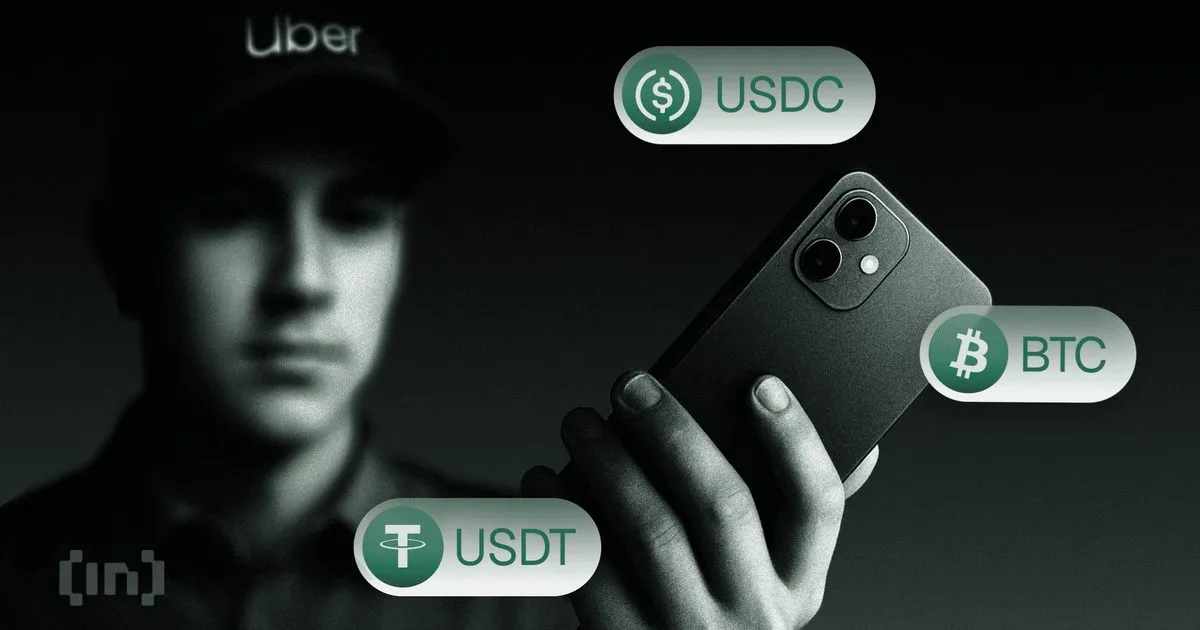
USDT Is Returning to Bitcoin After 10 Years. Should Users Care?

Tether‘s USDT, a $184 billion digital dollar, is coming back to Bitcoin this month, more than a decade after it first launched there. The new version promises private payments, with most details kept off Bitcoin’s public record.  USDT is the largest stablecoin, a crypto token pegged to the US dollar. It returns just as Washington asks whether Tether can police the coins it already has.  Sponsored  Sponsored  What Changes for USDT Holders When It Returns to Bitcoin?  For now, nothing. Tether billed the move as an expansion of its Bitcoin support in a 2025 announcement. Coins on Tron and Ethereum stay where they are.  “USDT on Bitcoin. Its coming home,” wrote Paolo Ardoino, CEO of Tether.  Ardoino set out the goal in 2025, promising exchanges and wallets private transfers, BTC-to-USDT swaps, and loans backed by Bitcoin.  “Bitcoin deserves a stablecoin that feels truly native, lightweight, private, and scalable,” Ardoino said at the time.  Is USDT Leaving Tron and Ethereum?  Theres no sign of that. Today, about $92 billion of USDT sits on Tron, roughly half of all coins in circulation, according to DefiLlama. Ethereum holds another $74 billion. Together, the two networks carry more than 90% of the supply.  Stablecoin Usage by Chain. Source: DefiLlama  Sponsored  Sponsored  Tether‘s 2025 announcement says nothing about pulling

10-02Industry

Tesla Stock Jumps 6% on Delivery Beat: Will Earnings Back It Up?

Tesla delivered 486,532 vehicles between July and September, beating the average forecast from 24 analysts by about 24,600. Tesla stock rose 5.5% to $373.55 by mid-morning Friday, according to Yahoo Finance.  The factory did not keep pace, however. Tesla built 464,391 vehicles, so about 22,000 of the cars it handed to buyers were made in earlier quarters.  Sponsored  Sponsored  Tesla Stock (TSLA) Performance. Source: Yahoo FinanceWhat Drove Teslas Delivery Beat  Model 3 and Model Y, Teslas mass-market sedan and SUV, did nearly all the work. They reached 478,237 deliveries, against 450,712 in Teslas own survey of analyst forecasts.  Teslas other models, a group that includes the Cybertruck, fell short. Deliveries came to 8,295, below the 11,285 expected and roughly half the 15,933 a year earlier.  Total deliveries slipped about 2% from more than 497,000 a year ago. That quarter was inflated by buyers rushing to claim a $7,500 US electric vehicle tax credit before it expired on Sept. 30, 2025.  Q3 2026  Production: 464,391  Deliveries: 486,532  Energy storage deployments: 13.7 GWh  Compared with the April to June quarter, deliveries rose 1.3%. Europe helped. Registrations there were up about two-thirds through August, Reuters reported.  Sponsored  Sponsored  Why Tesla Stock Now Hinges on October 21 Earnings  This is the second straight quarter Tesla sold more cars than it

10-02Industry
1
...
5860
...
1000