OKX Targets South Korea Entry With Proposed 20% Coinone Investment

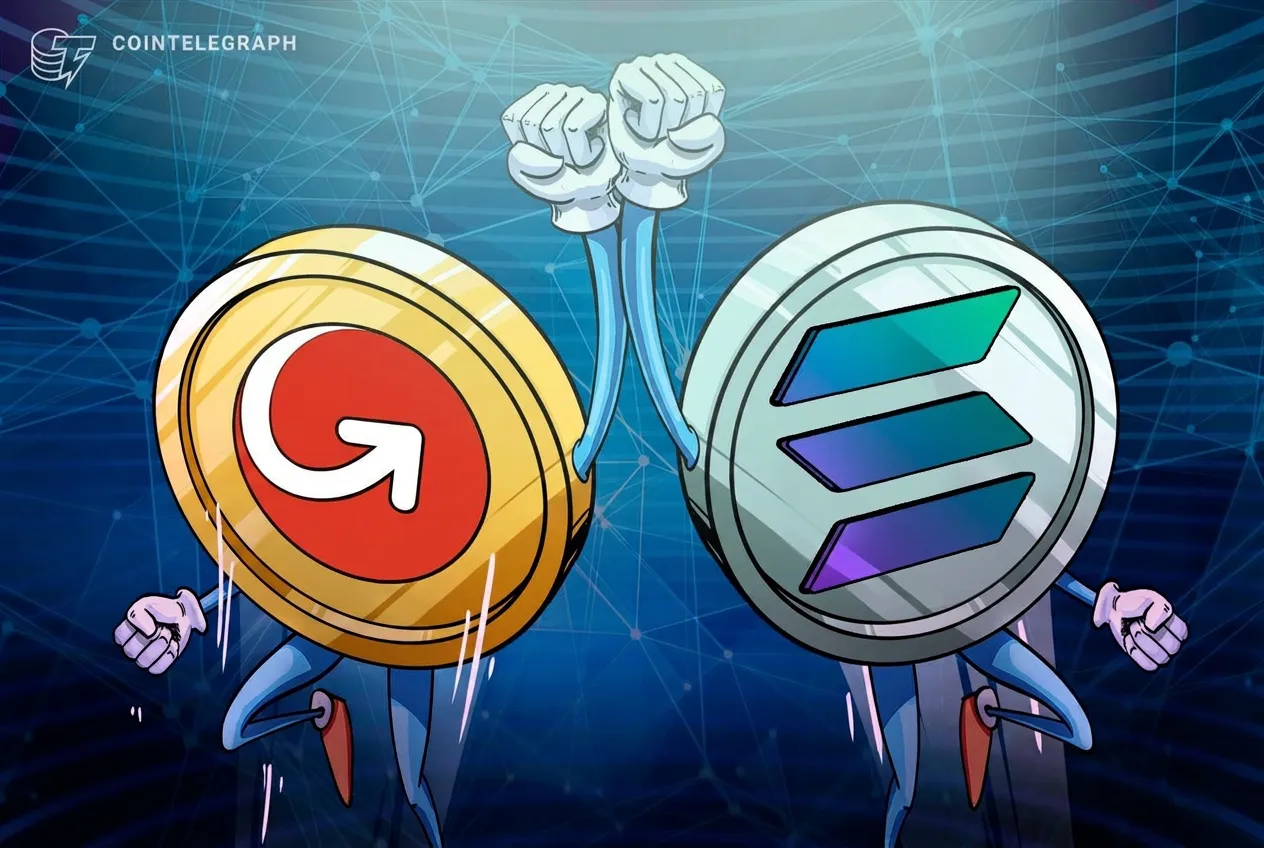
Global exchange OKX is reportedly seeking to acquire a in South Korean exchange Coinone alongside Korea Investment & Securities, in what could become one of the most significant foreign-linked investments in the countrys digital asset sector in years.  According to industry sources, the two firms are discussing plans to each acquire roughly 20% of Coinone through a capital raise structured around newly issued shares rather than purchases from existing shareholders. The approach would inject fresh capital into the exchange while avoiding immediate changes to management control.  Coinone is currently controlled by a group of domestic shareholders led by The One Group, which holds a 34.3% . Other major shareholders include Com2uS Holdings, Com2uS Plus, and Coinone founder and CEO Cha Myung-hoon, who also controls The One Group.  While the proposed investment is being framed primarily as a financial partnership, market observers believe OKX could eventually seek a more strategic role in the business. If that were to happen, it would represent only the second notable attempt by a major overseas exchange to gain influence over a Korean won-based trading platform, following Binances investment in Gopax parent company Streami.  The discussions come as South Korea reassesses its approach to digital asset regulation. Policymakers and regulators

05-16Industry

ChatGPT Adds Personal Finance Tools for U.S. Pro Users

OpenAI has introduced a new personal finance feature to ChatGPT, allowing Pro users in the U.S. to securely link their financial accounts and receive tailored, AI-powered guidance. The feature was announced on May 14, 2026, and marks a significant step in OpenAIs integration of financial tools with conversational AI.  The system leverages GPT-5.5, OpenAI‘s latest reasoning model, to analyze users’ financial data and personal goals. By connecting over 12,000 financial institutions via trusted platforms like Plaid, ChatGPT provides users with a comprehensive dashboard that visualizes their spending, subscriptions, investments, and more. This deeper financial context enables ChatGPT to assist with budgeting, goal-setting, and financial planning in a way that feels more personalized and actionable.  More Than Just a Dashboard  Users can ask ChatGPT questions like, “How can I save an extra $500 a month?” or “Whats the best way to pay off my credit card debt?” The AI combines account data with user-provided context—such as upcoming expenses or savings goals—to deliver practical advice. ChatGPT can also save key financial details in its “financial memories,” making future conversations more relevant.  For example, if a user mentions theyre saving for a car purchase, ChatGPT will incorporate that goal into its recommendations. This functionality builds on personalization

05-16Industry

Anyscale Launches Persistent Ray Dashboards for Debugging AI Workloads

Anyscale has unveiled its new Cluster and Actor dashboards for Ray, completing a fully persistent suite of monitoring tools designed to optimize and debug distributed AI workloads. This release addresses long-standing pain points for developers working at scale, such as ephemeral data loss and limited observability in Rays existing infrastructure tools. By persisting workload and cluster data even after the job completes, the new dashboards aim to simplify debugging and post-mortem analysis for complex AI pipelines.  Ray, an open-source framework developed at UC Berkeley‘s RISELab, is a cornerstone for distributed machine learning and Python applications. It powers everything from hyperparameter tuning to multimodal AI data processing, as seen in Anyscale’s recent integration with NVIDIA RTX GPUs announced in March 2026. Anyscale, the commercial steward of Ray, continues to expand its offerings for developers grappling with large-scale AI infrastructure challenges.  Persistent Dashboards: Solving Key Bottlenecks  Before this update, developers faced critical limitations when using Rays original dashboards. Cluster data was ephemeral, often disappearing once a cluster shut down, making root cause analysis for failures nearly impossible without rerunning expensive jobs. Additionally, data retention was minimal—dead node information persisted for only ten minutes, and records for terminated actors were capped at 100,000 entries. These constraints

05-16Industry

How AI Is Transforming Legal Research in 2026

Artificial intelligence is fundamentally reshaping legal research, cutting hours off traditional workflows while improving accuracy and integration with drafting tools. Platforms like Harvey AI, Westlaw Precision, and Lexis+ Protégé are setting new standards for how legal professionals access and analyze information.  Legal research has always been a cornerstone of the profession, but the introduction of AI is turning what was once a labor-intensive process into a streamlined, efficient operation. AI-native startups like Harvey and legacy players such as LexisNexis and Thomson Reuters are racing to dominate this rapidly growing market, which has seen explosive adoption rates in 2026.  How AI Tools Are Accelerating Legal Research  Traditional legal research relied heavily on keyword searches, Boolean strings, and manual review of case law, statutes, and secondary sources. This process was time-consuming and often left room for oversight. AI platforms, however, are changing the game by introducing natural language processing (NLP) and advanced synthesis capabilities.  Take Harvey AI, for example. The platform allows lawyers to ask complex, jurisdiction-specific questions in plain English — such as, “What is the enforceability of non-compete clauses in California post-2023 reforms?” — and receive structured, citation-backed answers. This isn‘t just a search engine; it’s a tool that organizes findings, highlights conflicting precedents,

05-16Industry

Augustus Wins OCC Approval to Build AI-Powered Stablecoin Bank

Augustus Bank, a Berlin-born fintech turned U.S. banking hopeful, has received conditional approval from the Office of the Comptroller of the Currency (OCC) to launch a national bank tailored for artificial intelligence (AI) and stablecoin-powered clearing. CEO Ferdinand Dabitz says the banks mission is to replace “broken” legacy systems that global clearing giants like Citi still rely on.  The conditional charter, granted on May 11 under the GENIUS Act framework, allows Augustus to proceed with plans to establish a Dallas-based institution. The bank will utilize stablecoins for payments and liquidity management, integrating AI deeply into compliance and back-office operations. Dabitz told the team is just “a couple of months” away from full approval, pending regulatory requirements.  Targeting Legacy Clearing Inefficiencies  Augustus aims to disrupt the correspondent clearing market, where established players like Citi and JPMorgan dominate. Citi alone reported $6.1 billion in clearing-related revenue in Q1 2026, a clear indication of the lucrative market Augustus wants to capture. But Dabitz argues that legacy banks cannot fully rebuild their systems to accommodate programmable money or AI-driven processes.  “The short answer is replacing them,” Dabitz said, emphasizing that Augustus‘ advantage lies in designing AI and stablecoin workflows from scratch rather than retrofitting decades-old infrastructure. The bank’s

05-16Industry

How AI Is Transforming Legal Research in 2026

Artificial intelligence is fundamentally reshaping legal research, cutting hours off traditional workflows while improving accuracy and integration with drafting tools. Platforms like Harvey AI, Westlaw Precision, and Lexis+ Protégé are setting new standards for how legal professionals access and analyze information.  Legal research has always been a cornerstone of the profession, but the introduction of AI is turning what was once a labor-intensive process into a streamlined, efficient operation. AI-native startups like Harvey and legacy players such as LexisNexis and Thomson Reuters are racing to dominate this rapidly growing market, which has seen explosive adoption rates in 2026.  How AI Tools Are Accelerating Legal Research  Traditional legal research relied heavily on keyword searches, Boolean strings, and manual review of case law, statutes, and secondary sources. This process was time-consuming and often left room for oversight. AI platforms, however, are changing the game by introducing natural language processing (NLP) and advanced synthesis capabilities.  Take Harvey AI, for example. The platform allows lawyers to ask complex, jurisdiction-specific questions in plain English — such as, “What is the enforceability of non-compete clauses in California post-2023 reforms?” — and receive structured, citation-backed answers. This isn‘t just a search engine; it’s a tool that organizes findings, highlights conflicting precedents,

05-16Industry

Anthropics record copyright deal stalls over fee questions

A federal judge declined to finalize Anthropics $1.5 billion settlement with authors on Thursday, asking for more detail on attorney fees and payments to lead plaintiffs before signing off on what would be the largest copyright settlement in U.S. history.  U.S. District Judge Araceli Martinez-Olguin probed lawyers on several unresolved issues during a May 14 hearing in San Francisco. That leaves about 120,000 authors and copyright holders waiting for resolution of a case thats been dragging on since 2024.  The lawsuit accused Anthropic of downloading more than 7 million pirated books from shadow libraries LibGen and PiLiMi to train its models.  Now-retired Judge William Alsup ruled in June 2025 that Anthropic‘s use of the books for AI training qualified as fair use, as long as the works were obtained legally. But he found that stockpiling pirated copies in a “central library” that went beyond training purposes wasn’t protected.  That ruling set up a trial, originally scheduled for December 2025, where Anthropic faced potential damages in the hundreds of billions of dollars. Rather than go to trial, Anthropic agreed to the $1.5 billion settlement.  Alsup preliminarily approved it in September 2025. The case was later reassigned to Martinez-Olguin after Alsup retired.  Authors and publishers filed claims covering

05-16Industry

Ethereum Sell Signal That Last Preceded A 63% Drop Flashes Again

Keshav is currently a senior writer at NewsBTC and has been attached to the website since June 14, 2021.  Keshav has been writing for many years, first as a hobbyist and later as a freelancer. He has experience working in a variety of niches, even fiction at one point, but the cryptocurrency industry has been the longest he has been attached to.  In terms of official educational qualifications, Keshav holds a bachelors degree in Physics from one of the premier institutes of India, the University of Delhi (DU). He started the degree with an aim of eventually making a career in Physics, but the onset of COVID led to a shift in plans. The virus meant that the college classes had to be delivered in the online-mode and with it came free time for him to explore other passions.  Initially only seeking to make some beer money, Keshav unexpectedly landed clients offering real projects, after which there was no looking back. Writing was something he had always enjoyed and to be able to do it for a living was like a dream come true.  Keshav completed his Physics degree in 2022 and has been focusing on his writing career since, but that doesnt mean

05-16Industry

OKX Eyes Coinone Stake as South Korea’s Crypto Market Heats Up

OKX, one of the world‘s largest cryptocurrency exchanges, is reportedly in talks to acquire a 20% stake in South Korean exchange Coinone. According to Yonhap News, the deal is being structured as a capital injection through new shares, with Korea Investment & Securities also vying for a parallel 20% stake. If finalized, the move would mark OKX’s entry into one of Asias most tightly regulated cryptocurrency markets.  Coinone, a key player in South Korea‘s crypto ecosystem, facilitates won-denominated trading alongside competitors like Upbit, Bithumb, Korbit, and Gopax. However, the exchange has faced regulatory pressure. In April, South Korean authorities fined Coinone $3.5 million and imposed a three-month partial business suspension for anti-money-laundering (AML) failures, including weak customer verification protocols and dealings with unregistered foreign entities. Despite these setbacks, Coinone’s strategic position in the market makes it an attractive acquisition target.  Why South Korea Matters for OKX  The South Korean market is increasingly competitive and highly regulated, but its significance is hard to overstate. With stringent AML and ownership rules enforced by the Financial Services Commission (FSC), the countrys regulatory framework is designed to ensure both compliance and market integrity. For a global player like OKX, a foothold in South Korea offers access to

05-16Industry

US Dollar Index Is Rising: Will Bitcoin Price Follow or Backtrack?

The US Dollar Index (DXY) is breaking out toward 101 after forming a double bottom on the daily chart. Historically, that move would have weighed on Bitcoin (BTC) price. But 2026 correlation data tells a different story.  Bitcoin trades near $80,605, up 0.97% over 24 hours and 8.71% over the past 30 days. The question now is whether dollar strength still drives BTC price, or if Bitcoin moves on its own fundamentals.  The Long-Term Inverse Correlation Still Carries Weight  For more than a decade, the DXY and Bitcoin have generally moved in opposite directions. Data from Bitcoin Counterflow dates back to 2011 and clearly visualizes the pattern.  Bitcoin expansion phases in 2013, 2017, and 2020 lined up with DXY weakness below 90. DXY rallies in 2014, 2018, and 2022 coincided with deep BTC drawdowns of 60% or more.  The mechanism behind the link is straightforward. A weaker dollar typically signals looser financial conditions and a higher risk appetite, both of which have historically lifted Bitcoin alongside other risk assets.  DXY vs BTC price / Source: Bitcoincounterflow.com  Youtuber Carl Moon recently posted a monthly comparison chart that strengthens this view. His chart marks each Bitcoin halving cycle against DXY phases.  Red blocks during BTC bull runs match DXY declines,

05-16Industry
1
...
474476
...
1000