Bitcoin Q-Day Recovery Proposal Aims to Let Users Prove Ownership After Quantum Attack

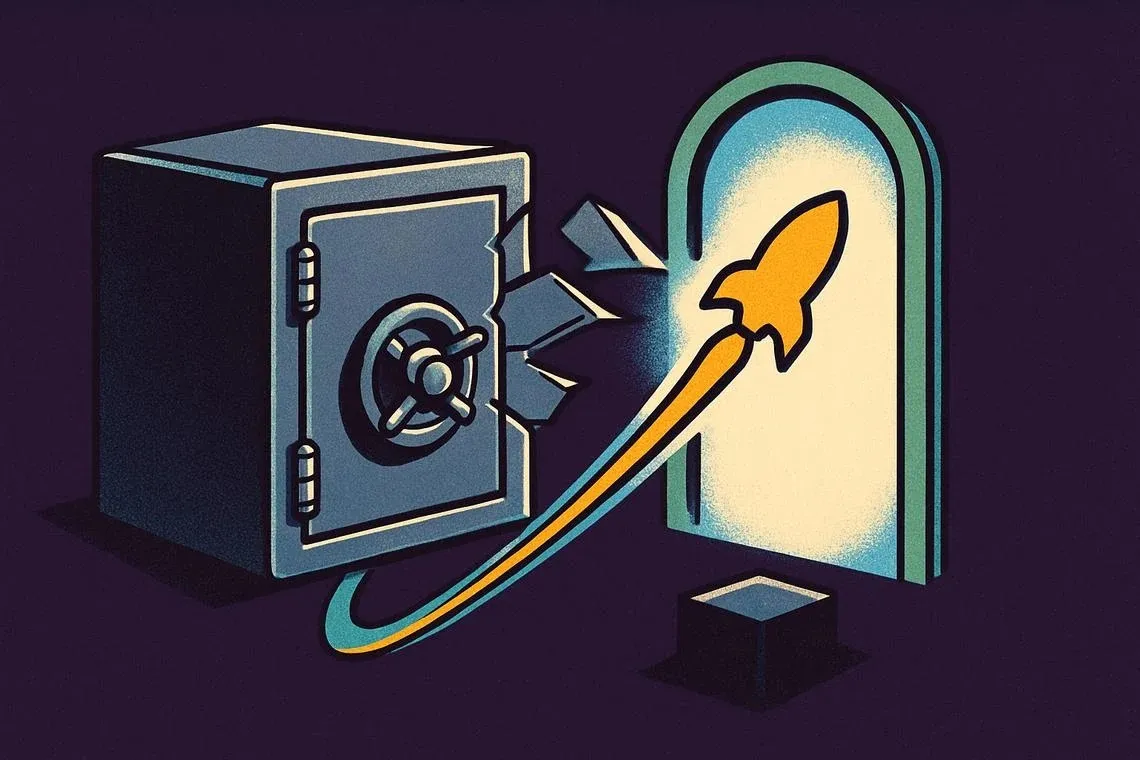
In briefProject Eleven introduced a post-quantum proof designed to verify Bitcoin wallet ownership after Q-Day.The implementation was developed with Binius maintainer Jim Posen and builds on earlier academic research.The prototype is unaudited and would require blockchain protocol support before it could be used.  As concerns over Bitcoins quantum security continue to grow, security firm Project Eleven on Thursday unveiled a cryptographic technique designed to address a major concern by allowing users to prove ownership of a wallet after quantum computers become capable of deriving private keys and generating valid digital signatures.  In a thread on X on Wednesday, Project Eleven CEO Alex Pruden said the central challenge isnt protecting wallets from quantum attacks—its proving who owns them once those attacks become possible.  “How do you prove you still own a wallet after a quantum computer can forge its signatures?” Pruden wrote. “After Q-Day, once a quantum computer can derive an ECC private key from its public key, a valid signature no longer proves ownership. Both the quantum adversary and the legitimate owner are able to produce identical signatures.”  “Q-Day” refers to the moment when a quantum computer can break the elliptic curve cryptography that secures Bitcoin transactions. The concern in the industry is that

07-17Exchange

What are tokenized money market funds?

BlackRocks BUIDL looks like a stablecoin, pays interest like a bond fund, and is legally neither. Tokenized money market funds are the fastest-growing real-world asset in crypto, and almost nobody who talks about them can explain what you actually own.  For a decade, crypto‘s answer to the question of where to park idle dollars was a stablecoin, and stablecoins had one glaring flaw as a savings instrument: they paid you nothing while the issuer collected the interest on the reserves. Tokenized money market funds are the industry’s response, and they have quietly become the most successful real-world asset category in existence. BlackRock, JPMorgan, Franklin Templeton, and Circle all now run one. The category went from essentially nothing to over $15 billion in about two years. And yet the basic question of what a holder actually owns, and what rights come with the token in the wallet, is answered wrong constantly, including by people trading them. This guide covers the structure, the mechanics, the major products, and the concentration problem sitting underneath the growth story.  What a tokenized money market fund is  A money market fund is one of the oldest and dullest products in finance. It pools money, invests it in very short-term,

07-17Exchange

Cloudflare x402 Integration Opens Door for Bitcoin in AI Agent Micropayments

Cloudflare recently announced the launch of its monetization program via the Coinbase-led x402 machine payments standard. x402, which lets AI agents pay for data online with crypto, has been gaining steam among the AI-pilled, as it unlocks more capable agent interactions with the open web.  Cloudflare, founded in 2009, has grown from a DDoS mitigation and content delivery network (CDN) provider into one of the internets foundational infrastructure companies.  The company, which launched publicly in 2010, had the mission to make web performance and security accessible to everyone, not just large enterprises. Today, Cloudflare powers approximately 20-23% of all websites globally, handles tens of millions of HTTP requests per second across 330+ cities in over 100 countries, touching a significant portion of global internet traffic.  As a result of their adoption and security offering to large portions of the open web, CloudFlare‘s integration of x402 is a major development for the structure of the internet. Websites that are increasingly inaccessible to the massive data demands from AI can now sell that data to AI agents for crypto. CloudFlare’s implementation only mentions Stablecoins such as USDC, the Open USD standard, but the protocol supports Bitcoin on-chain and is actively exploring integration of the Lightning

07-17Exchange

Visa backs Open USD with new stablecoin platform as Circle faces fresh competition

Visa introduced a new platform aimed at making it easier for banks, fintech companies and crypto firms to build products using stablecoins, expanding its push into blockchain-based payments as competition in the sector intensifies.  The company announced on Thursday that it was launching the Visa Stablecoin Platform (VSP), an enterprise service that allows institutions to issue, store, transfer and redeem stablecoins through a single Visa-managed system. The platform launched with support for Open USD (OpenUSD), a recently introduced stablecoin from Open Standard, and includes tools for minting and redeeming the token along with wallet infrastructure for managing onchain assets.  Stablecoins are cryptocurrencies designed to maintain a fixed value, typically by being pegged to the U.S. dollar. Unlike bitcoin BTC$64,506.47 or ether (ETH), they are widely used for payments, cross-border transfers and settlement because they combine blockchains speed with a relatively stable price.  Visa said the platform provides Wallet-as-a-Service infrastructure, blockchain connectivity and security features such as dual-approval workflows, audit logs and transfer allow lists. The platform is also integrated with Visas existing payment network, allowing financial institutions to incorporate stablecoins into treasury management, settlement and payment products without replacing their existing systems.  “Stablecoins are opening up a new layer of programmable money, but for

07-17Exchange

How High Will XRP Price Go After CLARITY Act Hearing Tomorrow?

$XRP is sitting near $1.11 today, and traders are watching two things closely: what the price charts are showing, and what happens at a big Washington hearing tomorrow. $XRP is still stuck in a long-term downtrend on the bigger picture weekly chart. That bigger trend hasnt reversed yet.  But on the daily chart, things look a little different. $XRP is showing a confirmed bullish divergence on the daily chart, analysts note. In simple terms, that means the price made a low, but the momentum behind that low was actually stronger than the previous one. Thats usually seen as an early warning sign that selling pressure is fading.  Because of that signal, expect $XRP to either move sideways for a while or see a small bounce higher. A sideways, choppy move is seen as the more likely outcome for now, since $XRP still lacks strong buying momentum. The good news is that the bullish divergence makes a sharp drop lower less likely in the near term.  Levels to watch  Technically, $1.10 is the critical level right now. If $XRP holds above $1.10, it could grind higher toward resistance at $1.13 to $1.15, if there is a development around CLARITY Act.  If $XRP breaks below $1.10 instead,

07-17Exchange

Robinhood built an RWA chain. Memecoins took it.

Robinhood spent months positioning its blockchain as regulated infrastructure for tokenized stocks. Two weeks after launch, tokenized assets account for about 4% of it, a cat token was worth twelve times the entire real-world asset base, and the CEO was posting that it works great for memes too.  LATEST: Robinhood Chain reaches $294 million in stablecoin market cap and $140 million TVL in under two weeks  The network has also recorded more than $3 billion in seven-day DEX volume, drawing comparisons to Ethereums launch pic.twitter.com/KTywnPVEjY  — crypto.news (@cryptodotnews) July 14, 2026  On July 1, at a London keynote billed as The World Is Flat, one of America‘s largest retail brokerages turned on its own blockchain. Robinhood Chain went live as an Ethereum layer 2 built on Arbitrum’s Orbit stack, carrying 95 tokenized equities priced by Chainlink oracles, a Uniswap deployment for liquidity, Morpho-powered lending, and access wired into a wallet used across more than 120 countries. The pitch was specific and repeated for months: a regulated venue where tokenized real-world assets plug into decentralized finance. For readers new to the launch, crypto.news has also explained the full architecture and Stock Token rules. Two weeks later the chain is a genuine success by every headline

07-17Exchange

Ethereum's Binance Buyers Just Flipped a Switch No One Was Watching

Ethereum CVD on Binance jumped to a three-month high near 64,700 as ETH holds near $1,900, with buy-side order flow pointing to real demand.  The number showed up quietly, buried inside a note CryptoQuant analyst Arab Chain posted just two hours before this went out, and almost nobody outside a handful of trading desks caught it right away.  Sixty four thousand seven hundred. That is roughly where Ethereums Cumulative Volume Delta on Binance sits now, its highest reading in three months. ETH itself has been parked near $1,900, which on its own barely qualifies as news.  CVD measures the gap between aggressive buy orders and aggressive sell orders on an exchange. When that number climbs alongside price, traders usually read it as real demand showing up, not just a thin order book letting price drift higher on fumes.  Source: CryptoQuant (Arab Chain), Binance: ETH CVD Momentum & Price Correlation (30D)Binance Order Flow Turns Positive  The 30-day correlation between ETH‘s price and its CVD reading sits at roughly 0.87. CryptoQuant’s number, posted two hours ago. That is a tight relationship for two series that do not always move in step.  A similar Binance buying spike showed up last week too. Cooler than expected U.S. CPI data sparked

07-16Industry

SBI taps Ondo to bring Japanese stocks onchain with JPYSC stablecoin

SBI Group has partnered with Ondo Finance to tokenize Japanese stocks and use its yen-backed JPYSC stablecoin for settlement and collateral.  SummarySBI has partnered with Ondo to bring tokenized Japanese stocks into its financial ecosystem.JPYSC will support settlement and collateral for Ondos tokenized financial products.The deal follows SBIs launch of a tokenized Japanese equity fund on Solana.  According to the companies, the agreement will bring Ondo‘s tokenized financial products into SBI’s financial ecosystem while connecting Japanese assets with international markets for tokenized securities. The partnership will also use SBIs customer network to offer the products to millions of investors.  Were excited to announce a partnership with SBI Group, one of Japans leading financial institutions.  The collaboration covers tokenizing Japanese assets with distribution across the SBI ecosystem, and settlement using the JPYSC stablecoin.  Ondo CEO Ian De Bode on the… pic.twitter.com/Kp4twvDeZo  — Ondo Finance (@OndoFinance) July 16, 2026  Under the agreement, Ondo Global Markets (BVI) Limited will issue tokenized financial products linked to Japan. SBI, a long-time Ripple partner, will distribute the products through its financial platforms and introduce them to existing customers.  Both companies will also conduct joint marketing and explore distribution through strategic partners. SBI and Ondo did not disclose a launch date, the first assets planned

07-16Industry

Robinhood tackled Coinbase head-on then immediately inherited Bases biggest problem

Coinbase is reshaping its Ethereum layer-2 network, Base, around trading, payments and tokenized assets as Robinhoods new blockchain rapidly gains users and liquidity in many of the same markets.  On July 15, Base creator Jesse Pollak acknowledged that the network‘s earlier emphasis on social products had allowed it to lose ground in several of crypto’s fastest-growing financial categories.  Pollak wrote on X:  “The entire social side of the market that many of us had been building towards — Farcaster, Zora, mini apps, and yes, creator coins — disintegrated completely.”  Base will now concentrate on trading, payments and tokenized assets, bringing Coinbase into closer competition with companies building blockchain infrastructure for financial settlement.  Pollak identified Robinhood and Stripe as formidable rivals as both expand their roles in tokenization and stablecoin payments.  Base loses ground during its social push  Over the past years, Base had bet that Farcaster, Zora, mini apps and creator coins could form the foundation of a consumer-focused crypto economy.  The strategy sought to turn posts, profiles and other online content into tradable assets, allowing creators to develop direct financial relationships with their audiences.  The model initially generated substantial activity. At its peak, Base became the leading blockchain for daily token launches, briefly overtaking Solana for the first

07-16Industry

Crypto Trading Volumes Sink To Weakest Levels In Two Years As Traders Step Back

Trading activity across the largest crypto assets has slipped to a two-year low, a sign that retail and institutional traders alike are losing the conviction to chase moves in a market stuck between macro uncertainty and rangebound price action.  According to an on-chain update from Santiment, top cap crypto volumes have been consistently fading since July 2024. The downtrend has now pushed average trading activity to levels not seen since the depths of the previous bear cycle, reflecting a market where aggressive sector rotation has largely stopped. Bitcoins extended stall near the low-to-mid $60,000 range, combined with heavy macro pressure, geopolitical tensions, and erratic ETF flow swings, has sapped trader appetite for risk.  The volume fade is not simply a lull. It reveals a structural shift in how participants are deploying capital. Rather than rotating profits from Bitcoin into altcoins—a hallmark of earlier risk-on phases—traders are sitting on their hands. Spot demand has weakened, and confidence that altcoins can sustain follow-through rallies has eroded. When that rotation engine breaks down, trading volumes across major tokens dry up noticeably, often before social chatter and sentiment metrics register the same chill.  Why the Volume Collapse Reshapes the Trade Setup  Low volume is a double-edged signal. On

07-16Industry
1
...
227229
...
1000