NMLSRegulated
United States Crypto Asset Transfer License (MTL)





United States Crypto Asset Transfer License (MTL)
Singapore Crypto Asset Exchange License (CEX)
United Arab Emirates Crypto Asset Exchange License (CEX)
Malta Crypto Asset Exchange License (CEX)
Salvador Crypto Asset Exchange License (CEX)
Bahamas Crypto Asset Exchange License (CEX)
Turkey Virtual Asset Service Provider (VASP)
Seychelles Crypto Asset Exchange License (CEX)
Australia Virtual Asset Service Provider (VASP)

OKX platform suspected of colluding with currency dealers to defraud money. On December 2nd, I used the payment method of the currency dealer in C2C to transfer Canadian dollars according to the address. The currency dealer insisted that they did not receive it and refused to make the payment. I complained to the platform, and the platform asked me to provide information. After I provided it as instructed by the platform, I have not received any response. Today, on December 14th, the platform directly canceled my order. I did not receive the purchased USDT on OKX, and my bank account has not been refunded. I complained to the customer service, but they just referred me back to the so-called specialist for investigation. I sincerely advise to be more cautious when trading on OKX. I will not use this platform anymore because the risk is too high.
Blockchain black platform Ouyi OKX official certified merchant joint fraud uremia mother medical treatment cost 2000u has been filed. So far, Ouyi black platform has not responded.
Exchanges with reserves exceeding 96.71%
Exchanges with 24H inflows exceeding 99.99%
Exchanges with 24H trading volume exceeding 98.69%
OKB
OKB
$125.30
0.13%
24H Vol
$23,612,750.41
Market Cap
$2,631,353,568.12
Issue Time
2019-04-30
Crowdfunding Price
$1.58
Circulation (pieces)
21,000,000.00
return on investment
+7,823.67%
Recently destroyed (pieces)
--
Total destroyed (pieces)
--
| Currency/Name | Trade | Unit Price | Change | 24H Vol | +2%/-2% Market Depth | Liquidity |
|---|---|---|---|---|---|---|
| BTC/USDT | $78,957.44 | 2.12% | $687,795,329.73 | $4.37M/$2.09M | 840 |
| ETH/USDT | $2,478.82 | 1.33% | $442,308,569.77 | $3.30M/$2.02M | 825 |
| USDC/USDT | $1.00 | 0.02% | $174,562,689.95 | $10.33M/$15.14M | 812 |
| SOL/USDT | $96.18 | 1.05% | $144,253,694.4 | $1.97M/$2.27M | 721 |
| XRP/USDT | $1.48 | 1.59% | $132,375,277.38 | $1.27M/$1.68M | 727 |
| HYPE/USDT | $77.45 | 4.26% | $77,873,867.13 | $422.31K/$579.94K | 689 |
| DOGE/USDT | $0.0893613 | 3.91% | $66,019,262.41 | $1.23M/$1.43M | 701 |
| ZEC/USDT | $818.12 | 7.09% | $50,987,281.44 | $463.88K/$450.86K | 645 |
| TRUMP/USDT | $2.45 | 9.63% | $40,200,707.58 | $441.40K/$411.06K | 573 |
| SUI/USDT | $0.81251179 | 2.22% | $34,843,957.57 | $630.19K/$586.72K | 650 |
What Is OKX?
OKX is a global company offering exchange and Web3 services with offices in Hong Kong, Singapore, the UAE, Silicon Valley, and the Bahamas. OKX exchange services are offered by its Seychelles-incorporated and Bahamas-registered entities. OKX offers Web3 services in the United States and has an office in Silicon Valley, but it does not offer exchange services in the United States. The exchange offers basic trading including spot and simple options, and derivatives including margin, futures, perpetual swaps and options. Other products include: trading bots, block trading, OKX Earn (savings, stablecoins, DeFi, staking, ETH 2.0 and more), crypto loans and Jumpstart, the exchange’s launchpad.
OKX wallet claims to be the “portal to Web3,” offering a crypto hot wallet, decentralized exchange (DEX), a NFT marketplace and decentralized applications (DApps). The wallet supports over 30 networks, including major blockchains like Bitcoin, Ethereum, BNB Chain, Solana, Polygon, Avalanche, Fantom and more.
OKX also has its own native blockchain — X Layer and native token — OKB, which allows builders and projects to deploy DApps and developers to use infrastructure like OKX Oracle and more.
In January 2022, OKEx was rebranded as OKX, with a new branding and roadmap.
Who Are the OKX Founders?
OKX (formerly OKEx) is owned by OK Group.
The company was founded by Mingxing "Star" Xu back in 2013 in China. Xu is a Chinese entrepreneur. He holds a Bachelor's degree in Applied Physics from the University of Science and Technology Beijing. Star Xu is CEO of OK Group.
The present CEO of OKX is Star Xu.
When Did OKX Launch?
The exchange, formerly known as OKEX, was launched in 2017.
OKX Restricted Countries
The project is supported in over 200 countries. However, residents of the United States don’t have access to the platform's services.
What Coins Are Supported on OKX?
The exchange lists over 350 cryptocurrencies and supports more than 500 trading pairs. The platform lists major tokens including BTC, ETH, OKB, AAVE, SOL, MATIC, XRP, DOGE, SHIB, and DOT.
How Much Are OKX Fees?
The fee structure is based on market taker and maker model. Trading fees on the platform start at 0.10% and decrease as trading volume increases. For regular users, fees depend on the number of OKB (native currency) in the OKX ecosystem, while for advanced users, fees are based on their 30-day trading volumes.
Is It Possible To Use Leverage or Margin Trading on OKX?
OKX offers margin trading with leverage up to 10X. For derivatives, OKX also offers futures trading and perpetual swaps with up to 125X leverage. Traders can also leverage through crypto options, including BTC, ETH and more.
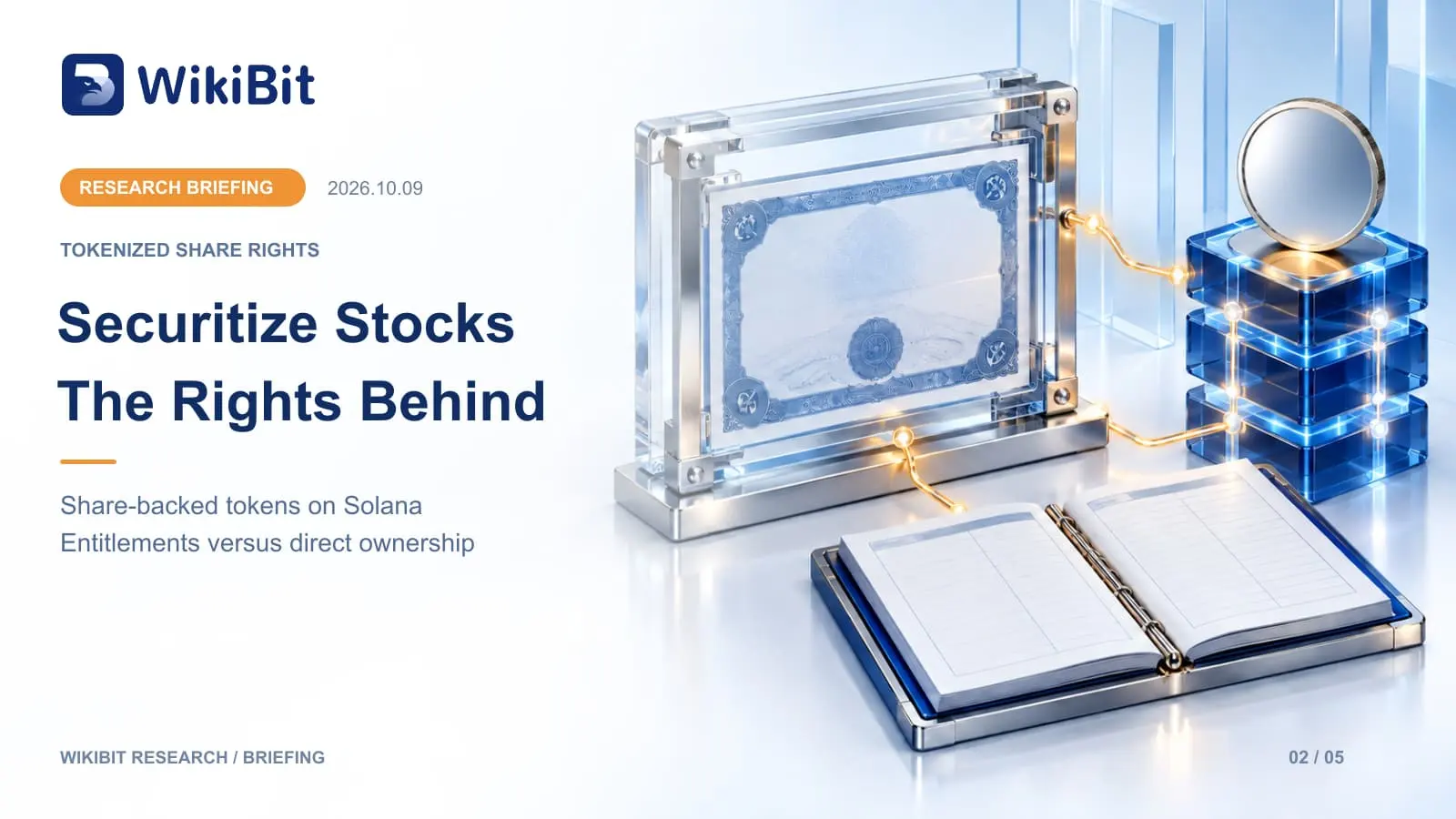
The most consequential detail in Securitizes October 8 tokenized-stock launch is not that Apple or Nvidia can trade through a blockchain interface. It is the legal claim represented by the token. Securitize launched Securitize Stocks with an initial collection of 12 U.S.-listed equities on Solana through its regulated broker-dealer infrastructure. The initial tickers are AAPL, MSFT, NVDA, GOOG, TSLA, META, AMZN, NFLX, CRCL, SPCX, MSTR and PLTR. The tokens are backed one-for-one by underlying shares. They are designed to convey security entitlements and associated economic rights such as dividends and, where applicable, voting benefits. Yet an important qualification appears in Securitizes own disclosures: a token holder is not automatically a registered shareholder of the underlying company. The initial product is a security entitlement held through Securitize Markets, not a direct issuer-register entry. A convertible entitlement-token structure is intended to support conversion to direct recorded ownership in supported circumstances. That may sound like a legal footnote. It is central to whether tokenized equities can become a serious capital-markets asset class.A Token That Tracks a Stock Is Not Necessarily a Share Crypto markets have offered many different products under the label tokenized stock. Some are debt obligations whose value tracks a stock. Others are synthetic derivatives.
OKX and Intercontinental Exchange, the owner of the New York Stock Exchange, have advanced a proposal for around-the-clock trading in tokenized U.S. equities through their reported OKXICE joint venture. Reuters reported on October 5 that the venture had filed a notice with the U.S. Securities and Exchange Commission concerning a proposed venue operating 24 hours a day, seven days a week. The contemplated universe includes shares or share-linked instruments referencing more than 60 U.S. companies. This is a material market-structure development. It is not evidence that the market has already begun accepting orders, that the SEC has approved every instrument or that holders of a token automatically hold the same legal rights as registered shareholders.The reported venture Public reporting describes OKXICE as a 50–50 venture between crypto exchange OKX and Intercontinental Exchange. The proposed model brings together an established securities-market operator and crypto-native trading infrastructure. The underlying question is whether an equity-linked product can remain continuously tradeable after traditional U.S. stock-market hours without losing essential protections around ownership, custody, disclosure, settlement and corporate actions.Why the filing matters Most U.S. listed equities trade within regulated exchange sessions, with extended-hours trading subject to separate market conditions and liquidity. Crypto markets operate continuously. A tokenized-equities venue could allow 24/7
Tokenized equities are moving from offshore wrappers to an institutional U.S. market design. OKXICE, the 50-50 joint venture between crypto exchange OKX and Intercontinental Exchange, the parent company of the New York Stock Exchange, has notified the SEC that it plans to launch a Tokenized Securities Venue under the agencys new Innovation Exemption. The proposed venue would begin with more than 60 U.S.-listed stocks. Trading would be available around the clock. The tokenized shares are intended to preserve shareholder rights such as dividends and voting. Companies whose shares are tokenized would receive a 30-day opportunity to object. There is no announced launch date yet. The filing is important because it combines three market structures that rarely coexist: regulated securities ownership + public blockchain settlement + AMM-style liquidity.This Is Not Just an Offshore Stock Wrapper Crypto exchanges have offered stock-linked tokens outside the United States for years. The legal structure varies. Some products are debt instruments linked to a share price. Some are synthetic derivatives. Some have redemption links to underlying shares. The SECs Innovation Exemption takes a more conservative approach for U.S. tokenized NMS stocks. Qualifying tokens are expected to preserve the rights and privileges of the traditional share. That means the token should not merely track Nvidia‘s or Apple’s price. The ownership experience matters. Dividends, voting and