

Equiti
2-5 years
Not Regulated
Broker
Questionable Regulatory License
Visit Website

Basic Information

Country/Region
Seychelles
Exchange AbbreviationEquiti
Company NameEquiti Brokerage (Seychelles) Limited
Operating Period2-5 years
Websitehttps://www.equiti.com/sc-en/
Trade TypeContract Trading、Leveraged Trading

Score

0.00/10
2026-10-12 Rating

RiskNotice

1 risk alerts
This platform currently has no valid crypto asset regulation. Please be aware of the risks!

No Regulatory License

Be aware of the risks!

Exchange Overview

Exchange Overview

Equiti Brokerage (Seychelles) is an FSA-regulated multi-asset broker offering global access for trading online.

Business Region

InfluenceA
0
2
4
6
8
10

Disclosure

News

11

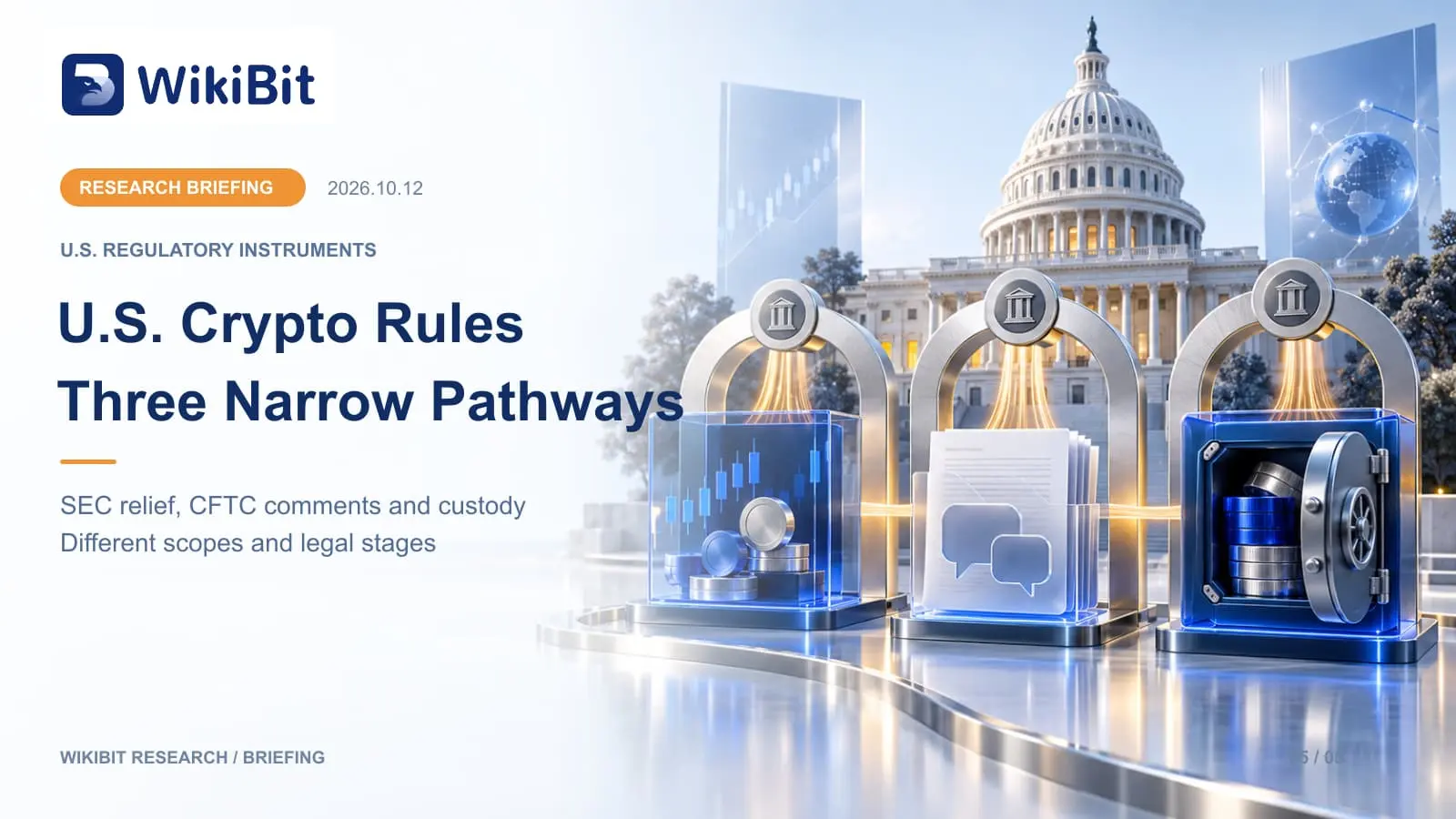
After the CLARITY Act Stalled: SEC Tokenization Exemption, CFTC Proposal and Spot Gaps

Two U.S. regulators are continuing to build pieces of a digital-asset framework after the Digital Asset Market CLARITY Act failed to advance in the Senate. But the most important pieces are at different legal stages: one has already taken effect as limited relief, another is a request for comment, and a comprehensive statutory framework for ordinary spot markets is still missing.  The distinction was highlighted in new October 11 interviews with industry executives and legal scholars. Some expect agencies to enable products faster than Congress could. Others warn that executive-agency changes cannot create the durable boundaries a statute would have established.The SECs tokenized-stock exemption is real—and narrow  On September 17 the Securities and Exchange Commission approved a temporary, conditional Innovation Exemption for limited trading in tokenized National Market System stocks on qualifying tokenized-securities venues. The published conditions include permissioned trading, transaction transparency, restrictions on symbols and volumes, protections around trading halts, records and systems controls.  A venue still has to satisfy those conditions. The exemption does not mean any decentralized exchange can trade any security without other obligations, nor does it certify the economic value of a particular token. The SEC describes the mechanism as a controlled way to learn from live onchain
After the CLARITY Act Stalled: SEC Tokenization Exemption, CFTC Proposal and Spot Gaps
10 hours agoIndustry Research

Bitcoin and Russia–Ukraine Energy Ceasefire Claims: What Was Confirmed on Oct. 11

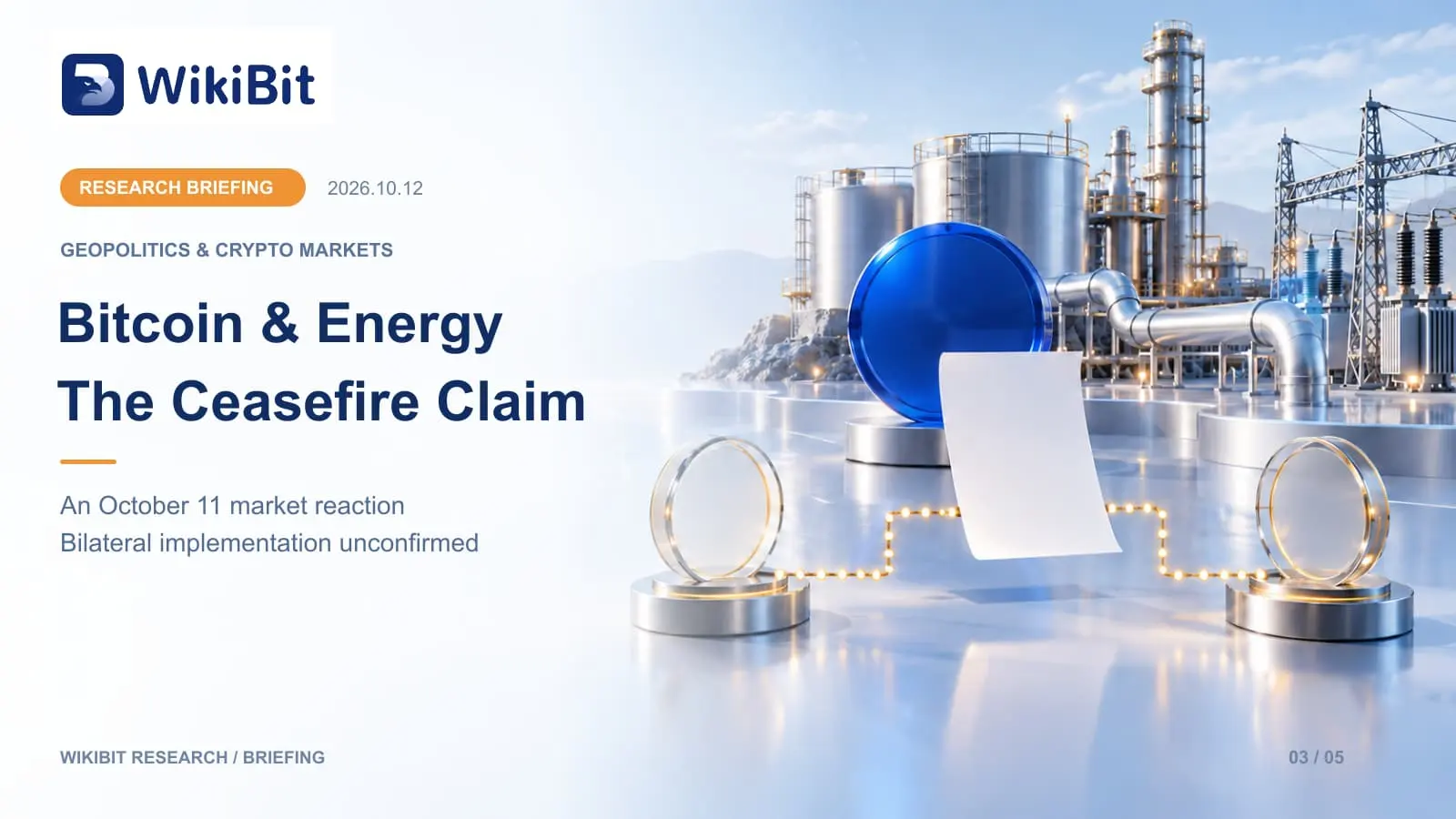
Bitcoin rose during Sunday, October 11 reporting after President Donald Trump claimed an immediate Russia–Ukraine “energy ceasefire” and Kyiv offered conditional support for a reciprocal halt to attacks. The political announcement and the markets reaction were real. Whether an enforceable bilateral ceasefire had actually begun was not confirmed.  President Donald Trump posted that both sides had agreed to stop attacks on energy infrastructure. Ukrainian President Volodymyr Zelenskyy said Ukraine was ready to refrain from striking Russian energy facilities if Russia made the same commitment, but requested details from Washington and continued to report Russian attacks. Reuters said Moscow had not confirmed the arrangement at the time of its coverage.  The key status is therefore claimed agreement / Ukrainian conditional support / no confirmed Russian acceptance, not “the war has ended” and not “peace deal finalized.”Why a ceasefire headline can move cryptocurrency  Energy infrastructure has been a significant channel through which the conflict affects oil and fuel supply expectations. Investors can quickly translate news of possible de-escalation into assumptions about energy prices, inflation pressure and interest-rate expectations. Crypto trades during the weekend even when U.S. equities and much of the conventional commodity market are closed.  CoinDesk reported that bitcoin was initially little changed after the

Bitcoin and Russia–Ukraine Energy Ceasefire Claims: What Was Confirmed on Oct. 11
10 hours agoIndustry Research

IMF Tokenized Stocks Study: 24/7 Demand, 80% Fractional Trades and Liquidity Risks

More than half of trading in the tokenized equities examined by the International Monetary Fund occurred outside regular U.S. equity-market hours. Approximately 80% of transactions were smaller than one conventional share. Those are substantial signals of what users want from a tokenized stock: a way to trade when U.S. exchanges are closed and a way to buy a fraction of an expensive share.  The same study finds that these markets are considerably less liquid and roughly 1.5 times as volatile as the equivalent traditional stocks. That matters for anyone assuming that round-the-clock access necessarily improves execution quality.  The results appear in Chapter 3 of the IMFs October 2026 Global Financial Stability Report, Scaling Tokenization: New Efficiencies, New Vulnerabilities, publicly discussed ahead of the full report release. Public discussion intensified in October 11 reporting. The IMFs empirical observations deserve close reading because they answer a different question from recent exchange launches: how do tokenized stocks actually trade after they exist?What the IMF measured  The IMF compared five liquid tokenized U.S. equity-linked instruments with corresponding conventional assets, using products from Ondo Finance and xStocks. The exercise covered 11 centralized and decentralized trading venues, 365 trading days, and more than two million five-minute observations of prices

IMF Tokenized Stocks Study: 24/7 Demand, 80% Fractional Trades and Liquidity Risks
10 hours agoIndustry Research